Write your own review!
Mercedes
A must read for every patient
This book should be given to every patient, so they can be on an equal footing and now how the system works and why it works the way it does. Well researched and explained from the inside out, it demystifies a whole area of life that all of us will have to deal with at some stage, it helps the patient understand the doctor and thus the doctor to understand the patient, and here is to understanding!
Penny
Doctor and Patient Communication
If you have ever wondered how a doctor (your doctor) thinks, this book will help you figure it out. The book contains a variety of case studies from people of all ages that help explain the thinking process doctors' use to make a diagnosis. It is a book that can be continually referenced. It is a must read for patients, and should be recommended for doctors. Everyone who reads How Doctors Think will have a better understanding of how the right communication between a patient and doctor can impact the correct diagnosis and the right course of treatment. This is a book you will want to pass on or recommend to friends and family. Thank you Jerome Groopman for a much needed book.
Patricia
How to Help Your Doctor Help You
This is not a quick how-to book, but a well-written explanation of how a doctor’s medical training and experience can lead him or her to a specific diagnosis or treatment. It is an absorbing book that kept me up past my bedtime because I couldn’t put it down. Dr. Groopman cites incidents from real life, calling on his own experience and that of physicians who are well-known in their fields to illustrate both successes and failures. We learn about the thinking that led to correct or incorrect diagnoses. In this way Groopman builds a case for the questions that we need to ask when we seek a diagnosis or treatment. The book has helped me to understand how my own doctor might think and why, and how I can better help him to help me. In the end, Groopman explains tactful questions that we need to ask in order to help our doctors find answers. I wrote a list of these questions to keep in my wallet. The author shows the reader how to become a “partner” in his or her own healthcare and how to assist in the treatment of family members. I highly recommend this book.
Vera
How Doctors Think
This book, while written for the layman, should be required reading for every doctor. The author uses interesting cases to illustrate the many pitfalls that can occur in a physician's thinking. The epilogue is perhaps the most helpful part of the book: questions that patients or their families can ask the doctor which may help him or her redefine the problem. Highly recommended for the general reader.
Susan
Hard to Diagnose
The difficult to diagnose patient is often the least favorite patient. Especially in the emergency room. But, if you or loved ones have ever had an illusive or obscure illness, as I have had, you will appreciate this book.
One of the physicians mentioned in this book after hearing the symptoms, would ask herself: 'What else could this be?" Thereby possibly getting the real diagnosis and/or saving her patient unnecessary surgery.
I recommend this book for doctors and patients.
Gail
An Important Book
This book should be required reading for everyone! Since we all have been patients at one time or another, this book can guide us in getting better medical care in a system that is often overworked with doctors who don't have the time for complex cases. As someone who can relate to some of the patients' experiences with misdiagnoses and dismissals that it's "merely stress", I can now understand why some medical professionals act the way they do.
It's unfortunate that the patient and their family have to be the ones who need to evaluate the treatment and attitude of the doctor, but it is empowering to know the right questions to ask to help the doctor better evaluate the situation.
This book is a must read for both the layman and the doctor. If it were required reading as part of a doctor's training, it could result in patients receiving better medical care. I recommend this book without exception.
Andrea
A look into your doctor's mind
This book should be read not only by patients and their families, but by doctors. There are many wonderful doctors in the field, but at this book points out, they are under pressure from economic forces to see more patients and spend less time with them. Hence, many of the mistakes detailed in this book are made. Groopman tells of errors made and the possible reasons why the doctor thought that way.
The most valuable part of this book maybe the last chapter, which gives concrete advice to patients and their families about asking the right questions to get their doctor to think about their symptoms in different ways when a diagnosis and treatment cannot be reached.
Groopman writes in a way that is not preachy, not too difficult for laymen but complex enough that physicians will want to read it. He says in the afterword, new to the paperback edition, that he got great feedback from his fellow doctors. This should be standard reading at all medical schools!
Mary
Understanding the Medical Profession
Dr. Groopman states that in order to to get a patient's information, he must "establish rapport with the patient". In today's hurried world, how does one and how can one establish that necessary and needed rapport? Dr. Groopman gives many insights to this problem as well as medical school training and doctors not being able to "think outside the box" in making diagnoses.
While this book was written for lay people, I feel it should be mandatory reading for every med student, current practitioners and medical school professors.
This book is a keeper on my bookshelf!
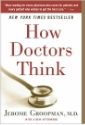
 Book Reviewed by: