Write your own review!
 Cathryn Conroy
This Is Great Literature, But It's Also a Very Challenging and Difficult Book to Read
Cathryn Conroy
This Is Great Literature, But It's Also a Very Challenging and Difficult Book to Read
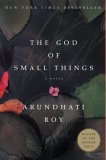
This is literature, perhaps even great literature. (This debut novel by Arundhati Roy did win the Man Booker prize in 1997, after all.) But that doesn't mean it is an easy book to read. Quite the opposite. It's a real challenge.
Taking place in the small Indian town of Ayemenem, this is the story of twins Rahel and Estha and their deeply troubled extended family. The plot, which involves failed marriages, illicit love affairs, deaths, horrific forms of betrayal, and two kids trying to figure it all out, is secondary to the overarching theme of how we sometimes purposely and sometimes inadvertently destroy our own lives—generation after generation after generation. It is a story about family fights, forbidden love, forbidden sex, violent spousal abuse, child sexual abuse, incest, Indian politics, and the insurmountable differences between classes in India. And through it all Roy writes with a razor-sharp sharp perception of the comedy and tragedy of the human condition. Escapist reading this is not.
What makes it great literature: This is a celebration of language and the beauty of words. Each word is carefully chosen. Each sentence is perfect. The words flow like poetry and demand to be read a second time for their sheer beauty. But this isn't poetry. It's a novel. The structure, style and extraordinary word play are highly imaginative, perhaps even the work of a genius.
What makes it challenging: This tragic story is not told chronologically, jumping primarily between two distinct times—two weeks when the twins are 7 years old and later when they are 31 years old. And sometimes the jump comes without warning, which makes it very confusing. Key plot points are revealed long before they actually occur. And even while a major part of the plot is unfolding, the action jumps in time—from one day ahead to four days behind to two weeks ahead. As the author herself says, "It begins at the end and ends in the middle." Reading this book was not relaxing; it was work!
Advice: The first chapter is dense in important information, but because it jumps around in time and introduces many characters (yay for the Kindle X-ray feature!), I decided to reread the first 20 pages, something I don't remember ever doing before. It then all clicked for me…and I was off and running.
SVM
Subtle
Those who have rated the book a 1 or 3, should stay away from such material in thier lives since such material is not for thier 'frog in a well' minds. Those who think that the book is a broken down story line should not read nonlinear storylines since it is just about concentration. There are many books which I have read, Books that arouse dark feelings, Love, hatred, patriotism, etc etc. But one mind boggling thing about this book is that it gives the readers a sense of SMELL in its pages. I have not experienced in any books as of now.
Marianne V
Love and betrayal
The God of Small Things, the first (and so far, only) novel by Indian writer, Arundhati Roy, was written between 1992 and 1996. This (semi-autobiographical) story takes place in the village of Ayemenem and the town of Kottayam, near Cochin in Kerala, and is set principally during two time periods: December 1969 and 23 years later. The main characters are Esthappen (Estha) and Rahel, seven-year-old two-egg (i.e. non-identical) twins, and their mother Ammu. Ammu falls in love with Velutha Paapen, a Paraven (Untouchable) who works for the family’s Pickle Factory, a man the twins already list amongst their most-loved. But even in 1969, with a Communist Government, parts of India are still firmly in the grip of the Caste system. By breaking the "Love Laws," or "The laws that lay down who should be loved, and how. And how much”, Ammu and the twins set in motion “The Terror”. The manipulations of Ammu’s aunt, Baby Kochamma, are instrumental in bringing down The Terror, and her subsequent cruelty to Ammu and the twins will leave readers gasping.
As well as commenting on the Caste system and Class discrimination in general, the novel examines Indian history and politics, the taboos of conventional society, and religion. But more than anything, this is a story about love and betrayal.
The innocent observations of 7-year-olds, their interpretation of unfamiliar words and phrases, the (typically Indian) Capitalisation of Significant Words, the running together of and splitting apart of words , the phonetic spelling, all are a source of humour and delight in this novel. “It’s an afternoon-mare”, Estha-the-Accurate replied. “She dreams a lot”. Even as Estha is being molested by the Orangedrink Lemondrink man in the Abhilash Talkies, his observations (“Not a moonbeam.”) bring laughter. Echoes, repetitions and resonances abound. Roy is a master of the language: “So futile. Like polishing firewood.” Her prose is luminous. This novel is powerful, moving, tragic. Beautifully written, with wonderful word pictures.
This novel demands at least two reads: once to learn the story; a second time to appreciate the echoes and repetitions and understand what the early references mean. It deserves a third reading to fully appreciate the prose, the descriptive passages. On this, my third reading, I read parts I would swear I had not read earlier. And I had tears in my eyes very early in the novel. I loved this book when I first read it: I love it even more now. I remain hopeful that Arundhati Roy will share her considerable literary talents with her eager readers in the form of another novel.
geeta
Reality of society
Roy's TGOT is outstanding.it arouses the feeling of sadness on the other hand it makes us to feel the reality of society.condition of women in India and dalit........
Rima Mukherjee
Crossing forbidden lines
This book is miraculously ,fantastically crafted. I have never seen such fluency in English language in an Indian writer before. The book only describes the naked truth behind the facets of society. It leaves the reader to gape and wonder why are the love lines are always being demarcated? Should love be a few dictated lines of the society?
Me
Yum yum
It's true the book lacks a clear plot (at least in the first half, I haven't finished), but a book should be appreciated for what it is. If you are a writer, this book will enrich your life... at least, it did mine. What I feel I get most out of it is that just by reading this book I am better able to view the world symbolically. When I look at the sky or trees, I see life I had not seen before. The world is so much more meaningful.
Anyway, there are lots of smaller stories within the overarching story, and these should be valued as such because the journey is as important as the destination. Some of these are just profound and beautifully written metaphors which I found myself extending into my writing journal.
If you have any appreciation for social justice, this is an excellent read in terms of details as well. "Merciless" is a good descriptor, mercilessly honest.
However, if you are looking for a book that will make you a better person and currently your life is meaningless, this book won't give your life a deeper meaning. It's like the oracle at Delphi, which says, "Know thyself" and "Nothing too much", and tells you nothing about how to get there. Although it's a bit more complicated and closer to helpful than the oracle. If you already basically understand what the hell she's writing about, this will certainly enrich that understanding.
Anna Lessiah
I have studied this novel and written a series of poems which today I descovered has gained me full marks for my A-2 course work. I therefore feel it neccessary to highly praise my benifactor: the more I read and re-read this book the more the exisit beauty of it awes me. The book seems created all at once, a perfect, crafted and intricate sculpture of a book. No one word is pointless, each heavy with meaning and reverberations that echo through the text itself and beyond. I find all to often that hype about a book sets it up for a fall and i never enjoy it so much as expected but this book will always exeed the words describing it. It is impossible for me to get close enough to this text. Its like a lover that you can't hug close enough or be near anough. I feel almost jelous that others can read it, i want it to be mine. I want one day to be able to write so originally without contrivences.
B. Guisgand
Though many can not appreciate the intense detail and admirable subtleties of this book I feel that it deserves some great care and attention. This book is not for light readers nor those whith strict gramatical ideals, and thats what I love about it. This book pushes all the envelopes and resides somewhere between epic poetry and socio-political comentary. Only through analyzing it's intricacy can you gain an appreciation for it as a true work of art. It's the next "house of leaves."