Summary | Excerpt | Reviews | Beyond the book | Read-Alikes | Genres & Themes | Author Bio
Critics' Opinion:
Readers' Opinion:
First Published:
Feb 2013, 240 pages
Paperback:
Feb 2014, 224 pages
 Book Reviewed by:
Morgan Macgregor
Buy This Book
In January, in a piece about HBO's television series "Girls," and specifically, responding to the backlash surrounding the show's lack of diversity, senior editor of The Atlantic, Ta-Nehisi Coates, wrote, "The problem isn't the Lena Dunham show is about a narrow world. The problem is that there aren't more narrow worlds on screen. Broader is not synonymous with better."
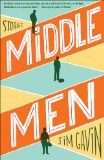
I agree with this, and say it also applies to fiction. For me, total immersion in a "narrow" world makes for the most pleasurably intense reading. The writers that do it right are able to pull back the curtain on a milieu (a place, an era, a profession) that's foreign to a reader, while creating characters so finely tuned and fully fleshed that they're easily recognizable, if not relatable. The very best ones are relatable. Jim Gavin's Middle Men, a short story collection about men in a very particular place in their lives, achieves this. (I'd like to insert the disclaimer, here, that I am not a man, and therefore am allowed to make claims such as, "relatable," without being too ironic, I think.)
That particular place that Gavin's men find themselves in is, of course, the middle. Not the middle of their lives, necessarily, the middle of becoming themselves, or at least the selves they envision becoming. They're in that weird vortex: of knowing where you want to go, and who you want to be, but without a clue as to how you'll get there. They're striving – some passively, others with wild abandon – they're broke, they have dreams, they have ideas (not all of them good), and they have no idea what to do next.
In "Bewildered Decisions in Times of Mercantile Terror," Bobby flounders around San Francisco, desperately seeking a toehold on his own life. What he wants is to be, to feel like, a real man. Not like the men in his neighborhood though, the ones his cousin (and perhaps only friend) Nora is interested in: "solvent hipsters – architects, creative directors at advertising agencies, and other lieutenants in the corduroy mafia." His idea for achieving this is to convince Nora - successful, professional Nora, grown up Nora, Nora in "full suburban lockdown"- to hook him up with investors for a product he's calling The Man Handle.
In "Illuminati", Sean - college dropout and writer of one script that never saw the light of day – is summoned by his uncle to a literal old boys club to hear a story his uncle thinks will kick start Sean's career. Instead, the fated lunch serves as a living example of what Sean already knows he doesn't want to, cannot, become.
"Middle Men" (the final story, which is in two parts) features a disillusioned second-generation toilet salesman taking solace in the architecture of his "office": the freeways of Southern California.
The best story in the collection is "Elephant Doors." Adam, early 20s and an aspiring standup comedian, is the newly hired production assistant on a long-running Jeopardyesque trivia show. One night, after failing to land a comedy gig, and in a particularly cynical mood, Adam finds himself having dinner with Hobbs, a kid even more wet behind the ears than he is.
Hobbs peppered Adam with questions about agents and managers. Instead of admitting his own ignorance and frustration in these matters, Adam gave a speech on the nobility of craft. 'If you do things right and put in the work, everything else will take care of itself,' he said, with surprising conviction. He felt like he was channeling some future version of himself, the total pro who had attained mastery in all areas of life. Then it occurred to him, with creeping horror, that by summoning this wise man too soon, under false pretenses, he was precluding his existence. He was fucking with the space-time continuum. He imagined the two versions of himself – the young fraud and the old pro – standing on either side of a dark chasm. If there was some blessed third version of himself, the middle man who could bridge the gap, Adam saw no trace of him in the darkness.
There is redemption for Adam, and for all of Gavin's middle men, though in a lovely and frankly refreshing nod to reality, this redemption isn't always the "happiness" or "success" we imagine for ourselves.
Bobby comes to understand, "with thrilling clarity, that Nora's path to success – corporate, dignified, incremental – would never work for him." The 16-year-old narrator of "Play The Man", upon blowing an important basketball game, says, "I felt a miraculous sense of relief, because I knew it was all over, my future."
So the relief, the "big break," even, may not be in achieving the dream, but in abandoning it; in reveling in exactly what it feels like when you realize that you not only don't have to do it all, but can't. The beauty in this collection is that we meet Gavin's characters not when their lives are opening up (which of course makes for a nice, if easy, story), but when they're constricting, winnowing down into themselves to find their core, however meager yet unmistakably their own that core turns out to be. And isn't this, ultimately, universally relatable? It's nice to be reminded that we're not so different, really, any of us.
 This review was originally published in The BookBrowse Review in February 2013, and has been updated for the
February 2014 edition.
Click here to go to this issue.
This review was originally published in The BookBrowse Review in February 2013, and has been updated for the
February 2014 edition.
Click here to go to this issue.

If you liked Middle Men, try these:
by Tim Winton
Published 2015
An exhilarating new book from Australia's most acclaimed writer
by Nickolas Butler
Published 2015
Seldom has the American heartland been so richly and accurately portrayed. A rare work of fiction that evokes a specific time and place yet movingly describes the universal human condition - a novel that once read will never be forgotten.


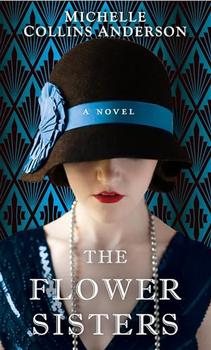
The Flower Sisters
by Michelle Collins Anderson
From the new Fannie Flagg of the Ozarks, a richly-woven story of family, forgiveness, and reinvention.
The House on Biscayne Bay
by Chanel Cleeton
As death stalks a gothic mansion in Miami, the lives of two women intertwine as the past and present collide.
The Funeral Cryer by Wenyan Lu
Debut novelist Wenyan Lu brings us this witty yet profound story about one woman's midlife reawakening in contemporary rural China.
Your guide toexceptional books
BookBrowse seeks out and recommends the best in contemporary fiction and nonfiction—books that not only engage and entertain but also deepen our understanding of ourselves and the world around us.