Summary | Excerpt | Reviews | Beyond the book | Read-Alikes | Genres & Themes | Author Bio
Critics' Opinion:
Readers' Opinion:
First Published:
Oct 2012, 480 pages
Paperback:
Oct 2013, 480 pages
 Book Reviewed by:
Elizabeth Whitmore Funk
Buy This Book
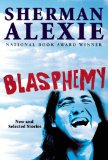
I first heard of Sherman Alexie years ago, in college when a fellow undergraduate completed an independent study on his work. This was in the heyday of Ten Little Indians, before the success of Alexie's young adult novel The Absolutely True Diary of a Part-Time Indian. I read Ten Little Indians with pleasure, and then the dark mystery, Indian Killer, but I wasn't consumed with the Sherman Alexie fever that plagued my classmate. Today, Alexie is known as a Native American writer who writes poetry, YA novels, short stories and adult fiction with his trademark laugh-out-loud humor and deft handling of controversial issues surrounding race, sex, violence, and substance abuse. Blasphemy demonstrates the range of his talent, and has made me a late inductee to the Alexie fan brigade. The collection contains both established Alexie favorites, such as "The Lone Ranger and Tonto Fistfight in Heaven" and "What You Pawn I Will Redeem" and also new, previously unpublished work. It has made me fall in love with Alexie's stories not because it offers anything different from the "rez boy" stories that he has become known for, but because I now see how his writing is simultaneously diverse and focused.
In his stories Alexie speaks through child narrators, suburban middle-class men, middle-aged women, college boys, impoverished blue-collar workers, insomniacs, criminals and bystanders. All the elements that are often associated with Alexie are here: the aloof schoolboy narrator; the stories built around basketball games; the drunken accidents; the white-skinned Indians struggling with acceptance. There is also branching off into new territory: brief, "flash fiction" style shorts that take up no more than two pages; the occasional story that is told from a third-person narration rather than the first person (of which Alexie is a master); and a story that takes place in New York rather than his familiar western landscape. There are mentions of viral videos, President Obama, and Iraq war veterans. The implication is clear: Blasphemy is work from a writer who is not only a longstanding member of contemporary American literature, but also one who is going to remain relevant and engaged for years to come.
The title shows us that this collection speaks to the subtle ways that language shifts lives and personalities. Blasphemy's opening story, "Cry Cry Cry" establishes this early on when the narrator says that things "stop being sacred when you talk blasphemy about them." Many of Alexie's characters live in this world where their reality is chosen, made by the words and actions they use: in "Breaking and Entering" a protagonist's split-second reaction forever alters his life, and in "Scars" three little words are forever etched into the motives of a convict. In these stories, blasphemy - whether in language or action - becomes a multi-layered issue that is not simply vulgar, but tied to feelings of ambition, love, loneliness, anger, and kindness. Alexie has spoken about the importance of writing young adult novels that do not shy away from the reality that many teenagers face, and in Blasphemy he continues to show the value of witnessing both the sacred and the profane.
Additional Information
For a conversation with Sherman Alexie, click on the video below recorded in 2009 by BigThink.com:
 This review was originally published in The BookBrowse Review in October 2012, and has been updated for the
October 2013 edition.
Click here to go to this issue.
This review was originally published in The BookBrowse Review in October 2012, and has been updated for the
October 2013 edition.
Click here to go to this issue.

If you liked Blasphemy, try these:
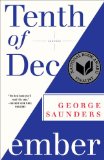
by George Saunders
Published 2014
One of the most important and blazingly original writers of his generation, George Saunders is an undisputed master of the short story, and Tenth of December is his most honest, accessible, and moving collection yet.

by Louise Erdrich
Published 2013
An exquisitely told story of a boy on the cusp of manhood who seeks justice and understanding in the wake of a terrible crime that upends and forever transforms his family.
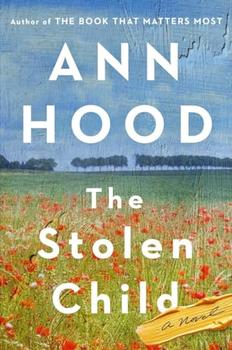
The Stolen Child
by Ann Hood
An unlikely duo ventures through France and Italy to solve the mystery of a child’s fate.

The Flower Sisters
by Michelle Collins Anderson
From the new Fannie Flagg of the Ozarks, a richly-woven story of family, forgiveness, and reinvention.
A classic is a book that has never finished saying what it has to say
Click Here to find out who said this, as well as discovering other famous literary quotes!
Your guide toexceptional books
BookBrowse seeks out and recommends the best in contemporary fiction and nonfiction—books that not only engage and entertain but also deepen our understanding of ourselves and the world around us.