
-
Your next favorite book
is waiting.
Summary | Excerpt | Reviews | Beyond the book | Read-Alikes | Genres & Themes | Author Bio
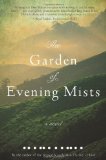
 Book Reviewed by:
Early on in the evocative new novel, The Garden of Evening Mists, the protagonist Teoh Yun Ling comes across an arresting pair of statues in her friend's tea estate gardens. It is only fitting that one of them is Mnemosyne, the Greek goddess of memory. The other one, Teoh Yun Ling is told, is her twin, the goddess of forgetting. This vignette might well capture the premise of this fantastic novel by Malaysian author Tan Twan Eng - that we spend almost our entire lives trying to find harmony between the twin pillars of memory and forgetfulness.
It is the late '80s and Yun Ling, a prominent Supreme Court justice in independent Malaysia has just retired and moved back from Kuala Lumpur, the country's capital, to her home in the country's highlands. "Yun Ling has been recently diagnosed with aphasia and she retires so that she can document her past while she still has a fairly firm grip on her faculties. One of the most beautiful things in her past is Yugiri, the garden of evening mists, and Yun Ling works at documenting how this garden came into being. It was created by Nakamura Aritomo, an enigmatic Japanese man who once worked in his country's Imperial gardens. Aritomo is now long gone and the garden, bequeathed to Yun Ling, has sunk into neglect.
As Yun Ling gets the garden going and tries to sort out Aritomo's legacy, she is haunted by visions from her past when Malaysia, then a British colony, was invaded by the Japanese during the Second World War. In chapters that alternate rather abruptly between the present and the past, the reader witnesses Yun Ling's trauma as she and her older sister suffer the horrors of internment at the hands of the Japanese. Her sister didn't survive the ordeal, leaving Yun Ling with a profound sense of survivor's guilt which haunts this beautiful novel. At the end of the war, to honor the memory of her lost sister who loved Japanese gardens, Yun Ling took up a gardening apprenticeship with Aritomo. Yugiri became a living memorial to her sister.
Aritomo is escaping a troubled past of his own and, until almost the very end of the novel the Japanese gardener remains an enigmatic figure. He is a man of multiple passions - in addition to gardening, he is skilled at the Japanese arts of ukiyo-e (woodblock prints - see Beyond the Book) and horimono (tattoos). Eng expertly interweaves the story with thematic elements borrowed from all of these art forms.
The novel's focus isn't strictly on plot but instead on creating a kind of metaphorical "mist" that only gives glimpses of forgotten memories. Some might find the book slow-going as a result, but the immersive experience of terrific writing about time and place more than compensates. The book is so rich in evocative detail and so steeped in its sense of place that it is hard not to be swept along for the ride.
One of the many beautiful lessons The Garden of Evening Mists drives home is the relevance of art in our everyday lives. To both Aritomo and Yun Ling, art is a living, breathing tangible thing as represented by Yugiri. It brings a modicum of peace to their troubled lives. The connection between the beautiful garden and her own life is not lost on Yun Ling. She knows that just as a Japanese garden uses elements of shakkei, our memories do too. "A garden borrows from the earth, the sky and everything around it, but you borrow from time," Eng writes. "Your memories are a form of shakkei too. You bring them in to make your life here feel less empty. Like the mountains and the clouds over your garden, you can see them, but they will always be out of reach."
Tan Twan Eng's latest novel is proof that just like the ethereal mists that surround Yugiri, our memories too can shift forms and shape our present everyday lives. Great art helps by filling in the holes with broad yet elegant brushstrokes.
For a visual tour of the book, please visit my Pinterest board.
 This review
first ran in the October 17, 2012
issue of BookBrowse Recommends.
This review
first ran in the October 17, 2012
issue of BookBrowse Recommends.

If you liked The Garden of Evening Mists, try these:

by Olivia Laing
Published 2025
Inspired by the restoration of her own garden, "imaginative and empathetic critic" (NPR) Olivia Laing embarks on an exhilarating investigation of paradise.
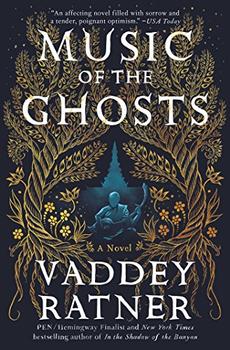
by Vaddey Ratner
Published 2018
This "novel of extraordinary humanity" (Madeleine Thien, author of Do Not Say We Have Nothing) from New York Times bestselling author Vaddey Ratner reveals "the endless ways that families can be forged and broken hearts held" (Chicago Tribune) as a young woman begins an odyssey to discover the truth about her missing father.

by John Spurling
Published 2015
A novel of fated meetings, grand battles, and riveting drama, and in its seamless fusion of the epic and the intimate, it achieves a truly singular beauty that deserves to be compared to the classic Chinese novels that inspired it.

L.A. Women by Ella Berman
Two ambitious writers in 1960s LA face betrayal when one writes a novel based on the other's life.







Your guide toexceptional books
BookBrowse seeks out and recommends the best in contemporary fiction and nonfiction—books that not only engage and entertain but also deepen our understanding of ourselves and the world around us.

