Summary | Excerpt | Reviews | Beyond the book | Read-Alikes | Genres & Themes | Author Bio

Critics' Opinion:
Readers' Opinion:
First Published:
May 2012, 288 pages
Paperback:
Apr 2013, 288 pages
 Book Reviewed by:
Morgan Macgregor
Buy This Book
Emily St. John Mandel's third novel, The Lola Quartet, drops the reader into a contemporary Florida suburb, where disgraced newspaper reporter Gavin Sasaki is forced to return to a hometown that is swiftly disintegrating and a past that is not quite ready to receive him.
I suppose the novel will be called a mystery, and it certainly is structured as such. But Mandel's writing includes essences of noir and of the socially conscious novel, and she achieves - through effortless shifts in point of view, and a sparseness that indicates a real sense of sophistication - a highly literary novel.
There is a mystery - what happened to Anna, Gavin's high school girlfriend, who disappeared one summer surrounded by rumors of a pregnancy? If the child exists, is it Gavin's? Why does everyone from Gavin's past seem to know more about what happened than he does? By raising these issues, Mandel shows the reader just how unknowable other people's lives are to us, trapped as we are within the confines of our own.
Gavin hasn't seen his high school friends, with whom he played in the jazz group, the Lola Quartet, for at least ten years and is surprised to find how much they've changed in that time. But isn't it always so? Gavin's story presents the idea that we invent the people we know just as much as we experience them. When we meet them again, later in life, we say, "what happened to you?" but the truth is, nothing "happened" to them. They continued on their trajectory, as we have on ours.
Gavin has returned to a town that's being encroached upon by swampland and hammered by the economic recession. He takes a job in housing foreclosures, something he finds deeply depressing. "There were moments when he thought there might be something hidden in his job, some as-yet-ungrasped larger meaning amid all these people, their fear and their sadness and their disappearing homes, but mostly his work just made him dislike houses. These enormous anchors that people tied to their lives."
Though this is simply the other side of the coin for Gavin; he once had the job he'd dreamed of having - a newspaper reporter in New York City - and he found it equally disappointing. "Too many of the stories seemed more like entertainment than news to him... On two or three occasions he'd managed to get invited along for drinks with a couple of veterans, and their stories mostly concerned a time that seemed better and more glorious than now and ended with some variation on 'those were the days.' He'd come home from the bars leaden with disappointment."
Gavin had entertained dreams of cracking cases, administering hard-hitting reportage, telling compelling stories; but the very nature of the industry - and the whole country, it seems - had morphed silently around him into something else, and Gavin is failing to adapt. He laments at having been "born in the wrong decade."
The murky, wet heat of the Florida swamps serve as a potent metaphor for Gavin's perspective as he attempts to track down Anna - always slightly skewed, wavering, reflecting, dissolving into mirages the closer he gets. The developed land, too, is discombobulating, disorienting. The dense swampland encroaches on lifeless, foreclosed suburbs while depressing stretches of the worst kind of pre-fab commercial enterprises continue to multiply. "The conservationist who'd told him that the creatures in the swamps meant they were entering a time when every place would look the same as every other place, the same pythons, the same parrots, the same palm trees from Florida to Indonesia to Argentina, an ecological flattening of experience."
Along with this sense of nature-urban-suburban homogenization, Mandel interweaves a strong sense of danger. "All of these creatures multiplying in the brackish far reaches, the suburbs coming out to meet them." In fact, this may be her strongest attribute as a writer: the ability to conjure entire worlds of meaning and implication in a single line. There are whole chapters where nearly every single sentence exemplifies a merciless cutting to the chase.
"'It's just a strange situation,' he said, meaning everything."
"She was tired in a way that made the world seem insubstantial."
"She moved like a ghost through the caffeinated hours."
Despite the sparseness of her prose, Mandel manages to evoke sensuality and tone, mood and atmosphere, all with very little description and zero floridity, something this reader in particular appreciates.
The climax, however, is a bit of a letdown - and rightfully so. Gavin had once commented to his sister that, "real people are so goddamn disappointing... real people have nothing good to say when something happens." In made-for-TV movies, the climax is always exactly as we'd hoped, the audience baited and strung along, all the while knowing that everything would turn out alright in the end. But real life is rarely like that; people are not like that. They can't be, and in this way, Mandel's characters are painfully real. Or rather, they're not characters at all. They're people.
 This review was originally published in The BookBrowse Review in May 2012, and has been updated for the
May 2013 edition.
Click here to go to this issue.
This review was originally published in The BookBrowse Review in May 2012, and has been updated for the
May 2013 edition.
Click here to go to this issue.

If you liked The Lola Quartet, try these:
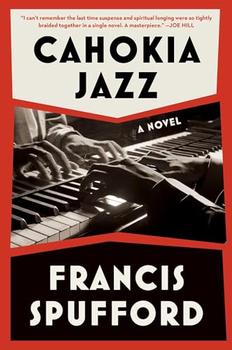
by Francis Spufford
Published 2024
From "one of the most original minds in contemporary literature" (Nick Hornby) the bestselling and award-winning author of Golden Hill delivers a noirish detective novel set in the 1920s that reimagines how American history would be different if, instead of being decimated, indigenous populations had thrived.

by Vu Tran
Published 2016
A thrilling and cinematic work of sophisticated suspense and haunting lyricism, set in motion by characters who can neither trust each other nor trust themselves.



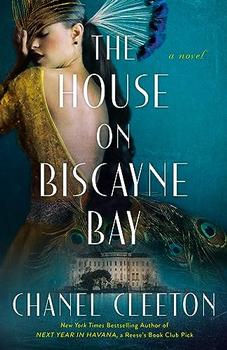
The House on Biscayne Bay
by Chanel Cleeton
As death stalks a gothic mansion in Miami, the lives of two women intertwine as the past and present collide.
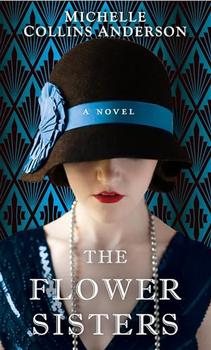
The Flower Sisters
by Michelle Collins Anderson
From the new Fannie Flagg of the Ozarks, a richly-woven story of family, forgiveness, and reinvention.
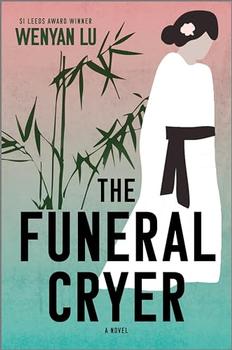
The Funeral Cryer by Wenyan Lu
Debut novelist Wenyan Lu brings us this witty yet profound story about one woman's midlife reawakening in contemporary rural China.
Your guide toexceptional books
BookBrowse seeks out and recommends the best in contemporary fiction and nonfiction—books that not only engage and entertain but also deepen our understanding of ourselves and the world around us.