Summary | Excerpt | Reading Guide | Reviews | Beyond the book | Read-Alikes | Genres & Themes | Author Bio
Critics' Opinion:
Readers' Opinion:
First Published:
Mar 2012, 240 pages
Paperback:
Nov 2012, 256 pages
 Book Reviewed by:
Morgan Macgregor
Buy This Book
The epigraph for Megan Mayhew Bergman's Birds of a Lesser Paradise says it all: "We will now discuss in a little more detail the Struggle for Existence." The quote comes from Charles Darwin, a figure that hovers over this collection like a storm cloud; threatening, beautiful, menacing. Close.
Bergman's stories feature women embattled, with themselves, their lovers, their parents, their politics, and with nature. They are, in many ways, hardened women, who speak with the hot blankness of a Lydia Davis character:
"You can keep the silver, he said. And the dining room set. Anything, really."
"I don't care, I said. That stuff only matters to women who need men."
The women, collectively, are in their 30s or older, newly single, soon-to-be-single, living by themselves, with pets, or with their aged parents. In all cases, they are unquestionably alone, seeking to solve the question of how to live. Not the general, modern-condition "how should one live his or her life?", but rather, how do these women - with their complicated and competing philosophies, their broken hearts and ticking biological clocks - live in this world, the one we're all slowly destroying by living in it. They are veterinarians, community garden owners, animal shelter volunteers, bird conservationists; they are women who want to do good. But their intentions get muddled when they ask themselves: how can you save the world and live in it? How can you want to need nothing, when all you need is to be wanted? How can you dedicate your life to nature without ignoring your own?
This may sound like an environmentalist's retake on the classic feminist "you can't have it all" conundrum, but Bergman's women are not the women torn between a career and children, and the stories serve more as comments on the perils and inevitabilities of personhood, not womanhood. That's not to say that her characters deny their femininity, but more that they rebel against it, reckon and reason with it and its changing shape, its inherent trade-offs.
So while all of the main characters in the collection are women, the stories themselves are decidedly "unfeminine". That's mostly because, even when wading into emotional waters, Bergman's characters are powered by a ruthless lack of sentimentalism. In "The Urban Coop," a woman who's worried that her partner is too old to impregnate her consults a doctor who suggests that in vitro might be a possibility: "Yeah, I thought. A ten-thousand-dollar, pain-in-the-ass possibility." She goes home and stares at the animals in her yard. "I'm sorry I eat all your children before they hatch, I said to the hens."
In "Every Vein a Tooth," a woman chooses to keep taking in sick animals rather than keep her boyfriend. "People always say: don't give up so easily on the things you love. But you can, and I did."
The mother in "Housewifely Arts": "My son is a forty-three-pound drama queen, a mercurial shrimp of a boy who knows many of the words to Andrew Lloyd Webber's oeuvre... The things my body has done to him, I think. Cancer genes, hay fever, high blood pressure, perhaps a fear of math - these are my gifts."
Bergman's characters may be "unfeminine," in some ways, but they also acknowledge the currency of beauty, the biological urge to have a baby, the need to feel, well, feminine. They just do it with a mordant awareness that saves them from cliché. The veterinarian in "Saving Face," whose face has been deformed by an accident in the operating room: "Once you'd been a pretty girl, Lila thought, you had to drag around your club-footed vanity for the rest of your life, watch it wane and suffer."
The alcoholic mother in "Another Story She Won't Believe": "I think there is a time in every woman's life, a time in her thirties, when she realizes she is past her prime. I'm not talking about the mind. Fuck the mind. The mind grows so sharp it becomes the problem, sees the problem, see it in men's eyes. I'm talking about the legs, and the breasts, and the smile that used to open doors. I'm talking about the half-drunk swagger that could pluck a man from the bar, any man."
Bergman's writing is so good, that any hint of banality stands out like a sore thumb. I found only one story giving in to convention and sentimentalism, and interestingly, it's the title story. "Birds of a Lesser Paradise" is by far the weakest in the collection (the only one I would call weak). In it, a
36-year-old single woman lives with her father in the North Carolina swamp, running bird-watching expeditions. Nothing works in this story: the father's quest to see the mythic ivory-billed woodpecker is not enough to drive the narrative, nor is the unfortunate cliché that the daughter has to let her father go in order to "let the world in." I knew what was going to happen before I finished the first page - a bad sign.
Conversely, the strongest story here, "Yesterday's Whales," encapsulates all of Bergman's themes with subtlety, restraint, and some incredibly beautiful writing. Lauren, whose boyfriend heads a population control organization, and with whom she has signed a "No Breeding Pledge," discovers she's pregnant. She retreats to her grandmother's old house, now empty, and there finds, to her surprise, that she feels connected to her grandmother and to her mother, "this rugged line of women with sharp ideas and heirloom casseroles, so in love with the world... I'd rolled my eyes then, at their motherhood propaganda. Now it made me want to cry."
Despite her dogged philosophies and resolute decisions, Lauren finds that she wants, very much and all of a sudden, "to be that exalted, complicated presence in someone else's life, the familiar body, the source of another's existence... I guess all the cerebral striving in the world couldn't combat the biological basics."
Bergman's stories, like the world, are full of danger, but she always finds a way to remind us that there's danger in here too, in us. In "Night Hunting," a woman moves back to her hometown with her mother, who's dying of cancer. The landscape is being overrun by coyotes, of which her mother is terrified due to a scuffle she once had with one."Lightning can't strike twice, I'd say, but then we'd both thought about the return of her cancer. The theory was bullshit."
I haven't read a collection this deeply affecting and, for lack of a better word, real, since Alan Heathcock's Volt, and before that, it had been a long time since a short story stunned me into submission with its humanity. Yes, humanity. Bergman's stories are swarming with nature - with oceans, wildlife, biology, the whole mess of planet Earth - but their real strength comes from how they're always able to distill it down, again and again, to us: our own, singular, one-shot human lives, and the people we share them with.
Birds of a Lesser Paradise reminds us that we can thrash and struggle against our biologies all we like, but ultimately, "What maniacs we are - sick with love, all of us."
 This review was originally published in The BookBrowse Review in March 2012, and has been updated for the
November 2012 edition.
Click here to go to this issue.
This review was originally published in The BookBrowse Review in March 2012, and has been updated for the
November 2012 edition.
Click here to go to this issue.

If you liked Birds of a Lesser Paradise, try these:
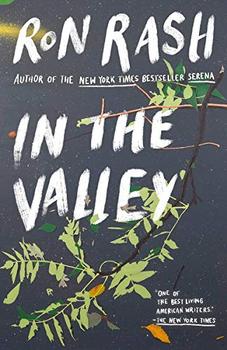
by Ron Rash
Published 2021
From bestselling and award-winning writer Ron Rash ("One of the great American authors at work today."--the New York Times) comes a collection of ten searing stories and the return of the villainess who propelled Serena to national acclaim, in a long-awaited novella.
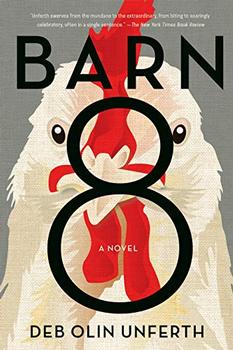
by Deb Olin Unferth
Published 2020
An unforgettably exuberant and potent novel by a writer at the height of her powers.

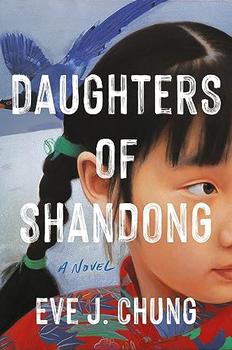
Daughters of Shandong
by Eve J. Chung
Eve J. Chung's debut novel recounts a family's flight to Taiwan during China's Communist revolution.
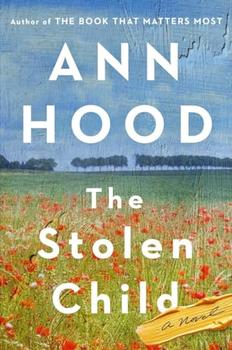
The Stolen Child
by Ann Hood
An unlikely duo ventures through France and Italy to solve the mystery of a child’s fate.
It is among the commonplaces of education that we often first cut off the living root and then try to replace its ...
Click Here to find out who said this, as well as discovering other famous literary quotes!
Your guide toexceptional books
BookBrowse seeks out and recommends the best in contemporary fiction and nonfiction—books that not only engage and entertain but also deepen our understanding of ourselves and the world around us.