
-
Your next favorite book
is waiting.
Summary | Excerpt | Reading Guide | Reviews | Beyond the book | Read-Alikes | Genres & Themes | Author Bio
A Novel
by Naomi Benaron Book Reviewed by:
Rwandans have a favorite saying: Imana yirwa ahandi igataha i Rwanda. "Wherever God spends the day, He comes home to sleep in Rwanda." For much of the early '90s though, as the country was torn apart by tensions and later genocide, this statement would have been hard to believe.
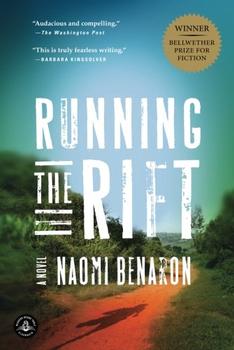
Naomi Benaron's incredible debut novel, Running the Rift, is set during one of the most tumultuous times in Rwanda's recent history. The ever-simmering tensions between the Hutu and the Tutsi exploded in full force in 1994 when President Habyarimana was killed (along with the president of neighboring Burundi) in a suspicious plane crash. Mistrust immediately fell on the RPF, the Rwandan Patriotic Front, mostly Tutsi refugees who had fled to Uganda during earlier clashes. The resulting genocide, which lasted more than 90 days, killed over 800,000 people - mostly Tutsi and moderate Hutus.
The fictional characters from Running the Rift are set squarely in the middle of this relatively recent turmoil and Benaron does an expert job at weaving their story against the tragic historical background. Central to the story is Jean Patrick Nkuba, who, as the book opens in 1984, is a ten-year-old Tutsi boy just coming to grips with his father's death in a car accident. Even at this early time, the tensions between Tutsi and Hutu bubble just under the surface. To afford her children some measure of safety, especially in the wake of a random act of violence targeted against her family, Jean Patrick's mother moves them to their uncle's home in the picturesque town of Cyangugu.
It is here, against the backdrop of the gorgeous Lake Kivu, that Jean Patrick comes of age and tries to realize his dreams of representing Rwanda in the 800-meter dash at the Olympics. Jean Patrick wins a scholarship to study at a prestigious boarding school, and early on "Coach" seeks him out as a star athlete with potential. As the violence slowly ramps up around him, Jean Patrick must struggle to stay focused on his goal, keep the family he loves back home in Cyangugu, and hold on to the girl he treasures - no easy task.
As the story progresses, Jean Patrick evolves from an idealist who, like his father, believed that all Hutu and Tutsi would find peace and harmony together, to a young man with more realistic expectations of how the world actually works. Benaron does a great job with this gradual character development as Jean Patrick grows up in the shadow of violence. Benaron is also adept at questioning certain preconceived notions about what Hutu and Tutsi look like - it is often said that the former are short and stocky while the Tutsi are fair-skinned and tall. Bea, Jean Patrick's girlfriend, defies this easy categorization.
Benaron, who has an unofficially-adopted son in Rwanda, is very familiar with the country, and it shows. The depiction of the countryside is gorgeous and the language used to describe the food (especially the urwagwa, banana beer) is delicious. Running the Rift also punctures the sometimes-naïve perceptions held by NGOs - the book shows that their black-and-white readings of complex political situations might not be correct or what is needed.
Running the Rift won the Bellwether Prize, an honor bestowed by author Barbara Kingsolver for an unpublished work that brings issues of social justice to the fore. In awarding the prize, Kingsolver notes that Running the Rift "engages the reader with complex political questions about ethnic animosity in Rwanda... it conveys the impossibility of remaining neutral within a climate of broad moral compromise - even for purportedly apolitical institutions like the Olympics." It is to Benaron's credit that she achieves this without overwhelming the reader with political facts. The explanations are tucked neatly into the story so that even the reader who is unfamiliar with the history behind the book will have a relatively easy time of it. There are moments, though, when all the names get confusing - but it never gets so bad as to lose its brisk pace.
In the end, there is some measure of closure to the story, and here too the writing shines. Most important, even though this novel's subject matter offers plenty of opportunities for gratuitous violence and melodrama, Benaron thankfully steers clear of both. Through much of Jean Patrick's training, Coach emphasizes pace - the key to running the 800-metre, we learn, is not to burn out early. Benaron, herself a competitive runner once, seems to have translated this lesson well to the pages of her debut novel - which turns out to be a precisely paced, taut read.
Most novels about serious and weighty topics are meant to be read because there is a moral imperative to do so. That Running the Rift is also an incredibly tight and well-written novel makes the argument that much more compelling.
 This review was originally published in The BookBrowse Review in January 2012, and has been updated for the
October 2012 edition.
Click here to go to this issue.
This review was originally published in The BookBrowse Review in January 2012, and has been updated for the
October 2012 edition.
Click here to go to this issue.

If you liked Running the Rift, try these:
by Elizabeth Weil, Clemantine Wamariya
Published 2019
A riveting story of dislocation, survival, and the power of stories to break or save us.
by Lisa Ko
Published 2018
Finalist for the 2017 National Book Award for Fiction.
Named a Best Book of 2017 by NPR, Entertainment Weekly, the Los Angeles Times, BuzzFeed, Bustle, and Electric Literature, Lisa Ko's debut novel is essential reading for our times.
by Jonny Steinberg
Published 2015
In January 1991, when civil war came to Mogadishu, two-thirds of the city's population fled. Among them was eight-year-old Asad Abdullahi.
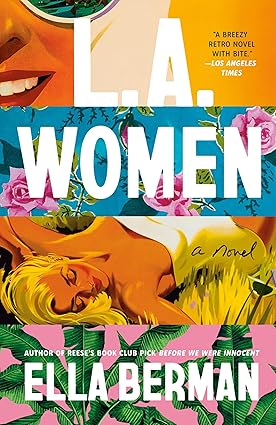
L.A. Women by Ella Berman
Two ambitious writers in 1960s LA face betrayal when one writes a novel based on the other's life.






Your guide toexceptional books
BookBrowse seeks out and recommends the best in contemporary fiction and nonfiction—books that not only engage and entertain but also deepen our understanding of ourselves and the world around us.

