Summary | Excerpt | Reading Guide | Reviews | Beyond the book | Read-Alikes | Genres & Themes | Author Bio
Critics' Opinion:
Readers' Opinion:
First Published:
Oct 2011, 448 pages
Paperback:
Aug 2012, 448 pages
 Book Reviewed by:
Jennifer G Wilder
Buy This Book
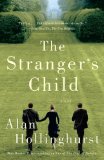
In the opening section of The Stranger's Child, Alan Hollinghurst jumps into the milieu of some of the greatest novels in English, the end of the dress-for-dinner era that came just before World War I. His fine and elegant writing seems to be more than an homage to novels such as Brideshead Revisited or Howard's End; the precision of his language allows Hollinghurst to tease out what his characters are actually thinking even as what comes out of their mouths is the proper, dining-room appropriate thing to say. The nuance he achieves seems at once realistic and modernistic - there are worlds of meaning hiding behind the most ordinary gestures. For example, in one interaction between young George Sawle and his Cambridge crush, the budding poet Cecil Valance, the two appear to be conventional school chums, but below the table they are engaged in a lusty tussle:
"Well, that's it, then," said Cecil. George sniggered and gazed with nervous admiration at his pondering face, above the high starched collar and lustrous black tie, the sparkle of his dress-studs in the candlelight, and felt a quick knock against his foot under the table. He gasped and cleared his throat but Cecil was turning with a bland smile to Mrs. Kalbeck, and then as Hubert started to say something idiotic George felt the sole of Cecil's shoe push against his ankle again quite hard, so that the secret mischief had something rougher in it, as often with Cecil, and after a few testing and self-conscious seconds George regretfully edged his foot out of the way.
Hollinghurst gives us the confusion of the moment and allows us to see each character feeling his way forward, full of uncertainty and misgivings. The chaos of the social interaction, wherein every character has a different preoccupation, is dizzying. It's only Cecil - the confident, virile, wealthy, poetic Cecil - whose mind is a closed book.
Cecil's affair with George is the primal tale at the heart of the novel, a narrative Garden of Eden, which - as years pass and the fact that he had relationships with men is lost and suppressed - the following generations yearn to recapture. The first section of the novel lays out who slept with whom and who knew what, and the rest of the novel (four more sections, spanning the years from the 1920s to the present day) sees the characters age (or die) and disperse. Readers are eyewitnesses to what really happened, and it's fascinating to watch as the story is fractured and lost - and partially recovered - as time passes.
There is a primary text, a poem entitled "Two Acres" that Cecil dashes off in George's sister Daphne's album. What a terrific novelistic feat Hollinghurst has performed - to give readers a poetic composition and then let us follow its rise and fall in the literary canon. At the moment of writing, the poem is full of inside jokes and ribald double-entendres related to Cecil's trysts with George. As the years pass, it is read as a love poem to Daphne, and then as a wistful memorial to the generation lost in WWI, and then as a comic example of the overwrought poetry of a long-forgotten age.
The Stranger's Child is, in some sense, a historical novel, but the big events of History with a capital H take place off stage. World War I occurs in the space between the first two sections, and World War II in the space after that. Then it's the sixties, and the world changes entirely. Historical transformations occur on the level of the individual and the family. For the gay men who are the main protagonists throughout, the cultural paradigm shifts are profound - the love affairs at the start of the book are deeply secret, and by the end there are gay marriages and even text-message dates.
Hollinghurst's project in this book is much larger than that of his scholarly characters who seek to unearth proof of homosexual relationships that took place during more oppressive times. There is a memento mori message here - time is fleeting, and even the most diligent scholarship can never resurrect the past. Important facts will be forgotten - crucial artifacts will be lost. Anyone who has ever worked at piecing together a family tree will relate profoundly to this messy truth. The character who ends up writing Cecil's biography (Paul Bryant) is a terrific comic creation - he's awkward, neurotic, self-absorbed, and he is every bit as red-blooded and complex as the people he writes about.
There is no easy way to communicate with the dead and get their testimony - although the characters in The Stranger's Child try everything from spiritualism to Queer Theory to do so.
Hollinghurst's sweeping, finely wrought novel is an argument for getting the details right, even in the face of an unrecoverable margin of error.
 This review was originally published in The BookBrowse Review in November 2011, and has been updated for the
September 2012 edition.
Click here to go to this issue.
This review was originally published in The BookBrowse Review in November 2011, and has been updated for the
September 2012 edition.
Click here to go to this issue.

If you liked The Stranger's Child, try these:
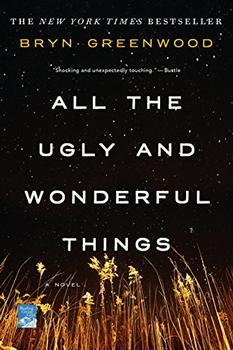
All the Ugly and Wonderful Things
by Bryn Greenwood
Published 2017
A beautiful and provocative love story between two unlikely people and the hard-won relationship that elevates them above the troubled Midwestern backdrop of their lives.
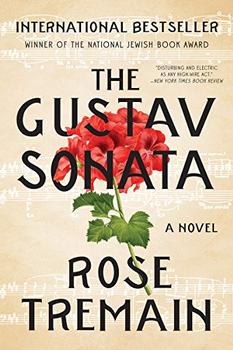
by Rose Tremain
Published 2017
A breathtakingly radiant story of an unlikely childhood friendship that survives the test of time.

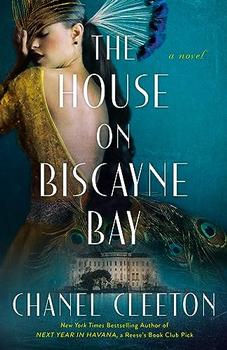
The House on Biscayne Bay
by Chanel Cleeton
As death stalks a gothic mansion in Miami, the lives of two women intertwine as the past and present collide.
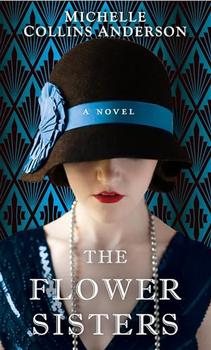
The Flower Sisters
by Michelle Collins Anderson
From the new Fannie Flagg of the Ozarks, a richly-woven story of family, forgiveness, and reinvention.

The Funeral Cryer by Wenyan Lu
Debut novelist Wenyan Lu brings us this witty yet profound story about one woman's midlife reawakening in contemporary rural China.
Your guide toexceptional books
BookBrowse seeks out and recommends the best in contemporary fiction and nonfiction—books that not only engage and entertain but also deepen our understanding of ourselves and the world around us.