Summary | Excerpt | Reviews | Beyond the book | Read-Alikes | Genres & Themes | Author Bio
Critics' Opinion:
Readers' Opinion:
First Published:
Sep 2011, 256 pages
Paperback:
Oct 2012, 256 pages
 Book Reviewed by:
Jennifer G Wilder
Buy This Book
Paul La Farge's Luminous Airplanes is itself a luminous book, an exquisitely polished small world of characters and emotions that captures a generation's coming of age through the perspective of one young man. La Farge's first-person narrator is a literary seeing eye whose name we never learn, but he belongs to the generation sometimes called Gen X, and his growing up occurs side-by-side with vertiginous changes in American culture. As a kid, the narrator learns to program in BASIC on one of the first home computers; as a young man, he finds a way to make his living in the world as a "content manager" - a line of work that seems strangely absurd and empty of content (even though the pay is good until the Silicon Valley bubble pops).
This technological evolution, along with the narrator's other struggles with family and romantic identity, read as true-to-life and symbolic in the same breath. The narrator drives from San Francisco to upstate New York to clean out his grandparents' home, and the revisiting of old childhood spaces blends with memory in a telescoping narrative that feels like a good simulacrum of the way a person constructs identity. It's a confusing and messy situation, and the past and the present are never free of each other. The young man shows up in his grandparents' small town in his ironic city clothes, a "burgundy leather jacket and thrift-store shirt with the monkey Curious George depicted performing various activities against a yellow background." Is this the attire of the hip and retro, or of the sad and lost?
La Farge has done a masterful job creating a world that is at once emotionally real and self-consciously literary on every page. The prose is sharp and beautiful, and the characters are so engaging they may lull the reader into thinking of Luminous Airplanes as a conventional novel. It isn't. At one point the narrator finds he doesn't want to read a book he's been toting around for months. "Reading a novel, especially a contemporary novel, with its small stock of characters and situations, felt like being stuffed into a sleeping bag head-first: it was warm and dark and there wasn't a lot of room to move around." But La Farge gives his readers plenty of space. The novel is as delicately constructed as a lyric poem - every detail is carefully connected by the finest of threads.
The story is at once a good yarn and a record of a moment in history that hasn't yet been thoroughly explored. I found the subject matter especially intense and revealing, as the narrator and I (and La Farge himself) are exactly the same age. Yet even as I was immersed in the story (as a story) I could hear the murmurs of literary conversations going on everywhere in the text. The novel is funny and loving and imaginative, and at every turn there is evidence of a keen and generous intelligence at work behind the scenes. This is a book that demands to be read again.
In this spirit, Paul La Farge achieves the masterstroke that allows the book to take off into the next chapter of American literary history; it turns out that the end of Luminous Airplanes is not the end after all. The novel continues in installments online (at www.luminousairplanes.com) along with evolving commentary from the narrator/writer and a special apparatus for browsing.
It's tempting to be skeptical about a novel's jump into hypertext - or as La Farge calls it, "immersive text." I'm as Luddite a reader as they come (Wouldn't it be nice to have more books hand printed by letterpress?), but Luminous Airplanes readies the reader for takeoff - the jump to the web fits with the themes and questions presented in the book. What role does technology have to play in our literary future? If anyone can engage this question in a way that is intelligent and experimental, rather than gimmicky, it's Paul La Farge. I expect to learn a great deal from him about how to find meaning in our new world of technology-based literature, as books come out from between their hardcovers. But what is between the covers of this book is satisfying enough - I hope that years from now when my grandchildren are in college trying to understand the zeitgeist of the end of the twentieth century, Luminous Airplanes is on the syllabus.
 This review was originally published in The BookBrowse Review in October 2011, and has been updated for the
October 2012 edition.
Click here to go to this issue.
This review was originally published in The BookBrowse Review in October 2011, and has been updated for the
October 2012 edition.
Click here to go to this issue.

If you liked Luminous Airplanes, try these:
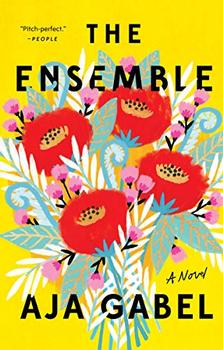
by Aja Gabel
Published 2019
The addictive novel about four young friends navigating a cutthroat world and their complex relationships with each other, as ambition, passion, and love intertwine over the course of their lives.
by Jennifer Egan
Published 2011
A Visit from the Goon Squad is a book about the interplay of time and music, about survival, about the stirrings and transformations set inexorably in motion by even the most passing conjunction of our fates. Sly, startling, exhilarating work from one of our boldest writers.



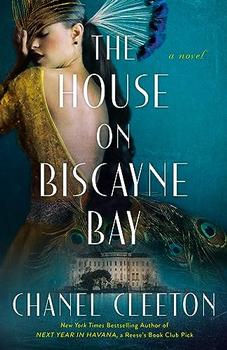
The House on Biscayne Bay
by Chanel Cleeton
As death stalks a gothic mansion in Miami, the lives of two women intertwine as the past and present collide.
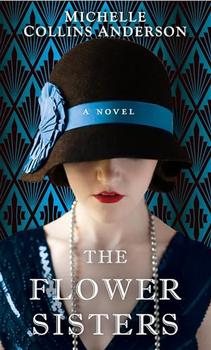
The Flower Sisters
by Michelle Collins Anderson
From the new Fannie Flagg of the Ozarks, a richly-woven story of family, forgiveness, and reinvention.
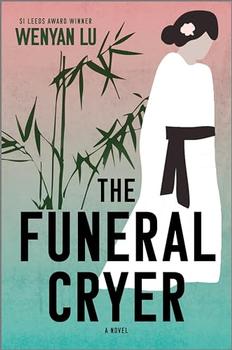
The Funeral Cryer by Wenyan Lu
Debut novelist Wenyan Lu brings us this witty yet profound story about one woman's midlife reawakening in contemporary rural China.
Your guide toexceptional books
BookBrowse seeks out and recommends the best in contemporary fiction and nonfiction—books that not only engage and entertain but also deepen our understanding of ourselves and the world around us.