
-
Your next favorite book
is waiting.
Summary | Excerpt | Reviews | Beyond the book | Read-Alikes | Genres & Themes | Author Bio
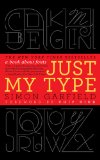
A Book About Fonts
by Simon Garfield Book Reviewed by:
If you think that fonts are not a big deal - that Calibri is just the same as Arial - consider this: it was 2009 when something went awry at the popular Swedish furniture company, IKEA. Sure the company still sold furniture and home accessories with interesting names such as Björken and Säter; the sleek cafeterias still dispensed the sinfully delicious Swedish meatballs with lingonberry sauce. What had gone horribly wrong in the eyes of many, however, was that IKEA had lost its soul. The 2010 store catalog used Verdana as its typeface dumping IKEA's old faithful, Futura. The font switcheroo sparked uproar in the design industry, and the company was seen as abandoning its particular brand of design chic in favor of something more drab and well, homogeneous.
In his entertaining and informative book, Just My Type: A Book About Fonts, Simon Garfield makes the case for typeface variety so eloquently that you begin to see the point of the IKEA font debacle. "The arguments showcased the classic battleground of font warfare: new type, old type; a pure intention versus an Evil Empire; an old company seen to be deserting its roots for financial gain; a supremely beautiful typeface battling against a supremely functional one," Garfield writes.
As its tagline describes, Just My Type is precisely that - a book about fonts and almost everything one could possibly want to know about them. Garfield's breezy writing serves up many entertaining trivia - the role of hand gloves in font design; which font is used in the signs for the television sitcom The Office (and why); how Gotham played a large part in President Barack Obama's election campaign; and how the look of the entire city of London was changed by one beautiful font.
Since each of the 22 chapters discusses a particular font (or two) and often its associated designer, the book can be read out of sequence and still make sense. At times, especially toward the end, the book can feel a little strained - as if Garfield were trying to cram all his research into the pages before time ran out.
Just My Type is not meant to be the definitive book about typefaces and fonts and it doesn't pretend to be. (Incidentally, Garfield clarifies that a font refers to the digital, computerized form of a particular typeface). For one thing, Garfield does not delve much into the history of typefaces and printing. Nor does he explain in detail how new typefaces are invented everyday - through the use of software programs such as Macromedia Fontographer.
What Just My Type does very well is focus on the human-interest stories and historical details that lie at the heart of font design. Did you know, for example, that the type designer Matthew Carter finds font anomalies in movies? The movie Chocolat was supposedly set in the 1950s in a sleepy French village. Yet the type used on one of the notices in the movie is set in ITC Benguiat, invented in the 1970s. By zeroing in on such quirky and entertaining nuggets, Garfield makes the book extremely readable and the world of fonts readily accessible.
One of the best chapters in Just My Type is devoted to explaining how fonts were specifically designed for highways. It is fascinating to learn that every detail was thought through: the impact of headlights and halation and the light-flooding effect, which meant that white-on-black letters should be slightly thinner than black-on-white. Particular research was conducted for night vision, poor visibility, and the needs of the elderly. One can be sure that the resultant fonts - Transport and Interstate - were designed specifically for legibility and speed reading on highways under all kinds of driving conditions.
In Just My Type, Jonathan Barnbook, creator of the Mason and Priori font families, is quoted as saying: "Typography truly reflects the whole of human life and it changes with each generation. It may well be the most direct visual representation of the tone of voice with which we express the spirit of the time." Simon Garfield's vastly entertaining book succeeds in showing us just how true that statement really is.
Additional Info
Readers who get converted into font geeks after reading this book can extend the curriculum beyond its pages. If a particular unknown font is nagging at you, you can identify it online at MyFonts.com in the WhatTheFont section. Equally fun, you can take an online quiz, What Type are You?. I tried my hand at it, answering four questions from a man who sounded like he was trying a Freud impression. It turns out my type is Universal and that I am "someone at peace with all things modern and get irritated with something old, sloppy and random." I am not sure how this squares with the fact that my favorite type for daily work is Times New Roman, voted "least favorite" in a poll of over 100 type designers - but I'll take it.
 This review was originally published in The BookBrowse Review in November 2011, and has been updated for the
September 2012 edition.
Click here to go to this issue.
This review was originally published in The BookBrowse Review in November 2011, and has been updated for the
September 2012 edition.
Click here to go to this issue.

If you liked Just My Type, try these:
by Simon Garfield
Published 2018
As managing time becomes the greatest challenge we face in our lives, this multi-layered history helps us tackle it in a sparkling new light.
by Michael Rosen
Published 2016
Michael Rosen takes you on an unforgettable adventure through the history of the alphabet in twenty-six vivid chapters, fizzing with personal anecdotes and fascinating facts
by Mary Roach
Published 2014
The irresistible, ever-curious, and always best-selling Mary Roach returns with a new adventure to the invisible realm we carry around inside.




Judge a man by his questions rather than by his answers.
Click Here to find out who said this, as well as discovering other famous literary quotes!

Can you name the title?
Test your book knowledge with our daily trivia challenge!
Your guide toexceptional books
BookBrowse seeks out and recommends the best in contemporary fiction and nonfiction—books that not only engage and entertain but also deepen our understanding of ourselves and the world around us.
