Summary | Excerpt | Reading Guide | Reviews | Beyond the book | Read-Alikes | Genres & Themes | Author Bio
The Astonishing Rise and Spectacular Fall of a Serial Imposter
by Mark Seal
Critics' Opinion:
Readers' Opinion:
First Published:
Jun 2011, 336 pages
Paperback:
Apr 2012, 336 pages
 Book Reviewed by:
Jo Perry
Buy This Book
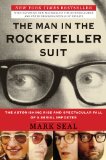
Mark Seal's absorbing biography about German con man Christian Karl Gerhartstreiter (aka Clark Rockefeller), The Man in the Rockefeller Suit, invites the reader to contemplate the power of a big lie, the fluidity of identity, and the limits of credulity. Seal succeeds in fleshing out a personality so unfixed that, at times, the man at the center of his narrative seems completely empty on the inside - save for a relentless drive toward personal wealth and social advancement.
Gerhartstreiter's remarkable ability to invent new personalities and to transform himself is fascinating, as is his absolute belief in each transformation. This commitment to each role may explain why, even after he's been outed by police as a fraud, his final and most impudent alias, Clark Rockefeller, seems to stick. He never drops the patrician accent or mannerisms, and, despite the prison clothes, he still strikes a strong resemblance to the real Nelson Rockefeller, donning large, dark-rimmed glasses.
As aggressive and audacious as the Wall Street investors he impersonated, this faux American blueblood is an astonishingly single-minded and efficient opportunist who manipulates strangers' smallest civilities and turns them into large, self-benefiting (and often expensive) favors: American tourists who give him a ride in Germany become his U.S. sponsors, a young woman he barely knows agrees to marry him so that he can become a permanent U.S. resident - the examples go on and on.
He watches film noir, studies Thurston Howell from the television show Gilligan's Island, learns to play golf, becomes a classical DJ, attends college, changes his name - from Christian Karl Gerhartstreiter to Chris Gerhart to Christopher Kenneth Gerhart - and he constantly revises his back-story: his father is an engineer, his mother is from South Africa; his father is an ambassador, his mother has cancer; his father is in the witness-protection program; his parents died in a car crash...
One brief incident demonstrates the effectiveness of his cons:
He tried on various names for size on his drive west, including Dr. Christopher Rider... He had the good fortune to meet a cardiologist in [Las Vegas], which was such a wonderful coincidence, he told the doctor, for he was a cardiologist too. He said he was moving to Las Vegas to set up a practice and was hoping to find an established physician whose practice he might join.
'Do you think we might be a good fit?' the young man asked.
Boy, is he ever. As Rockefeller's lies unfold, it's hard not to marvel at how easily he's conned his marks. Wealthy widows meet him in church then fall all over themselves to befriend and support the charming stranger, who, at this time, is known as Christopher Mountbatten Chichester, grandson and "poor relation" of Lord Mountbatten and producer of the TV series, The Prisoner.
Chichester's crested blazers, aristocratic accent (Thurston Howell again?), descriptions of a home in Switzerland, and fancy business cards are enough to convince people that he's for real. No one blinks at his old car, chronic cash shortage, or his bogus plan to move Chichester Cathedral, which he claims to own, brick by brick from England to San Marino.
More flamboyant lies - he's a physicist, a spy, a member of the Trilateral Commission - distinguish the rest of Rockefeller's "career." He moves into a San Marino guesthouse, cons the owner (whose family mysteriously disappears), then flees to the east coast where he borrows the identity of Christopher Crowe, producer of Alfred Hitchcock Presents, and procures several Wall Street jobs. Then finally he becomes Clark Rockefeller, a man whose Yale baseball cap, billion dollar art collection (though not one art dealer or artist friend seems to notice that the Rothkos are fake), and charming eccentricities land him a wife: the highly-educated and successful businesswoman Sandra Boss.
In the astounding events that follow, Seal chronicles how the dark side of Rockefeller's personality develops and ultimately leads to the unraveling of his most corrupt deeds, including the kidnapping of his own daughter and his connection to the suspicious disappearance of a couple in California twenty years prior.
The Man in the Rockefeller Suit reminds us that in America we're free to reinvent ourselves, to fantasize and to fib a little about who we are (change our hair color or eye color, or change our names) in order to become the person we wish we were. Perhaps it is this freedom, and the optimism that informs it, that makes it so easy for Rockefeller to lie and so easy for his victims to believe. Seal's narrative is a suspenseful series of unmaskings, but it also ends before confronting the final, perhaps unsolvable mystery: Who really lives inside Christian Gerhartstreiter?
 This review was originally published in The BookBrowse Review in June 2011, and has been updated for the
May 2012 edition.
Click here to go to this issue.
This review was originally published in The BookBrowse Review in June 2011, and has been updated for the
May 2012 edition.
Click here to go to this issue.

If you liked The Man in the Rockefeller Suit, try these:

by Sarah Weinman
Published 2023
From the author of The Real Lolita and editor of Unspeakable Acts, the astonishing story of a murderer who conned the people around him - including conservative thinker William F. Buckley - into helping set him free

by Tony Tetro, Giampiero Ambrosi
Published 2022
The world's most renowned art forger reveals the secrets behind his decades of painting like the masters - exposing an art world that is far more corrupt than we ever knew while providing an art history lesson wrapped in sex, drugs, and Caravaggio.






The Flower Sisters
by Michelle Collins Anderson
From the new Fannie Flagg of the Ozarks, a richly-woven story of family, forgiveness, and reinvention.
The House on Biscayne Bay
by Chanel Cleeton
As death stalks a gothic mansion in Miami, the lives of two women intertwine as the past and present collide.

The Funeral Cryer by Wenyan Lu
Debut novelist Wenyan Lu brings us this witty yet profound story about one woman's midlife reawakening in contemporary rural China.
Your guide toexceptional books
BookBrowse seeks out and recommends the best in contemporary fiction and nonfiction—books that not only engage and entertain but also deepen our understanding of ourselves and the world around us.