Summary | Excerpt | Reading Guide | Reviews | Beyond the book | Read-Alikes | Genres & Themes | Author Bio
Critics' Opinion:
Readers' Opinion:
First Published:
Aug 2010, 672 pages
Paperback:
Aug 2011, 672 pages
 Book Reviewed by:
Jennifer G Wilder
Buy This Book
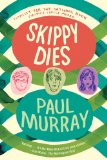
In the first section of Skippy Dies, Howard, a 28-year old teacher, plays with a new-fangled movie camera his girlfriend Halley has been given to review. The tiny camera comes equipped with "real-time image augmentation, meaning that your movies can be even more vivid than they are in real life." When Howard points the machine at Halley, he sees a rosy, saturated version of her. On screen, she seems more finely veined, more sympathetic, more desirable, more subtle. The "Intelligent Eye" technology in the movie camera is a fitting metaphor for Paul Murray's project in Skippy Dies - he points his lens at the hormone-addled field of a Catholic boys' school in Dublin, and what we see is a hyper-real landscape full of beautiful, loud color. The central characters in the novel are fourteen year-old boys - feral, foul-mouthed, steeped in confusion - and yet they come across on the page as exquisite and delicate specimens of humanity. Even the bad boys are sympathetic and gorgeous. They make you want to reach out and hug them (in a maternal way) - to feed them something nourishing even as you unplug their computers and hide their cell phones.
With a masterful sleight of hand, Paul Murray has turned adolescence into a magical realist wonderland. This isn't Harry Potter, however - these kids are dealing with porn and drugs and lots of other heavy-duty reality. Murray navigates freely through multiple points of view, conveying the omnivorous flexibility of the boys' mental landscape and the way they exist as a sort of collective consciousness. There are individual stories here (Skippy's, Ruprecht's, Carl's), but there is also a fluid group experience going on, as if the school boys themselves are unsure of where their boundaries lie. Their thoughts sift through a hash of disparate material, giving comparable weight to school work (ecology, Irish mythology) and video games, parents and pop singers. They are starting to realize that life is not what they imagined. "You spend your childhood watching TV," the boys reflect, "assuming that at some point in the future everything you see there will one day happen to you: that you will win a Formula One race, hop a train, foil a group of terrorists… Then you start secondary school and suddenly everyone's asking you about your career plans and your long-term goals... Gradually the awful truth dawns on you: that Santa Claus was just the tip of the iceberg." The boys have moved on from TV to become steeped in more complex technologies - text messages sent to girls' cell phones are of a piece with computer-generated missives to extra-terrestrials. Sexual longings are not vague, as these boys have the internet to provide them with explicit details. Video games are realer than real.
The adults in the novel play the role of reality clamping down on the boys. Some are comic, like Howard the teacher, who is himself a grown-up Seabrook grad. Howard is wimpy and confused, and his pallid home life reads like a watered-down Nick Hornby novel. Howard's colleagues at Seabrook are flat and prosaic compared to the boys. There's one tragic-comic scene where the school counselor literally can't hear what Skippy is saying to him because he's been out for a couple of weeks having his ears irrigated. Gallstones are mentioned a lot, and other middle-age infirmities. The Catholic order which founded the school is itself dying out, and the old religious strictness and fear of hellfire has shrunk to a handful of caricatured Paraclete fathers skulking about. Grown-ups are implicated in everything that goes wrong by their very mediocrity - they fail to step up to the plate; they do not pay attention to the right things. Money motivates them more than anything else.
Skippy Dies is structured in three books titled "Hopeland," "Heartland," and "Ghostland." The length of the novel compared to the amount of time it covers means that the pace is slow, and I found it took me about a hundred pages to adjust my expectations and get in the groove of the project. Stylistically, Murray prefers boisterous excess to pared-down intensity. The first two books cover the months that lead up to the eponymous event (Skippy's death is described in an opening prologue), and the third book takes up the aftermath. There are flaws here - the third book in particular begins to seem sensationalist as it heaps disaster on top of tragedy. I also began to wonder about the way the female characters come out - the girls here seem inscrutable not just to the boys, but to the novel. We're allowed brief forays into the female point-of-view through the beautiful Lori from the girls' school next door (short for Lorelei, a goddess in Scandinavian mythology, see "White Goddess" in the sidebar), but they're not entirely convincing.
In 2010, Skippy Dies was long-listed for the Man Booker Prize, short-listed for the Costa Award and was a finalist for the National Book Critics Circle Award - which underscores the fact that it is more than a comic entertainment or a lurid satire (as some of the book-jacket PR would lead you to think). I should say that before I began to discern flaws in the book, I had already entered deeply into it, so that my criticisms were in dialog with the themes and agendas of the novel itself. The technicolor picture Skippy Dies paints of adolescence is so engaging that by the time I made it to "Ghostland" I had already drunk the proverbial Kool-aid - the spiked punch at the Hop - and was ready to follow Paul Murray anywhere.
 This review was originally published in The BookBrowse Review in September 2010, and has been updated for the
September 2011 edition.
Click here to go to this issue.
This review was originally published in The BookBrowse Review in September 2010, and has been updated for the
September 2011 edition.
Click here to go to this issue.

If you liked Skippy Dies, try these:
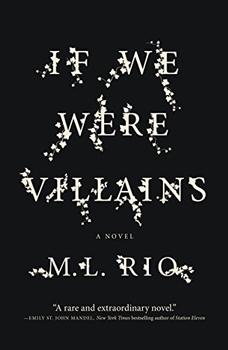
by M L. Rio
Published 2018
Intelligent, thrilling, and richly detailed, If We Were Villains is a captivating story of the enduring power and passion of words.

The Twelve Lives of Samuel Hawley
by Hannah Tinti
Published 2018
A mesmerizing father-daughter epic that explores what it means to be a hero.


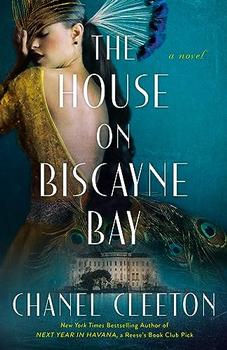
The House on Biscayne Bay
by Chanel Cleeton
As death stalks a gothic mansion in Miami, the lives of two women intertwine as the past and present collide.
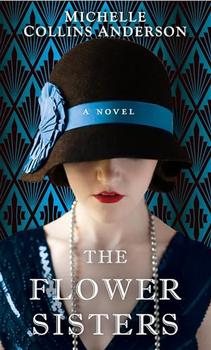
The Flower Sisters
by Michelle Collins Anderson
From the new Fannie Flagg of the Ozarks, a richly-woven story of family, forgiveness, and reinvention.
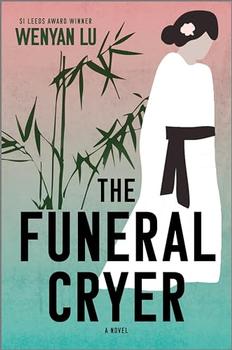
The Funeral Cryer by Wenyan Lu
Debut novelist Wenyan Lu brings us this witty yet profound story about one woman's midlife reawakening in contemporary rural China.
Your guide toexceptional books
BookBrowse seeks out and recommends the best in contemporary fiction and nonfiction—books that not only engage and entertain but also deepen our understanding of ourselves and the world around us.