Summary | Excerpt | Reviews | Beyond the book | Read-Alikes | Genres & Themes | Author Bio
Critics' Opinion:
Readers' Opinion:
First Published:
Jun 2010, 304 pages
Paperback:
Jun 2011, 304 pages
 Book Reviewed by:
Jo Perry
Buy This Book
Nine Lives is a stunning, affecting study of human aspiration and goodness. But despite the jacket blurbs, this isn't really "travel writing." As Dalrymple moves through India's "sacred topography," he assembles the biographies of nine people whose lives intersect with the divine. Although contemporary India is always present (a shaman listens to a soccer game on a transistor radio from his hut on a bone-strewn cremation plot), Nine Lives immerses the reader in an India of "sacred time" where the contemporary meets the times, gods are present in nature - and art, song, wandering, military service - even prostitution - express spiritual striving, devotion, humility, love and hope.
The nine stories are surprising, shocking, grotesque, lovely, and supported by pertinent and interesting history and background information (literacy erodes the capacity to memorize epic poetry.). Dalrymple shrewdly fixes his gaze upon his pilgrims, bards, dancers, witches, and artists instead of his own experiences or ideas. And recording his subjects' stories, Dalrymple asks the questions I wanted answered: Does a naked ash-smeared pilgrim with an MBA ever regret quitting his job as a sales manager at Kelvinator; how does it feel when an untouchable dalit becomes "an omnipotent deity" worshipped by Brahmins; or what it actually means to be a holy man or a Jain nun, or a mystic, seeking salvation on the roads of modern India. We learn the details--how much is eaten or not eaten, how it feels to abandon family, friends and village and set off with nothing except a desire to become a holy minstrel, what it's like to stop eating and "live on air."
Most memorable of the nine are holy dancer Hari Das; illiterate bard Mohan Bhopa, and Jain nun Mataji, "a tiny, slender barefoot figure… with a pot of water made from coconut shell in one hand and a peacock fan in another. As she climbed, she gently wiped each step with the fan in order to make sure she didn't stand on, hurt or kill a single living creature..."
Mataji has striven to, "shed [her] last attachments in this illusory world," but she cannot shake the love she feels for fellow nun Prayogamati, who, ill with tuberculosis took her own life through sallekhana a ritual fast. When Dalrymple asks if Prayogami committed suicide, Mataji corrects him: "Suicide is… the result of despair. But sallekhana is… an expression of hope… when you embrace sallekhana you are embracing a whole new life--it's no more than going through from one room to another." Then Mataji's reveals that she has begun her own fast-until-death. Has Mataji chosen to die to meet her beloved friend in future life?
"…who knows whether we will meet again? And if we do meet, in our new bodies, who is to say that we will recognize each other?"
The divine is less uncertain for Hari Das who, as a theyyam dancer, depends on the gods to take over his mind and body on schedule. For most of the year Hari Das is an untouchable well-digger and prison guard. But when Hari Das applies the wildly colored face paint and huge, elaborate god-costume, "The god comes alive and takes over… [and his] being is divine."
Bard and shaman Mohan Bhopa summons the sacred through his recitation of a 4,000 line poem—which takes five 8 hour all-night performances to complete. Mohan performs his epic before a narrative painting called a phad, which is much more than an illustration to the story. The phad is a "portable temple," "a crossing place from the human to the divine…" The gods live in the poem and in the jewel-toned phad, just as Dalrymple's nine mystics come to life through his rich, precise, and otherworldly narrative. I wish, though, Dalrymple had included photographs. Readers like me who are unfamiliar with India cannot possibly imagine all of the places or people even though he describes them so well.
 This review was originally published in The BookBrowse Review in July 2010, and has been updated for the
August 2011 edition.
Click here to go to this issue.
This review was originally published in The BookBrowse Review in July 2010, and has been updated for the
August 2011 edition.
Click here to go to this issue.

If you liked Nine Lives, try these:

by Bruce Kirkby
Published 2022
A warm and unforgettable portrait of a family letting go of the known world to encounter an unfamiliar one filled with rich possibilities and new understandings.
by Gary Krist
Published 2015
From bestselling author Gary Krist, a vibrant and immersive account of New Orleans' other civil war, at a time when commercialized vice, jazz culture, and endemic crime defined the battlegrounds of the Crescent City

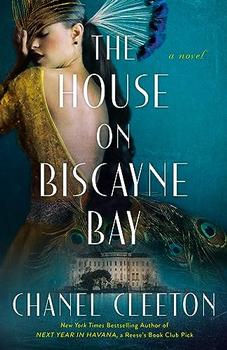
The House on Biscayne Bay
by Chanel Cleeton
As death stalks a gothic mansion in Miami, the lives of two women intertwine as the past and present collide.
The Flower Sisters
by Michelle Collins Anderson
From the new Fannie Flagg of the Ozarks, a richly-woven story of family, forgiveness, and reinvention.

The Funeral Cryer by Wenyan Lu
Debut novelist Wenyan Lu brings us this witty yet profound story about one woman's midlife reawakening in contemporary rural China.
Your guide toexceptional books
BookBrowse seeks out and recommends the best in contemporary fiction and nonfiction—books that not only engage and entertain but also deepen our understanding of ourselves and the world around us.