Summary | Excerpt | Reading Guide | Reviews | Beyond the book | Read-Alikes | Genres & Themes | Author Bio
Critics' Opinion:
Readers' Opinion:
First Published:
Jun 2010, 496 pages
Paperback:
Mar 2011, 512 pages
 Book Reviewed by:
Amy Reading
Buy This Book
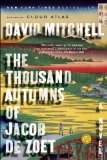
The Thousand Autumns of Jacob de Zoet is so unbelievably good that as soon as I started reading it, I grew anxious about how to convey its brilliance without resorting to overused words like, well, "brilliance." I'll do my best to produce a discerning review, but all I really want to say is: for the love of story, read this book!
This is one of those books whose subject matter is irrelevant, because it is so engrossing and self-sufficient that it submerses you in itself, no context or justification needed. Mitchell has resurrected a finely observed world of perfect details matched with bold, sweeping action. It is that rare thing, a deeply serious adventure novel. Mitchell earned my fealty right away, and I gave myself over to the intricate tale of Dutch-Japanese trade relations at the turn of the nineteenth century for the sheer pleasure of his over-the-top characters, engaged in the dire business of enacting themselves.
And oh! how they do talk of themselves. The very ripest pleasure of the book is the dialogue. My favorite line has got to be this: "I am more than six hundred years old. You shall die, in minutes...". But Mitchell is rarely so pithy. His characters lengthily unfurl their biographies to one another in astonishing monologues too long to quote here with justice. Here's the very beginning of how the ne'er-do-well Arie Grote introduces himself to Jacob de Zoet: "Like my hat, do you? Boa Constrictor, this was, in the jungles of Ternate, what slunk one night into my hut what I shared with my three native maids. My first thought was, well one of my bed-mates was wakin' me gentle to toast my beans, eh? But no no no, there's this tightenin' and my lungs're squeezed tight an' three of my ribs go pop! snap! crack! an' by the light o'the Southern Cross, eh, I see him gazin' into my bulgin' eyes—an' that, Mr de Z., was the squeezy bugger's downfall." The novel is full of such narrative set-pieces, ridiculously gratifying to read.
Mitchell's characters cheat each other at cards and Go. They steal from their employers. They say absolutely nothing in courtly diplomatic rituals. They lie and scheme and secrete, for in the tightly closed world of the Dutch trading post in Nagasaki (see sidebar), nothing is how it appears and each person advances his or her agenda from behind a carefully designed mask. A major part of the novel's success comes from this perfect mixture of antique setting and modern character development.
And that is, perhaps, the very outermost layer of the book's many embedded themes. The novel's subject matter is hugely ambitious and seems to ripple outward in importance the longer it is contemplated. It begins with a story about a Dutch trader who falls in love with a Japanese midwife, but it soon reaches out to the tensions of east meets west, the costs of economic development, and the pressure that power puts upon personality. Mitchell has chosen for his time and setting a loaded moment when the modern individual came into being at the intersection of capitalist networks of trade. The literary theorist Georges Gusdorf hypothesized that autobiography was born when the Venetians learned how to manufacture silver oxide mirrors, which began to be widely traded in the seventeenth century. Seventy pages into The Thousand Autumns, Mitchell sends an earthquake to rumble under the Dutch warehouse and shatter crates full of Venetian mirrors. "Silver is more truth," remarks a Japanese abbot as he stands among the wreckage, "than copper mirrors of Japan. But truth is easy to break." Inscribed in this shard of a scene is a metaphor for the opacity of character and the fracturing of perspective within an adversarial trade relationship.
David Mitchell has made his name as an experimental writer in books like Ghostwritten and Cloud Atlas. For this book, he has toned down the literary pyrotechnics, limiting himself solely to changing narrative perspectives between sections and expecting the reader to catch up with the shift. Still, it is not an easy book to read, with its dozens of characters and the author's high-minded refusal to explain what you'll learn by peering around the world he has made. But the book is infinitely worth the grip you must exert to hold it all in your mind, and if you like The Thousand Autumns, do read Cloud Atlas. David Mitchell can put his stylus down on any point on the globe at any moment in history (or the future) and effortlessly write it into being.
The Thousand Autumns has received near-unanimous praise from its British reviewers, and all of them mention Mitchell's previous two Booker nominations, as if rendering inevitable a third one. The Thousand Autumns eminently deserves such a prize, but truly the novel is a gift: a long, transporting tale that returns you to yourself far richer that when you left.
Interesting Link
A Q&A with David Mitchell about The Thousand Autumns at Powells.
 This review was originally published in The BookBrowse Review in July 2010, and has been updated for the
March 2011 edition.
Click here to go to this issue.
This review was originally published in The BookBrowse Review in July 2010, and has been updated for the
March 2011 edition.
Click here to go to this issue.

If you liked The Thousand Autumns of Jacob de Zoet, try these:
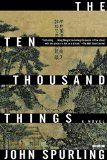
by John Spurling
Published 2015
A novel of fated meetings, grand battles, and riveting drama, and in its seamless fusion of the epic and the intimate, it achieves a truly singular beauty that deserves to be compared to the classic Chinese novels that inspired it.
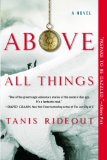
by Tanis Rideout
Published 2014
"Tell me the story of Everest," she said, a fervent smile sweeping across her face, creasing the corners of her eyes. "Tell me about this mountain that's stealing you away from me."

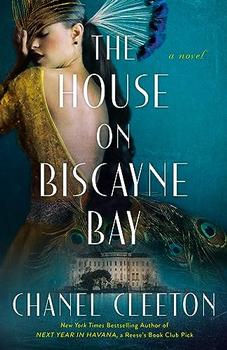
The House on Biscayne Bay
by Chanel Cleeton
As death stalks a gothic mansion in Miami, the lives of two women intertwine as the past and present collide.
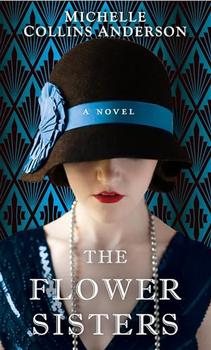
The Flower Sisters
by Michelle Collins Anderson
From the new Fannie Flagg of the Ozarks, a richly-woven story of family, forgiveness, and reinvention.
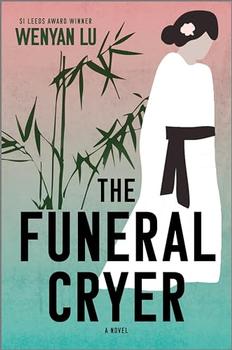
The Funeral Cryer by Wenyan Lu
Debut novelist Wenyan Lu brings us this witty yet profound story about one woman's midlife reawakening in contemporary rural China.
Your guide toexceptional books
BookBrowse seeks out and recommends the best in contemporary fiction and nonfiction—books that not only engage and entertain but also deepen our understanding of ourselves and the world around us.