Summary | Excerpt | Reading Guide | Discuss | Reviews | Beyond the book | Read-Alikes | Genres & Themes | Author Bio
Critics' Opinion:
Readers' Opinion:
First Published:
Feb 2010, 368 pages
Paperback:
Mar 2011, 400 pages
 Book Reviewed by:
Marnie Colton
Buy This Book
Working on the Johns Hopkins medical campus in East Baltimore, I've found it impossible to remain unaware of tensions between the hospital and the neighborhood. While Hopkins has a world-renowned reputation for excellence in both research and medical care, it also has sown the seeds of mistrust in locals, some of whom believe that the hospital exploits the black families that live nearby. In one fascinating chapter of The Immortal Life, "Night Doctors," Rebecca Skloot relates some of these urban legends, offering the testimony of a relative of Henrietta Lacks: "'I'm telling you, I lived here in the fifties when they got Henrietta, and we weren't allowed to go anywhere near Hopkins. When it got dark and we were young, we had to be on the steps, or Hopkins might get us.'" As recently as the 1990s, residents brought lawsuits against Hopkins for failing to disclose high lead levels in homes that the institution had rented to families participating in a lead abatement study. It is Henrietta Lacks's experience, however, that best exemplifies the intertwining of race, poverty, women's health, informed consent, and treatment modalities not only at Hopkins but also nationwide, making it the perfect mix of human interest story and scientific investigation.
Skloot strikes a tricky balance between inserting herself into the narrative and stepping back to let the Lacks family, the heart and soul of the book, tell their stories. For the most part she succeeds. Encountering a wall of resistance from Henrietta's sons, Skloot sets out to contact their sister, Deborah, a simultaneously wary and welcoming woman who has been exploited by previous writers and curiosity-seekers with dubious motives. The two forge a close relationship despite the great differences in their ethnic and cultural backgrounds, with Deborah often accompanying Skloot on her research travels.
One of the most moving segments occurs when Skloot arranges for Deborah and her troubled brother Zakariyya to visit the Hopkins laboratory of Christoph Lengauer, an Austrian cancer researcher who shows the Lacks siblings their mother's cells under the microscope.  Lengauer is the first scientist to express empathy with the family's fears as well as anger about how history has forgotten Henrietta, echoing the theme of the book when he says, "'Whenever we read books about science, it's always HeLa this and HeLa that. Some people know those are the initials of a person, but they don't know who that person is. That's important history.'"
Just as Skloot brings dignity to the individuals who make scientific investigation possible, she also expertly lays out the pros and cons of the current tissue research debate in her "Afterword." This complex issue has valid points on both sides: tissue-rights advocates maintain that patients who undergo diagnostic procedures should be able to determine how their tissues can be used; at the same time, many scientists contend that research will suffer if patients have such control over their "'bits and pieces,'" as Harvard University vice provost David Korn deems the tissues taken from these sorts of procedures. (Informed consent is required from patients who are specifically donating tissues for research but not for patients whose tissues are stored after procedures like biopsies and appendectomies.) So far, the courts have ruled in favor of the greater good of science at what some see as an intolerable cost to individual rights. Momentum is growing, however, for doctors and scientists to more readily share information about what they might do with the byproducts of routine medical tests and operations. We have already made great strides since the days when patients took their doctors' word as law and felt too humbled to ask questions; perhaps, Skloot suggests, becoming educated on bioethics will help people better understand the ramifications of the medical forms that they sign and the sacrifices that they might need to make on behalf of scientific research. Though it sometimes veers into melodrama at the expense of a more nuanced approach, The Immortal Life of Henrietta Lacks makes an engaging introduction to these issues, one that hooks the reader with its emphasis on the real people behind the controversy.
 This review was originally published in The BookBrowse Review in March 2010, and has been updated for the
March 2011 edition.
Click here to go to this issue.
This review was originally published in The BookBrowse Review in March 2010, and has been updated for the
March 2011 edition.
Click here to go to this issue.

If you liked The Immortal Life of Henrietta Lacks, try these:
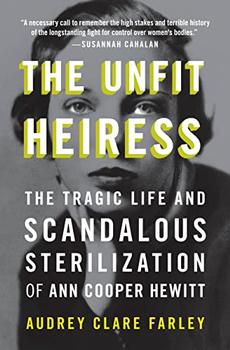
by Audrey Farley
Published 2023
For readers of The Immortal Life of Henrietta Lacks and The Phantom of Fifth Avenue, a page-turning drama of fortunes, eugenics and women's reproductive rights framed by the sordid court battle between Ann Cooper Hewitt and her socialite mother.

by Dolen Perkins-Valdez
Published 2023
Inspired by true events that rocked the nation, a profoundly moving novel about a Black nurse in post-segregation Alabama who blows the whistle on a terrible wrong done to her patients, from the New York Times bestselling author of Wench.



The House on Biscayne Bay
by Chanel Cleeton
As death stalks a gothic mansion in Miami, the lives of two women intertwine as the past and present collide.
The Flower Sisters
by Michelle Collins Anderson
From the new Fannie Flagg of the Ozarks, a richly-woven story of family, forgiveness, and reinvention.
The Funeral Cryer by Wenyan Lu
Debut novelist Wenyan Lu brings us this witty yet profound story about one woman's midlife reawakening in contemporary rural China.
Your guide toexceptional books
BookBrowse seeks out and recommends the best in contemporary fiction and nonfiction—books that not only engage and entertain but also deepen our understanding of ourselves and the world around us.