Critics' Opinion:
Readers' Opinion:
First Published:
Aug 2008, 272 pages
Paperback:
Aug 2009, 272 pages
 Book Reviewed by:
Donna Chavez
Buy This Book
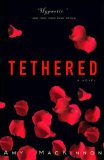
Tethered is the first book in recent memory that I
absolutely could not read fast enough to see how it comes
out. The book is deceptive. Is it a mystery? Is it a
literary novel? At first it seems to be a rather
interesting, if uncomplicated, story about a young woman,
Clara Marsh, who works in a funeral home as an undertaker;
assistant to the funeral director, Linus Bartholomew. She's
had a rather difficult life – orphaned at an early age then
raised by an overly strict Bible-thumping grandmother – thus
she is pretty much a loner. So when she encounters a little
girl called Trecie in one of the mourning rooms I was
expecting a story about how Clara begins to relate to the
youngster and eventually overcomes her inability to connect
with others. Boy was I wrong.
The first thing that becomes abundantly clear is just how
damaged Clara is. She is so much more than simply a person
who keeps to herself. This is a woman who has perfected the
art of isolation to the extent that she is unable to even
bring herself to hug or return the affection of Linus and
his wife Alma who look upon her as their own daughter.
Indeed, far from identifying with Trecie, Clara has bonded
with a dead girl -- an unidentified child who was found
brutally murdered several years ago and whose grave she
visits regularly. She is unsympathetically untouched by the
mystery surrounding that child's death although it is the
primary focus of police detective Mike Sullivan and the rest
of the community. In so many ways she seems perfectly suited
to the downstairs/backroom nature of her profession. When
called upon to pick up a body Clara wants nothing to do with
the family, desiring only to dispatch the rather grim and
certainly gruesome clinical responsibilities of her job with
as little live human contact as possible.
On the other hand, in an apparent anomaly, in her spare time
Clara toils in the magnificent greenhouse that is attached
to her home. A place of indescribable beauty, it is a lush
refuge, a vibrant sanctuary where she cultivates row upon
row of thriving flowers. She knows each flower by name and
by its meaning – Shasta daisies/innocence,
chrysanthemums/cheerfulness, etc. – and thoughtfully selects
flowers appropriately suited to the deceased, then
discreetly tucks a bouquet in each casket. What's more, as
Trecie makes herself more of a presence in Clara's life –
both Clara and Trecie suffer from the same mental illness:
trichotillomania (an irresistible urge to pull out their
hair) -- she becomes torn between remaining aloof from
others and trying to intervene in this troubled child's
life. Does she remain tethered to and by her solitude or
does she allow herself to walk among and interact with
others? Truly, in Clara, MacKinnon has woven a character so
intricate and complex, yet the bits and pieces we glean
about her past offer a plausible foundation for her
"quirks."
However, I kept wondering throughout if Clara's assessment
of the world around her was to be trusted. Is she
sufficiently disconnected from the real world that it would
render her narration faulty? Or is she, like Humbert Humbert
in Nabokov's Lolita, an unreliable narrator putting
so much of her own self-serving slant on events that the
reader never really sees the facts? This, as much as
anything, held my interest because MacKinnon does a stand up
job of casting just enough doubt about Clara's mental
soundness via her interaction with the other characters that
it kept me guessing as to what was really going on. I still
can't say whether Tethered should be categorized as a
mystery or a literary novel but what I do know is that with
her stupendous prose and intricate characterizations
MacKinnon has penned a winner.
 This review was originally published in August 2008, and has been updated for the
August 2009 paperback release.
Click here to go to this issue.
This review was originally published in August 2008, and has been updated for the
August 2009 paperback release.
Click here to go to this issue.
Clara has such a detached attitude toward the more clinical aspects of her job as undertaker – removing organs, sewing the mouth shut, applying makeup – that her description of these tasks seems no different than a fishmonger discussing the gutting and filleting of salmon. And MacKinnon includes enough subtle hints as to the danger and toxicity of the chemicals used in cadaver preparation that one might pause before considering disposition of one's – or a loved one's -- earthly remains. Additionally, there is the casket to think about and the fact that there may be more bodies to bury in Clara's community cemetery than that plot of hallowed ground can hold. It all leads one to ask, is this really the best and most environmentally conscientious way to handle post-life leavings?
In his book (published in paperback in December 2008) Grave Matters: A Journey through the Modern Funeral Industry to a Natural Way of Burial Mark
Harris follows the final resting place decisions of a number of people who opted for a variety of alternative means of dispatching their mortal vestiges. Harris, who is I believe the son of an undertaker, is an environmental journalist who advocates for green burial.
First, let me caution that his chapters on traditional embalming and burial are not for the faint of heart. They contain candidly graphic descriptions of the procedures from beginning to steamy end, including the process of organic decomposition and the leaching of toxic embalming chemicals into the soil. Once past that, however, there follow a number of interesting and environmentally sensitive choices, some are pricey but many are cost-effective.
Cremation may be the most obvious and popular choice. However, Harris points out that the smoke is a pollutant too. So another option might be, say, a backyard burial. In several states, it turns out, there is no law preventing burying a person's remains in one's own backyard. No casket is required and only permission from the state, city or county is necessary. Of course, it would be prudent to warn a real estate agent before selling one's home that granny has been laid to rest under the sugar maple. Some other, more creative, means of cadaver disposition he discusses include burial at sea, inclusion in a coral reef (my favorite) and "natural burial," in a shroud placed in a pre-dedicated state or privately-owned park. All options that Harris describes include a list of costs, laws to be aware of and resources.
Of course, one can always donate one's body, or parts thereof, to science. Which, sad to say, brings its own set of caveats. Accordingly, one might wish to read Annie Cheney's Body Brokers: Inside America's Underground Trade in Human Remains before making that decision.
This review was originally published in August 2008, and has been updated for the
August 2009 paperback release.
Click here to go to this issue.
Your guide toexceptional books
BookBrowse seeks out and recommends the best in contemporary fiction and nonfiction—books that not only engage and entertain but also deepen our understanding of ourselves and the world around us.
