Summary | Excerpt | Reading Guide | Reviews | Beyond the Book | Readalikes | Genres & Themes | Author Bio
Critics' Opinion:
Readers' Opinion:
First Published:
Apr 2005, 320 pages
Paperback:
Mar 2006, 304 pages
 Book Reviewed by:
BookBrowse Review Team
Buy This Book

Excerpt
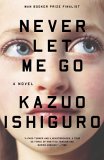
Never Let Me Go
My name is Kathy H. I'm thirty-one years old, and I've been a carer now for
over eleven years. That sounds long enough, I know, but actually they want me to
go on for another eight months, until the end of this year. That'll make it
almost exactly twelve years. Now I know my being a carer so long isn't
necessarily because they think I'm fantastic at what I do. There are some really
good carers who've been told to stop after just two or three years. And I can
think of one carer at least who went on for all of fourteen years despite being
a complete waste of space. So I'm not trying to boast. But then I do know for a
fact they've been pleased with my work, and by and large, I have too. My donors
have always tended to do much better than expected. Their recovery times have
been impressive, and hardly any of them have been classified as "agitated," even
before fourth donation. Okay, maybe I am boasting now. But it means a lot to me,
being able to do my work well, especially that bit about my donors staying "calm." I've developed a kind of instinct around donors. I know when to hang
around and comfort them, when to leave them to themselves; when to listen to
everything they have to say, and when just to shrug and tell them to snap out of
it.
Anyway, I'm not making any big claims for myself. I know carers, working now,
who are just as good and don't get half the credit. If you're one of them, I can
understand how you might get resentful—about my bedsit, my car, above all, the
way I get to pick and choose who I look after. And I'm a Hailsham student—which
is enough by itself sometimes to get people's backs up. Kathy H., they say, she
gets to pick and choose, and she always chooses her own kind: people from
Hailsham, or one of the other privileged estates. No wonder she has a great
record. I've heard it said enough, so I'm sure you've heard it plenty more, and
maybe there's something in it. But I'm not the first to be allowed to pick and
choose, and I doubt if I'll be the last. And anyway, I've done my share of
looking after donors brought up in every kind of place. By the time I finish,
remember, I'll have done twelve years of this, and it's only for the last six
they've let me choose.
And why shouldn't they? Carers aren't machines. You try and do your best for
every donor, but in the end, it wears you down. You don't have unlimited
patience and energy. So when you get a chance to choose, of course, you choose
your own kind. That's natural. There's no way I could have gone on for as long
as I have if I'd stopped feeling for my donors every step of the way. And
anyway, if I'd never started choosing, how would I ever have got close again to
Ruth and Tommy after all those years?
But these days, of course, there are fewer and fewer donors left who I
remember, and so in practice, I haven't been choosing that much. As I say, the
work gets a lot harder when you don't have that deeper link with the donor, and
though I'll miss being a carer, it feels just about right to be finishing at
last come the end of the year.
Ruth, incidentally, was only the third or fourth donor I got to choose. She
already had a carer assigned to her at the time, and I remember it taking a bit
of nerve on my part. But in the end I managed it, and the instant I saw her
again, at that recovery centre in Dover, all our differences—while they didn't
exactly vanish—seemed not nearly as important as all the other things: like the
fact that we'd grown up together at Hailsham, the fact that we knew and
remembered things no one else did. It's ever since then, I suppose, I started
seeking out for my donors people from the past, and whenever I could, people
from Hailsham.
Excerpted from Never Let Me Go by Kazuo Ishiguro Copyright © 2005 by Kazuo Ishiguro. Excerpted by permission of Knopf, a division of Random House, Inc. All rights reserved. No part of this excerpt may be reproduced or reprinted without permission in writing from the publisher.
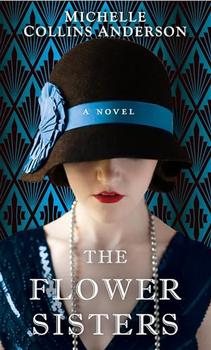
The Flower Sisters
by Michelle Collins Anderson
From the new Fannie Flagg of the Ozarks, a richly-woven story of family, forgiveness, and reinvention.
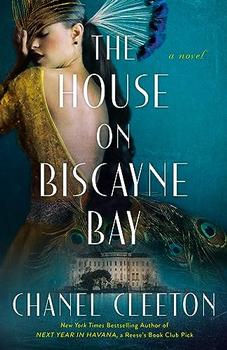
The House on Biscayne Bay
by Chanel Cleeton
As death stalks a gothic mansion in Miami, the lives of two women intertwine as the past and present collide.
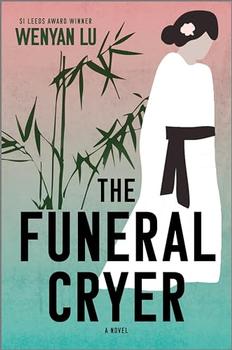
The Funeral Cryer by Wenyan Lu
Debut novelist Wenyan Lu brings us this witty yet profound story about one woman's midlife reawakening in contemporary rural China.
Your guide toexceptional books
BookBrowse seeks out and recommends the best in contemporary fiction and nonfiction—books that not only engage and entertain but also deepen our understanding of ourselves and the world around us.