Summary | Excerpt | Reviews | Readalikes | Genres & Themes | Author Bio
Critics' Opinion:
Readers' Opinion:
First Published:
Feb 2002, 384 pages
Paperback:
Dec 2002, 384 pages

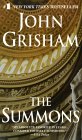
The house was called Maple Run, as if it were some grand estate with a staff and a social calendar. The last worker had been Irene the maid. She'd died four years earlier and since then no one had vacuumed the floors or touched the furniture with polish. The Judge paid a local felon twenty dollars a week to cut the grass, and he did so with great reluctance. Eighty dollars a month was robbery, in his learned opinion.
When Ray was a child, his mother referred to their home as Maple Run. They never had dinners at their home, but rather at Maple Run. Their address was not the Atlees on Fourth Street, but instead it was Maple Run on Fourth Street. Few other folks in Clanton had names for their homes.
She died from an aneurysm and they laid her on a table in the front parlor. For two days the town stopped by and paraded across the front porch, through the foyer, through the parlor for last respects, then to the dining room for punch and cookies. Ray and Forrest hid in the attic and cursed their father for tolerating such a spectacle. That was their mother lying down there, a pretty young woman now pale and stiff in an open coffin.
Forrest had always called it Maple Ruin. The red and yellow maples that once lined the street had died of some unknown disease. Their rotted stumps had never been cleared. Four huge oaks shaded the front lawn. They shed leaves by the ton, far too many for anyone to rake and gather. And at least twice a year the oaks would lose a branch that would fall and crash somewhere onto the house, where it might or might not get removed. The house stood there year after year, decade after decade, taking punches but never falling.
It was still a handsome house, a Georgian with columns, once a monument to those who'd built it, and now a sad reminder of a declining family. Ray wanted nothing to do with it. For him the house was filled with unpleasant memories and each trip back depressed him. He certainly couldn't afford the financial black hole of maintaining an estate that ought to be bulldozed. Forrest would burn it before he owned it.
The Judge, however, wanted Ray to take the house and keep it in the family. This had been discussed in vague terms over the past few years. Ray had never mustered the courage to ask, "What family?" He had no children. There was an ex-wife but no prospect of a current one. Same for Forrest, except he had a dizzying collection of ex-girlfriends and a current housing arrangement with Ellie, a three-hundred-pound painter and potter twelve years his senior.
It was a biological miracle that Forrest had produced no children, but so far none had been discovered.
The Atlee bloodline was thinning to a sad and inevitable halt, which didn't bother Ray at all. He was living life for himself, not for the benefit of his father or the family's glorious past. He returned to Clanton only for funerals.
The Judge's other assets had never been discussed. The Atlee family had once been wealthy, but long before Ray. There had been land and cotton and slaves and railroads and banks and politics, the usual Confederate portfolio of holdings that, in terms of cash, meant nothing in the late twentieth century. It did, however, bestow upon the Atlees the status of "family money."
By the time Ray was ten he knew his family had money. His father was a judge and his home had a name, and in rural Mississippi this meant he was indeed a rich kid. Before she died his mother did her best to convince Ray and Forrest that they were better than most folks. They lived in a mansion. They were Presbyterians. They vacationed in Florida, every third year. They occasionally went to the Peabody Hotel in Memphis for dinner. Their clothes were nicer.
Then Ray was accepted at Stanford. His bubble burst when the Judge said bluntly, "I can't afford it."
"What do you mean?" Ray had asked.
"I mean what I said. I can't afford Stanford."
Excerpted from The Summons by John Grisham Copyright 2002 by Belfry Holdings, Inc.. Excerpted by permission of Doubleday, a division of Random House, Inc. All rights reserved. No part of this excerpt may be reproduced or reprinted without permission in writing from the publisher.




The Flower Sisters
by Michelle Collins Anderson
From the new Fannie Flagg of the Ozarks, a richly-woven story of family, forgiveness, and reinvention.
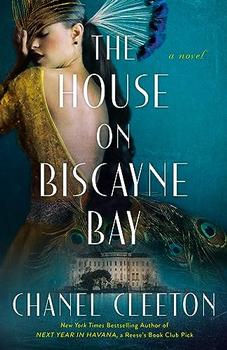
The House on Biscayne Bay
by Chanel Cleeton
As death stalks a gothic mansion in Miami, the lives of two women intertwine as the past and present collide.

The Funeral Cryer by Wenyan Lu
Debut novelist Wenyan Lu brings us this witty yet profound story about one woman's midlife reawakening in contemporary rural China.
Your guide toexceptional books
BookBrowse seeks out and recommends the best in contemporary fiction and nonfiction—books that not only engage and entertain but also deepen our understanding of ourselves and the world around us.