Summary | Excerpt | Reviews | Readalikes | Genres & Themes | Author Bio
Critics' Opinion:
Readers' Opinion:
First Published:
Jun 2001, 304 pages
Paperback:
Mar 2002, 368 pages

After dropping out of the University of Illinois at Urbana-Champaign and then the University of Chicago, where he learned to write computer software, Ellison drove a beat-up car to California. Although he had little trouble getting hired, staying so was a different story. He stumbled through a raft of computer-related jobs until he heard about a new kind of software that could store and quickly manipulate large databases. Seeing its potential, he launched a business in 1977 that would become Oracle. The company doesn't produce the kind of software that consumers buy or even know much about, but every organization that stores significant amounts of data needs it. For most of its first decade, sales doubled every year, so quickly that Oracle appeared to be on the verge of going totally out of control. Ellison's personal life was equally rocky. He married and divorced three times, and he broke his neck in a surfing accident.
In 1990, Ellison was almost booted out of his own company after Oracle disclosed that some of its employees had booked millions of dollars of sales that hadn't actually materialized. But by the mid-1990s it seemed that Ellison's high-stakes, step-skipping management style was entirely appropriate for an industry that was changing faster than any traditional organization could. Ellison was confident that no company was better suited than his to capitalize on the burgeoning Internet. After all, the first generation of e-commerce blue bloods -- Amazon.com, eBay, and Yahoo! --all relied on Oracle software. Thanks to them, and their gravity-defying stock prices, Ellison believed that the value of Oracle's shares would also explode. And he thought that would enable him to achieve his ultimate ambition -- to replace Bill Gates as the world's richest man.
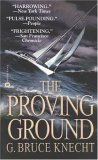
Ellison had always been interested in sailing. As a child, he imagined being able to travel to exotic places on the yachts he saw on Lake Michigan. Soon after he moved to California, he bought a thirty-four-foot sloop, although he gave it up because he couldn't afford it. In 1994, Ellison's next-door neighbor, a transplanted New Zealander named David Thomson, suggested the idea of building a maxi-yacht. The largest kind of boat permitted in many races, maxis are about eighty feet long. Ellison said yes, but he imposed a couple of conditions. First, he wanted it to be the fastest boat of its kind. Second, he wanted Thomson to do all the work. Thomson was a private investor affluent enough to live in Ellison's neighborhood, but he wasn't in a position to spend 3 or 4 million dollars for his own maxi. Deciding that it would be fun to oversee the design and construction of Ellison's boat, Thomson readily agreed to his terms.
Typically, when someone decides to build a boat, he or she wants to be involved in the plans, but Ellison made it clear that he didn't want to know about the details. When Thomson walked over to Ellison's house with a set of engineering drawings, they spent only a few minutes talking about the boat before Ellison turned the conversation to his newest plane, which they discussed for more than an hour. Thomson did send Ellison occasional e-mail updates. At the end of one, Thomson, who had heard that Ellison was going to the White House for a state dinner honoring the emperor of Japan, asked about the protocol for such an occasion. "What will you wear? Do Americans bow to the emperor?" At the end of the e-mail, Thomson wrote, "Have a great time. Sayonara."
Seconds after he pushed the send button, he sent another e-mail: "Sayonara. That's not a bad name for a boat."
Ellison didn't answer Thomson's White House etiquette questions, but to the name suggestion, he punched out an instant reply: "That's it."
Sayonara was completed in Auckland in May 1995, just a few days after Team New Zealand won the America's Cup -- a victory that the tiny nation commemorated with four ticker-tape parades and an outpouring of nationalistic pride rivaling the celebrations that followed World War II. Thomson had recruited almost half of Sayonara's crew from the winning squad, and they flew to San Francisco for Sayonara's inaugural sail shortly after the last parade. Thomson hired Paul Cayard to be the boat's first professional skipper. Cayard, who was the lead helmsman for Dennis Conner on Stars & Stripes, the boat that lost the Cup to the Kiwis, had competed in a total of five America's Cup regattas and in 1998 won the around-the-world Whitbread Race. To round out the crew, Cayard recruited several other members from Stars & Stripes to sail on Sayonara, creating a dream team of American and Kiwi yachtsmen.
Copyright © 2001 by G. Bruce Knechtht





The House on Biscayne Bay
by Chanel Cleeton
As death stalks a gothic mansion in Miami, the lives of two women intertwine as the past and present collide.

The Flower Sisters
by Michelle Collins Anderson
From the new Fannie Flagg of the Ozarks, a richly-woven story of family, forgiveness, and reinvention.

The Funeral Cryer by Wenyan Lu
Debut novelist Wenyan Lu brings us this witty yet profound story about one woman's midlife reawakening in contemporary rural China.
Your guide toexceptional books
BookBrowse seeks out and recommends the best in contemporary fiction and nonfiction—books that not only engage and entertain but also deepen our understanding of ourselves and the world around us.