Summary | Excerpt | Reading Guide | Reviews | Readalikes | Genres & Themes | Author Bio
Critics' Opinion:
Readers' Opinion:
First Published:
Oct 2000, 288 pages
Paperback:
Feb 2002, 304 pages

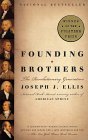
This was pretty much how matters stood in 1789, when the newly elected members of the federal government gathered in New York City and proceeded to test the proposition, as Abraham Lincoln so famously put it at Gettysburg, "whether any nation so conceived and so dedicated can long endure." We have already noted some of the assets and liabilities they brought along with them. On the assets side of the historical ledger, the full list would include the following: a bountiful continent an ocean away from European interference; a youthful population of nearly 4 million, about half of it sixteen years of age or younger and therefore certain to grow exponentially over subsequent decades; a broad dispersion of property ownership among the white populace, based on easy access to available land; a clear commitment to republican political institutions rooted in the prowess and practice of the colonial assemblies, then sanctified as the only paradigm during the successful war for independence in the state constitution; and last, but far from least, a nearly unanimous consensus that the first chief executive would be George Washington, only one man, to be sure, but an incalculable asset.
On the liability side of the ledger, four items topped the list: First, no one had ever established a republican government on the scale of the United States, and the overwhelming judgment of the most respected authorities was that it could not be done; second, the dominant intellectual legacy of the Revolution, enshrined in the Declaration of Independence, stigmatized all concentrated political power and even, its most virulent forms, depicted any energetic expression of governmental authority as an alien force that all responsible citizens ought to repudiate and, if possible, overthrow; third, apart from the support for the Continental Army during the war, which was itself sporadic, uneven, and barely adequate to assure victory, the states and regions comprising the new nation had no common history as a nation and no common experience behaving as a coherent collective (for example, while drafting the Declaration in Philadelphia in June of 1776, Jefferson had written back to friends in Virginia that it was truly disconcerting to find himself deployed at that propitious moment nearly three hundred miles from "my country"); fourth, and finally, according to the first census, commissioned by the Congress in 1790, nearly 700,000 inhabitants of the fledgling American republic were black slaves, the vast majority, over 90 percent, concentrated in the Chesapeake region and points south, their numbers also growing exponentially in a kind of demographic defiance of all the republican rhetoric uttered since the heady days of 1776.
If permitted to define a decade somewhat loosely, then the next decade was the most crucial and consequential in American history. Other leading contestants for that title--the years 1855-1865 and the 1940s come to mind--can make powerful claims, to be sure, but the first ten years of our history as a sovereign nation will always have primacy because they were first. It set the precedents, established in palpable fact what the Constitution had only outlined in purposely ambiguous theory, thereby opening up and closing off options for all the history that followed.
The Civil War, for example, was a direct consequence of the decision to evade and delay the slavery question during the most vulnerable early years of the republic. Similarly, America's emergence as the dominant world power in the 1940s could never have occurred if the United States had not established stable national institutions at the start that permitted the consolidation of the continent. (From the Native American perspective, of course, this consolidation was a conquest.) The apparently irresistible urge to capitalize and mythologize as "Founding Fathers" the most prominent members of the political leadership during this formative phase has some historical as well as psychological foundation, for in a very real sense we are, politically, if not genetically, still living their legacy. And the same principle also explains the parallel urge to demonize them, since any discussion of their achievement is also an implicit conversation about the distinctive character of American imperialism, both foreign and domestic.
Excerpted from Founding Brothers by Joseph J. Ellis Copyright© 2000 by Joseph J. Ellis. Excerpted by permission of Knopf, a division of Random House, Inc. All rights reserved. No part of this excerpt may be reproduced or reprinted without permission in writing from the publisher.





The Flower Sisters
by Michelle Collins Anderson
From the new Fannie Flagg of the Ozarks, a richly-woven story of family, forgiveness, and reinvention.

The House on Biscayne Bay
by Chanel Cleeton
As death stalks a gothic mansion in Miami, the lives of two women intertwine as the past and present collide.

The Funeral Cryer by Wenyan Lu
Debut novelist Wenyan Lu brings us this witty yet profound story about one woman's midlife reawakening in contemporary rural China.
Your guide toexceptional books
BookBrowse seeks out and recommends the best in contemporary fiction and nonfiction—books that not only engage and entertain but also deepen our understanding of ourselves and the world around us.