Summary | Excerpt | Reading Guide | Reviews | Readalikes | Genres & Themes | Author Bio
Critics' Opinion:
Readers' Opinion:
First Published:
Mar 2000, 448 pages
Paperback:
Jan 2001, 448 pages

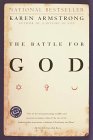
Introduction
One of the most startling developments of the late twentieth century has been the emergence within every major religious tradition of a militant piety popularly known as "fundamentalism." Its manifestations are sometimes shocking. Fundamentalists have gunned down worshippers in a mosque, have killed doctors and nurses who work in abortion clinics, have shot their presidents, and have even toppled a powerful government. It is only a small minority of fundamentalists who commit such acts of terror, but even the most peaceful and law-abiding are perplexing, because they seem so adamantly opposed to many of the most positive values of modern society. Fundamentalists have no time for democracy, pluralism, religious toleration, peacekeeping, free speech, or the separation of church and state. Christian fundamentalists reject the discoveries of biology and physics about the origins of life and insist that the Book of Genesis is scientifically sound <p> in every detail. At a time when many are throwing off the shackles of the past, Jewish fundamentalists observe their revealed Law more stringently than ever before, and Muslim women, repudiating the freedoms of Western women, shroud themselves in veils and chadors. Muslim and Jewish fundamentalists both interpret the Arab-Israeli conflict, which began as defiantly secularist, in an exclusively religious way. Fundamentalism, moreover, is not confined to the great monotheisms. There are Buddhist, Hindu, and even Confucian fundamentalisms, which also cast aside many of the painfully acquired insights of liberal culture, which fight and kill in the name of religion and strive to bring the sacred into the realm of politics and national struggle.
This religious resurgence has taken many observers by surprise. In the middle years of the twentieth century, it was generally taken for granted that secularism was an irreversible trend and that faith would never again play a major part in world events. It was assumed that as human beings became more rational, they either would have no further need for religion or would be content to confine it to the immediately personal and private areas of their lives. But in the late 1970s, fundamentalists began to rebel against this secularist hegemony and started to wrest religion out of its marginal position and back to center stage. In this, at least, they have enjoyed remarkable success. Religion has once again become a force that no government can safely ignore. Fundamentalism has suffered defeats, but it is by no means quiescent. It is now an essential part of the modern scene and will certainly play an important role in the domestic and international affairs of the future. It is crucial, therefore, that we try to understand what this type of religiosity means, how and for what reasons it has developed, what it can tell us about our culture, and how best we should deal with it.
But before we proceed, we must look briefly at the term "fundamentalism" itself, which has been much criticized. American Protestants were the first to use it. In the early decades of the twentieth century, some of them started to call themselves "fundamentalists" to distinguish themselves from the more "liberal" Protestants, who were, in their opinion, entirely distorting the Christian faith. The fundamentalists wanted to go back to basics and reemphasize the "fundamentals" of the Christian tradition, which they identified with a literal interpretation of Scripture and the acceptance of certain core doctrines. The term "fundamentalism" has since been applied to reforming movements in other world faiths in a way that is far from satisfactory. It seems to suggest that fundamentalism is monolithic in all its manifestations. This is not the case. Each "fundamentalism" is a law unto itself and has its own dynamic. The term also gives the impression that fundamentalists are inherently conservative and wedded to the past, whereas their ideas are essentially modern and highly innovative. The American Protestants may have intended to go back to the "fundamentals," but they did so in a peculiarly modern way. It has also been argued that this Christian term cannot be accurately applied to movements that have entirely different priorities. Muslim and Jewish fundamentalisms, for example, are not much concerned with doctrine, which is an essentially Christian preoccupation. A literal translation of "fundamentalism" into Arabic gives us usuliyyah, a word that refers to the study of the sources of the various rules and principles of Islamic law. Most of the activists who are dubbed "fundamentalists" in the West are not engaged in this Islamic science, but have quite different concerns. The use of the term "fundamentalism" is, therefore, misleading.
Excerpted from The Battle for God by Karen Armstrong Copyright© 2000 by Karen Armstrong. Excerpted by permission of Knopf, a division of Random House, Inc. All rights reserved. No part of this excerpt may be reproduced or reprinted without permission in writing from the publisher.





The House on Biscayne Bay
by Chanel Cleeton
As death stalks a gothic mansion in Miami, the lives of two women intertwine as the past and present collide.

The Flower Sisters
by Michelle Collins Anderson
From the new Fannie Flagg of the Ozarks, a richly-woven story of family, forgiveness, and reinvention.

The Funeral Cryer by Wenyan Lu
Debut novelist Wenyan Lu brings us this witty yet profound story about one woman's midlife reawakening in contemporary rural China.
Your guide toexceptional books
BookBrowse seeks out and recommends the best in contemporary fiction and nonfiction—books that not only engage and entertain but also deepen our understanding of ourselves and the world around us.