Summary | Excerpt | Reviews | Beyond the Book | Readalikes | Genres & Themes | Author Bio
 Book Reviewed by:
Elizabeth Whitmore Funk
Buy This Book

Like the Dutch, the Aztecs had become extremely skilled at
reclaiming swampland both for construction and for cultivation.
Their reclaimed chinampas, or floating gardens, produced at least
two harvests a year, their fertility boosted by regular treatments with
human manure collected in the city. Each day a flotilla of perhaps
fifty thousand canoes - each cut from a single tree trunk - swarmed
to and from the great metropolis carrying produce from these hydroponic
gardens and from further afield, the life blood of the city. But
as well as food, clean water was essential, as it is for any city. Skilfully
engineered aqueducts brought fresh water in from the surrounding
mountains. Canoes then dispensed the water to individual residences.
The city itself was divided into four by grand avenues which converged
on a central walled complex of palaces and temples. Out of this
soared the stepped pyramid of the Great Temple, sixty metres high, on
which were two shrines: to Tlaloc, the rain god, and to Huitzilopoctli,
the fearsome god of war who was the Mexica's patron deity. It was to
this god, identified with the sun, that the Aztecs sacrificed human
beings, typically prisoners of war. Cortés estimated that between three
and four thousand victims a year were sacrificed. Díaz described how
the priests 'strike open the wretched Indian's chest with flint knives
and hastily tear out the palpitating heart which, with the blood, they
present to the idols'. To the Mexica, their city was 'the foundation of
heaven', literally the political and religious centre of the universe.15 It
was their responsibility to offer 'precious water', or blood, as nourishment
to the deities so that life could continue in this harsh world.
Beyond the central complex were many other smaller temples as
well as markets, private residences and Montezuma's fabulous palace
with its water gardens, aviaries and menageries. Some of the private
residences were two storeys high and had roof gardens. In these walled
compounds two extended families lived, each home having access to
the street and the canal, a fact that helped make this a socially mobile
society: 'Even commoners could achieve high rank through military
service or the acquisition of great personal wealth.' The wealth of a
family was apparent from the external decoration and ornamentation
of their homes. The craftsmanship was superb. 'It could not be bettered
anywhere,' said one Spanish eyewitness.
The Spaniards were astonished by Tenochtitlán. It was a remarkable
creation, a wonder of the world at that time, in many respects
excelling the cities of Europe, a fact grudgingly acknowledged by
Cortés: 'these people live almost like those of Spain, and in as much
harmony and order as there, and considering that they are barbarous
and so far from the knowledge of God and cut off from all civilized
nations, it is truly remarkable to see what they have achieved in all
things'.
But this meeting of worlds was to be a fateful moment for
Montezuma and his people. Within three years, Cortés had conquered
the Aztec empire and the great city of Tenochtitlán had been
destroyed. In 1520, a terrible epidemic of smallpox swept through
the city, reducing the population by at least a third. Then, in April
of the following year, Cortés returned to the city with an army. At
the final siege of Tenochtitlán, Cortés had a mere 1,300 Spanish soldiers.
However, he cleverly enlisted the help of rival states. At least
100,000 indigenous warriors supported the Spaniards in the attack
on Tenochtitlán. The city's defenders fought valiantly, but, weakened
by disease and lack of food and water, they had no hope of victory
against the gunpowder and steel of the Europeans. There was vicious
house-to-house fighting. In the end Cortés could only take the city by
systematically destroying it.
Excerpted from City by Peter D Smith. Copyright © 2012 by Peter D Smith. Excerpted by permission of Bloomsbury. All rights reserved. No part of this excerpt may be reproduced or reprinted without permission in writing from the publisher.




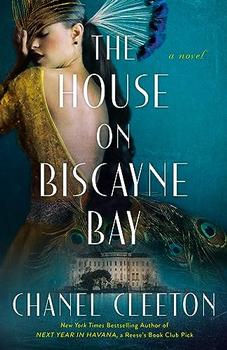
The House on Biscayne Bay
by Chanel Cleeton
As death stalks a gothic mansion in Miami, the lives of two women intertwine as the past and present collide.

The Flower Sisters
by Michelle Collins Anderson
From the new Fannie Flagg of the Ozarks, a richly-woven story of family, forgiveness, and reinvention.

The Funeral Cryer by Wenyan Lu
Debut novelist Wenyan Lu brings us this witty yet profound story about one woman's midlife reawakening in contemporary rural China.
Your guide toexceptional books
BookBrowse seeks out and recommends the best in contemporary fiction and nonfiction—books that not only engage and entertain but also deepen our understanding of ourselves and the world around us.