Summary | Excerpt | Reviews | Beyond the Book | Readalikes | Genres & Themes | Author Bio
Critics' Opinion:
Readers' Opinion:
First Published:
Sep 2011, 544 pages
Paperback:
Jul 2012, 544 pages
 Book Reviewed by:
Marnie Colton
Buy This Book

The World-Telegram will have a seven-grapher tomorrow, page 11 ("Jungle Praised by Hemingway"). The lead:
Ernest Hemingway, author_._._._is back home and "nearly broke" after eight months abroad, three of which he spent on the "dark continent." The trouble with bull-fighting, in the opinion of the man who admits he knows so little about it that he wrote a book on the subject, is simply that it's too formal. Like all invitation affairs, he holds, it has a plethora of rules. Out in the brush where the hunter fights for a clawhold with his prey as man to beast - and no rules committee in the offing - it's more fun.
The Herald Tribune's subhead on its Hemingway bright (eleven paragraphs, page 4): "Author, Back from African Hunt, Says He Never Shot Beasts Trailed for Camera." The lead: "Ernest Hemingway, enthusiastic over the three months he had passed in East Africa stalking big game with rifle and camera, returned yesterday on the French liner Paris with Mrs. Hemingway, who shared his adventures. Mr. Hemingway was in such high spirits that he granted an interview, something unusual for him."
The subject's first quote: "It's hard to describe just what there is to killing big game. It's very exciting and-uh-it gives you a fine feeling. It's the sort of the same thing as any killing; that is, it's fine, if you do a clean job of it and it's lousy if there's bad sportsmanship." Toward the end: "The pursuit of game having renewed his enthusiasm for life, he returned home 'to work like hell and make enough money so that I can go back to Africa and really learn something about lions.'"
It must be the Herald Trib's account that E. B. White of The New Yorker catches on his way to work on the morning of the fourth. The Herald Trib is the highbrow newspaper of choice in Manhattan, and these quotes are apparently just too much for a domesticated literary man. Because the following week, a three-stanza Hemingway send-up titled "The Law of the Jungle" appears on page 31 of The New Yorker. White's final lines:
And who, in time of darkest danger
Will only dominate a stranger.
Seventeen years from now, on the publication of Hemingway's weakest novel, Across the River and into the Trees, White, great American humorist, never a white hunter on the dark continent, will bring down Hemingway again in the magazine with a parody titled "Across the Street and into the Grill." By then parodying Hemingway will have become a cottage sport and pastime in America. White's piece will particularly enrage the author, perhaps because he instantly understands that it will get into anthologies and live way past his own death.
What was Ernest Hemingway's interior state when he stood at the Paris rail with his petite and affluent spouse on the eve of acquiring Pilar? (Pauline's uncle, Gus Pfeiffer - a New York businessman, part of whose fortune had been derived from his interests in a Paris and Manhattan perfumer named Richard Hudnut, and who liked Ernest a good deal, at least then - had staked the safari somewhere to the bottom line of about $30,000. The safari had lasted just a little over two months, not three, as was reported. Hemingway had been in Africa for nearly three months, but not in the bush for that long, and for about a week of the actual safari he was confined to a hospital bed in Nairobi, having suffered an attack of amoebic dysentery that necessitated evacuation by light plane.)
A whole lot of his state of mind can be glimpsed in his writing, not least his letter writing. Hemingway wrote somewhere between six and seven thousand letters in his life, by hand and by typewriter and by dictation, usually in free-associative bursts, often after a day's writing, to relieve tension, more or less in the way you'd speak in a conversation. This is particularly true of his letters to friends and to certain family members. "The desire to get to the man behind the work can be sometimes overwhelming. I always go back to the letters," Patrick Hemingway told me in 1987, a sentence that seems only truer with time.
Excerpted from Hemingway's Boat by Paul Hendrickson. Copyright © 2011 by Paul Hendrickson. Excerpted by permission of Knopf, a division of Random House, Inc. All rights reserved. No part of this excerpt may be reproduced or reprinted without permission in writing from the publisher.

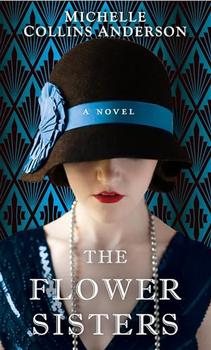
The Flower Sisters
by Michelle Collins Anderson
From the new Fannie Flagg of the Ozarks, a richly-woven story of family, forgiveness, and reinvention.
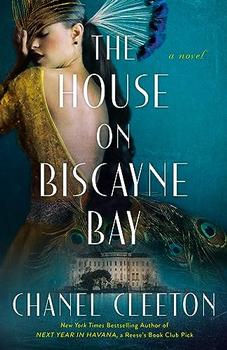
The House on Biscayne Bay
by Chanel Cleeton
As death stalks a gothic mansion in Miami, the lives of two women intertwine as the past and present collide.

The Funeral Cryer by Wenyan Lu
Debut novelist Wenyan Lu brings us this witty yet profound story about one woman's midlife reawakening in contemporary rural China.
Your guide toexceptional books
BookBrowse seeks out and recommends the best in contemporary fiction and nonfiction—books that not only engage and entertain but also deepen our understanding of ourselves and the world around us.