
-
Your next favorite book
is waiting.
Summary | Excerpt | Reading Guide | Reviews | Beyond the Book | Readalikes | Genres & Themes | Author Bio
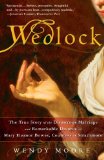
The True Story of the Disastrous Marriage and Remarkable Divorce of Mary Eleanor Bowes, Countess of Strathmore
by Wendy Moore Book Reviewed by:
Acclaimed then, if not universally admired, as a vigorous defender of press freedom, Bate had also established a reputation for his physical prowess. A well- publicized disagreement some four years previously at Vauxhall, the pop u lar plea sure gardens on the south bank of the Thames, had left nobody in doubt of his courage. Leaping to the defense of an actress friend who was being taunted by four uncouth revelers, Bate had accepted a challenge by one of the party to a duel the following day. When the challenger substituted a professional boxer of Herculean proportions, Bate gamely stripped to the waist and squared up. Although much the smaller of the two pugilists, the parson proceeded to pummel the boxer into submission within fifteen minutes, mashing his face “into a jelly” without suffering a single significant blow himself. The episode, which was naturally reported fully in the Morning Post, earned Bate the nickname “the Fighting Parson.” Having established his credentials for both bravery and combat skills, the Reverend Bate was evidently not a man to pick an argument with. Oddly this had not deterred his opponent at the Adelphi.
A relative newcomer to London society, though he had acquired some notoriety in certain circles, the defeated duelist was seemingly a stranger to everyone in the tiny parlor with the exception of his opponent and his tardy second. Although he was now sprawled in a chair under the ministrations of his medical attendants, it was plain that the man was slenderly built and uncommonly tall by eighteenth- century standards. The surgeon Foot, meeting him here for the first time, would later estimate his height at more than five feet ten inches–a commanding five inches above the average male. Despite a prominent hooked nose, his face was strikingly handsome, with thin but sensuous lips and small, piercing eyes under thick dark eyebrows. His obvious authority and bearing betrayed his rank as an officer in the King’s Army, while his melodic brogue revealed his Anglo- Irish descent. And for all his life- threatening injuries, he exuded a charisma that held the entire room in thrall. His name was gleaned by the gathered party to be Captain Andrew Robinson Stoney. And it was he, it now emerged, who had provoked the duel.
With the identity of the duelists established, details of the circumstances leading to their fateful meeting quickly unfolded and were subsequently confirmed in a report of events agreed between the combatants for release to the press. In providing this statement, attributing neither guilt nor blame, the duelists were complying with contemporary rules of dueling conduct. But as their version of events made plain, most of the circumstances surrounding the Adelphi duel had flouted all the accepted principles of dueling behavior. Meeting at night rather than in the cold light of day (traditionally at dawn), staging their duel inside a busy city venue rather than a remote location outdoors, and fighting without their seconds (who should have been present to promote reconciliation) were all strictly contrary to the rules. Yet the pretext for their fight to the death was entirely typical of duels that had been conducted since medieval knights had first engaged in the lists. The honor of a woman, it emerged, was at the crux of the dispute.
In the perverse code of honor that governed dueling, any form of insult to a woman was to be regarded by a man whose protection she enjoyed as the gravest possible outrage. According to the “Twenty- six Commandments,” for example, such an insult should be treated as “by one degree a greater offence than if given to the gentleman personally.” So while women were by convention almost always absent from duels, shielded from the horror of bloodshed and gore, their reputation or well- being was frequently at the very core of the ritual. Indeed, for some women, it might be said, the prospect of being fought over by two hot- blooded rivals could be so intoxicating that they sometimes encouraged duels even if they later regretted the consequences.
Excerpted from Wedlock by Wendy Moore Copyright © 2009 by Wendy Moore. Excerpted by permission of Crown, a division of Random House, Inc. All rights reserved. No part of this excerpt may be reproduced or reprinted without permission in writing from the publisher.



A classic is a book that has never finished saying what it has to say
Click Here to find out who said this, as well as discovering other famous literary quotes!

Can you name the title?
Test your book knowledge with our daily trivia challenge!
Your guide toexceptional books
BookBrowse seeks out and recommends the best in contemporary fiction and nonfiction—books that not only engage and entertain but also deepen our understanding of ourselves and the world around us.


