Summary | Excerpt | Reading Guide | Reviews | Beyond the Book | Readalikes | Genres & Themes | Author Bio
Critics' Opinion:
Readers' Opinion:
First Published:
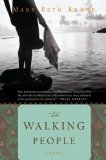
May 2009, 416 pages
Paperback:
May 2010, 416 pages
 Book Reviewed by:
BookBrowse First Impression Reviewers
Buy This Book

At the start of the Second World War, the village of Ballyroan consisted of seven families, which came to just over fifty people spread over one square mile. Conch, the closest town, was four miles inland and not a single person lived on the bogland or in the fields that stretched between Conch and Ballyroan, leaving those seven families alone, except when the children went to school or the people from town rode their bicycles out to swim in the sea or for some other equally isolated purpose. Big Tom often said that living in Ballyroan was like living on an island, except better. In every direction was water, but unlike the islands that sat out in the ocean like the backs of whales, Ballyroan had a freshwater river running through it. Not a stream, mind you, but a river. Fast, deep, full to the brim with fish if you knew the right places to look. It was because of the river that the Cahills never had to leave. Not when the Normans came, not when Grainne O’Malley ruled the clans and the seas, not even during the potato blight when the people either fled or turned into shadows.
"Because of this," Big Tom always said at the end of this familiar speech, and held up his fishing net.
"Put that away, you fool," Lily said when she saw him at it. Sometimes she would grab it out of his hands, gather it up in her arms until it was as small as she could make it, and carry it out of the kitchen to a hiding place only she and Big Tom knew.
But by 1956, despite centuries of gathering seaweed from the high sea ledges, drying it, giving it to the children to chew or keep for the flower beds, despite generation after generation of the same families driving cattle, footing turf, churning butter, bleeding the fall pig from the ceiling rafter of a dark back room before covering him with salt the size of hailstones and closing him up in his barrel, despite all the narrow headstones sticking out of the fields like milk teeth, five of the seven houses in Ballyroan were abandoned, their windows boarded, their inhabitants gone to England or Australia or Canada or America. Every one of these families said they were certain they’d come back one day, once they had their legs under them, once they’d put aside a little money to bring back home and start again, and when that day came, could they please write the Cahills to take the boards off the windows, light the fire in the kitchen, let the air and sunshine in.
Greta assumed that these families did not have a net like her father did, or they wouldn’t have had to leave. According to the man on the wireless radio, all of Ireland was leaving for England and America, all except the very young and the very old. It seemed a simple thing, a net. Such an ordinary piece of daily life--like a bucket or a spade--and Greta couldn’t see why people wouldn’t just go out and get one.
In the only other house left in Ballyroan lived Mr. Grady. Mr. Grady’s house stood exactly one mile north of the Cahills, and considered together the two houses were like signposts marking where one entered and exited Ballyroan. Big Tom said that no one ever wrote to Mr. Grady, and when Greta asked why, Big Tom said it was because Mr. Grady was a miserable son of a bitch. Lily didn’t like Mr. Grady spoken ill of in the Cahill house. She said it would bring bad luck. Sometimes she included Mr. Grady in the bedtime prayers she said with the girls, and when Big Tom said she should pray for the net and the salmon as long as she was praying for Mr. Grady, she said that would bring bad luck too.
Copyright © 2009 Houghton Mifflin Company. All rights reserved.
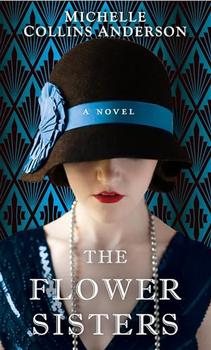
The Flower Sisters
by Michelle Collins Anderson
From the new Fannie Flagg of the Ozarks, a richly-woven story of family, forgiveness, and reinvention.
The Stolen Child
by Ann Hood
An unlikely duo ventures through France and Italy to solve the mystery of a child’s fate.
Harvard is the storehouse of knowledge because the freshmen bring so much in and the graduates take so little out.
Click Here to find out who said this, as well as discovering other famous literary quotes!
Your guide toexceptional books
BookBrowse seeks out and recommends the best in contemporary fiction and nonfiction—books that not only engage and entertain but also deepen our understanding of ourselves and the world around us.