Summary | Excerpt | Reviews | Beyond the Book | Readalikes | Genres & Themes | Author Bio

Critics' Opinion:
Readers' Opinion:
First Published:
Mar 2009, 400 pages
Paperback:
Feb 2010, 416 pages
 Book Reviewed by:
Joanne Collings
Buy This Book

BUENOS AIRES, 1950
The boat was the SS Giovanni, which seemed only appropriate given the fact that at least three of its passengers, including myself, had been in the SS. It was a medium-sized boat with two funnels, a view of the sea, a well-stocked bar, and an Italian restaurant. This was fine if you liked Italian food, but after four weeks at sea at eight knots, all the way from Genoa, I didn’t like it and I wasn’t sad to get
off. Either I’m not much of a sailor or there was something else wrong with me other than the company I was keeping these days.
We steamed into the port of Buenos Aires along the gray River Plate, and this gave me and my two fellow travelers a chance to reflect upon the proud history of our invincible German navy. Somewhere at the bottom of the river, near Montevideo, lay the wreck of the Graf Spee, a pocket battleship that had been invincibly scuttled by its commander in December 1939, to prevent it from falling into the hands of the British. As far as I knew, this was as near as the war ever came to Argentina.
In the North Basin we docked alongside the customs house. A modern city of tall concrete buildings lay spread out to the west of us, beyond the miles of rail track and the warehouses and the stockyards where Buenos Aires got started—as a place where cattle from the Argentine pampas arrived by train and were slaughtered on an industrial scale. So far, so German. But then the carcasses were frozen and shipped all over the world. Exports of Argentine beef had made the country rich and transformed Buenos Aires into the third-largest city
in the Americas, after New York and Chicago.
The three million population called themselves porteños—people of the port—which sounds pleasantly romantic. My two friends and I called ourselves refugees, which sounds better than fugitives. But that’s what we were. Rightly or wrongly, there was a kind of justice awaiting all of us back in Europe, and our Red Cross passports concealed our true identities. I was no more Dr. Carlos Hausner than Adolf Eichmann was Ricardo Klement, or Herbert Kuhlmann was Pedro Geller. This was fine with the Argentines. They didn’t care who we were or
what we’d done during the war. Even so, on that cool and damp winter morning in July 1950, it seemed there were still certain official proprieties to be observed.
An immigration clerk and a customs officer came aboard the ship, and as each passenger presented documents, they asked questions. If these two didn’t care who we were or what we’d done, they did a good job giving us the opposite impression. The mahogany-faced immigration clerk regarded Eichmann’s flimsy-looking passport and then Eichmann himself as if both had arrived from the center of a cholera epidemic. This wasn’t so far from the truth. Europe was only just recovering from an illness called Nazism that had killed more than fifty
million people.
“Profession?” the clerk asked Eichmann.
Eichmann’s meat cleaver of a face twitched nervously. “Technician,” he said, and mopped his brow with a handkerchief. It wasn’t hot, but Eichmann seemed to feel a different kind of heat from that felt by anyone else I ever met.
Meanwhile, the customs official, who smelled like a cigar factory, turned to me. His nostrils flared as if he could smell the money I was carrying in my bag, and then he lifted his cracked lip off his bamboo teeth in what passed for a smile in that line of work. I had about thirty thousand Austrian schillings in that bag, which was a lot of money in Austria, but not so much money when it was converted into real money. I didn’t expect him to know that. In my experience, customs officials can do almost anything they want except be generous or forgiving when they catch sight of large quantities of currency.
Excerpted from A Quiet Flame by Philip Kerr. Copyright © 2006 by Philip Kerr. Excerpted by permission of Putnam Books. All rights reserved. No part of this excerpt may be reproduced or reprinted without permission in writing from the publisher.




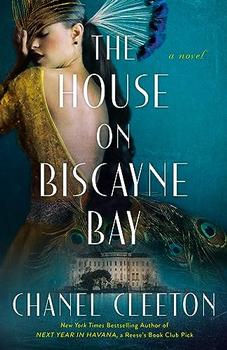
The House on Biscayne Bay
by Chanel Cleeton
As death stalks a gothic mansion in Miami, the lives of two women intertwine as the past and present collide.

The Flower Sisters
by Michelle Collins Anderson
From the new Fannie Flagg of the Ozarks, a richly-woven story of family, forgiveness, and reinvention.

The Funeral Cryer by Wenyan Lu
Debut novelist Wenyan Lu brings us this witty yet profound story about one woman's midlife reawakening in contemporary rural China.
Your guide toexceptional books
BookBrowse seeks out and recommends the best in contemporary fiction and nonfiction—books that not only engage and entertain but also deepen our understanding of ourselves and the world around us.