Summary | Excerpt | Reviews | Beyond the Book | Readalikes | Genres & Themes | Author Bio
Great Minds, the Gilded Age, and the Triumph of Evolution in America
by Barry Werth

Critics' Opinion:
Readers' Opinion:
First Published:
Jan 2009, 400 pages
Paperback:
Apr 2011, 400 pages
 Book Reviewed by:
Micah Gell-Redman
Buy This Book

Before leaving for the Continent, Youmans dined with the botanist Sir
Joseph Hooker, the first recognized man of science to risk his reputation
by publicly supporting Darwin. It was Hooker, director of the worldfamous
Royal Botanical Gardens of Kew, who had introduced Darwin to
Asa Gray. Weeks earlier, at Spencer’s urging, Hooker had invited
Youmans to Kew, where they now discussed at length not the international
series but Youmans’s decision to endow Spencer. Hooker recently
had tried to do the same for Gray, but the deal soured when Gray "gave
the money to Harvard instead," he explained. "You did better for
Spencer," he told Youmans.
Your work told where it should: Spencer is the mighty thinker among us. And what a splendid talker. He talks right at you like a book, and his language is so fluent and adaptive! He is all right now. The recognition of his genius is now complete. What a lucky thing it was that he failed in getting a consulate or some other public appointment when he began his Philosophy. . . . No man can do great original work and be hampered by the cares of a position. The thing is impossible. The work must have the whole man. That is why I have tried to get Gray free in America. You Americans don’t know how much of a man Gray is. But he is hampered with students’ work, and
In mid-November, Beecher, the fifty-nine-year-old pastor of Plymouth Church of the Pilgrims in thriving Brooklyn Heights, received a note from thirty-three-year-old Victoria Woodhull, celebrated copublisher of Woodhull & Claflin’s Weekly, which advanced among other causes women’s suffrage, shoetop-length skirts, spirit contact with the dead, free love, vegetarianism, and licensed prostitution. Some months earlier a vague, menacing statement had appeared in her newspaper:
Civilization is festering to the bursting point in our great cities and notably in Brooklyn. . . . At this very moment, awful and Herculean efforts are being made to suppress the most terrific scandal which has ever astounded and convulsed any community. . . . We have the inventory of discarded husbands and wives and lovers, with dates, circumstances and establishments.
Since then Beecher had resisted Woodhull’s efforts to meet with him.
Men of God, like politicians, grow accustomed to accusations of infidelity,
but Beecher, an antislavery and women’s rights paragon, feared
that Woodhull could destroy him. More than a year earlier his parishioner
Elizabeth Tilton had confessed to her husband, Theodore, a popular
newspaper editor, poet, reformer, and devoted friend and follower of
Beecher’s, that she and Beecher had been sexually intimate. Rumors of
the charge coincided with Woodhull’s sensational rise to national prominence.
Betrothed to an alcoholic with whom she bore a profoundly retarded
son at age fifteen, she had eked out a living in the years before the
war operating séances, telling fortunes, and peddling patent medicines
and abortifacients before finally divorcing him, marrying an anarchist,
and moving with both of them (her first husband was now infirm) to
New York City. With her sister, Tennessee Claflin, she soon came under
the wing of railroad and shipping mogul Cornelius Vanderbilt, who established
them as the first female brokers on Wall Street, where in six
months they made enough money to enter the rising mainstream of
Manhattan society, establish their weekly, and launch Woodhull into politics.
A businesswoman, Woodhull wore tailored, mannish jackets, skirts
that ended above the ankle, and colored neckties, trappings that downplayed
her passions and rage at society, though only slightly. She was
dark-eyed, surprisingly elegant considering her history, and slimmer than
her sister, whom Vanderbilt, an illiterate transportation genius with a wife
and thirteen children, liked to call "my little sparrow" as he cooed to her
and bounced her on his knee in his office.
Excerpted from Banquet at Delmonico's by Barry Werth. Copyright © 2009 by Barry Werth. Excerpted by permission of Random House, a division of Random House, Inc. All rights reserved. No part of this excerpt may be reproduced or reprinted without permission in writing from the publisher.



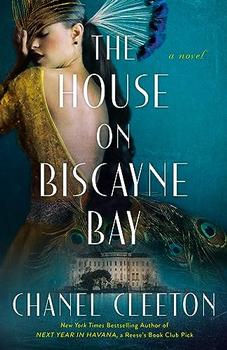
The House on Biscayne Bay
by Chanel Cleeton
As death stalks a gothic mansion in Miami, the lives of two women intertwine as the past and present collide.
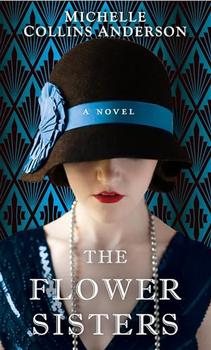
The Flower Sisters
by Michelle Collins Anderson
From the new Fannie Flagg of the Ozarks, a richly-woven story of family, forgiveness, and reinvention.

The Funeral Cryer by Wenyan Lu
Debut novelist Wenyan Lu brings us this witty yet profound story about one woman's midlife reawakening in contemporary rural China.
Your guide toexceptional books
BookBrowse seeks out and recommends the best in contemporary fiction and nonfiction—books that not only engage and entertain but also deepen our understanding of ourselves and the world around us.