Summary | Excerpt | Reviews | Beyond the Book | Readalikes | Genres & Themes | Author Bio

Critics' Opinion:
Readers' Opinion:
First Published:
May 2007, 377 pages
Paperback:
Mar 2008, 512 pages
 Book Reviewed by:
BookBrowse Review Team
Buy This Book

1
The man was called Calvin Franz and the helicopter was a Bell 222. Franz had
two broken legs, so he had to be loaded on board strapped to a stretcher. Not a
difficult maneuver. The Bell was a roomy aircraft, twin-engined, designed for
corporate travel and police departments, with space for seven passengers. The
rear doors were as big as a panel van's and they opened wide. The middle row of
seats had been removed. There was plenty of room for Franz on the floor.
The helicopter was idling. Two men were carrying the stretcher. They ducked
low under the rotor wash and hurried, one backward, one forward. When they
reached the open door the guy who had been walking backward got one handle up on
the sill and ducked away. The other guy stepped forward and shoved hard and slid
the stretcher all the way inside. Franz was awake and hurting. He cried out and
jerked around a little, but not much, because the straps across his chest and
thighs were buckled tight. The two men climbed in after him and got in their
seats behind the missing row and slammed the doors.
Then they waited.
The pilot waited.
A third man came out a gray door and walked across the concrete. He bent low
under the rotor and held a hand flat on his chest to stop his necktie whipping
in the wind. The gesture made him look like a guilty man proclaiming his
innocence. He tracked around the Bell's long nose and got in the forward seat,
next to the pilot.
"Go," he said, and then he bent his head to concentrate on his harness
buckle.
The pilot goosed the turbines and the lazy whop-whop of the idling blade slid
up the scale to an urgent centripetal whip-whip-whip and then disappeared behind
the treble blast of the exhaust. The Bell lifted straight off the ground,
drifted left a little, rotated slightly, and then retracted its wheels and
climbed a thousand feet. Then it dipped its nose and hammered north, high and
fast. Below it, roads and science parks and small factories and neat isolated
suburban communities slid past. Brick walls and metal siding blazed red in the
late sun. Tiny emerald lawns and turquoise swimming pools winked in the last of
the light.
The man in the forward seat said, "You know where we're going?"
The pilot nodded and said nothing.
The Bell clattered onward, turning east of north, climbing a little higher,
heading for darkness. It crossed a highway far below, a river of white lights
crawling west and red lights crawling east. A minute north of the highway the
last developed acres gave way to low hills, barren and scrubby and uninhabited.
They glowed orange on the slopes that faced the setting sun and showed dull tan
in the valleys and the shadows. Then the low hills gave way in turn to small
rounded mountains. The Bell sped on, rising and falling, following the contours
below. The man in the forward seat twisted around and looked down at Franz on
the floor behind him. Smiled briefly and said, "Twenty more minutes, maybe."
Franz didn't reply. He was in too much pain.
The Bell was rated for a 161-mph cruise, so twenty more minutes took it
almost fifty-four miles, beyond the mountains, well out over the empty desert.
The pilot flared the nose and slowed a little. The man in the forward seat
pressed his forehead against the window and stared down into the darkness.
"Where are we?" he asked.
The pilot said, "Where we were before."
"Exactly?"
"Roughly."
"What's below us now?"
"Sand."
"Height?"
"Three thousand feet."
"What's the air like up here?"
"Still. A few thermals, but no wind."
"Safe?"
Excerpted from Bad Luck and Trouble by Lee Child Copyright © 2007 by Lee Child. Excerpted by permission of Delacorte Press, a division of Random House, Inc. All rights reserved. No part of this excerpt may be reproduced or reprinted without permission in writing from the publisher.





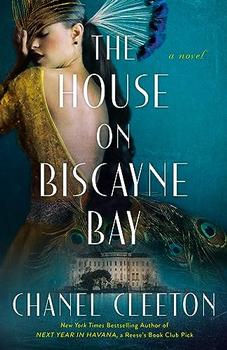
The House on Biscayne Bay
by Chanel Cleeton
As death stalks a gothic mansion in Miami, the lives of two women intertwine as the past and present collide.

The Flower Sisters
by Michelle Collins Anderson
From the new Fannie Flagg of the Ozarks, a richly-woven story of family, forgiveness, and reinvention.

The Funeral Cryer by Wenyan Lu
Debut novelist Wenyan Lu brings us this witty yet profound story about one woman's midlife reawakening in contemporary rural China.
Your guide toexceptional books
BookBrowse seeks out and recommends the best in contemporary fiction and nonfiction—books that not only engage and entertain but also deepen our understanding of ourselves and the world around us.