Summary | Excerpt | Reviews | Beyond the Book | Readalikes | Genres & Themes | Author Bio
Critics' Opinion:
Readers' Opinion:
First Published:
Mar 2007, 408 pages
Paperback:
Dec 2008, 408 pages
 Book Reviewed by:
BookBrowse Review Team
Buy This Book

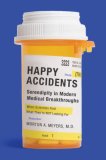
Introduction
Serendipity, Science’s Well-Guarded Secret
I exist
But only in you if you want me . . .
All things are meaningless accidents, works of chance
unless your marveling gaze,
as it probes, connects and orders,
makes them divine . . .
— Wilhelm Willms, “God Speaks”1
Contemplating the genesis of the great medical breakthroughs of the last
century, most people picture brilliant, well-trained scientists diligently
pursuing a predetermined goal — laboriously experimenting with first this
substance and then that substance, progressing step by step to a “Eureka!”
moment when the sought-after cure is at last found. There in the mind’s eye is
Marie Curie stirring a vat of pitchblende over many years to recover minute
amounts of radium, or Paul Ehrlich testing one arsenical compound after another
until he finds Salvarsan, the “magic bullet” against syphilis, on his 606th
attempt. In the contemporary setting, one looks to what might be called Big
Science. Surely, we imagine, in the halls of ivy-draped universities and the
gleaming labs of giant pharmaceutical companies, teams of researchers in smart
white coats are working in harmony to cure cancer, banish the common cold, or
otherwise produce the Next Big Thing in medicine.
For its own reasons, the medical establishment is happy to perpetuate these
largely false images. By tradition and protocol, it presents science as a set of
facts and strong beliefs that, like the Ten Commandments, have been set in stone
by a distant all-knowing authority and, if followed, will lead inevitably
through a linear process to the desired results. Furthermore, it portrays the
history of scientific advances as a
sequence of events that have led to more-or-less direct progress.
The reality is different. Progress has resulted only after many
false starts and despite widespread misconceptions held over long periods
of time. A large number of significant discoveries in medicine
arose, and entirely new domains of knowledge and practice were
opened up, not as a result of painstaking experimentation but rather
from chance and even outright error. This is true for many of the common
drugs and procedures that we rely on today, notably many antibiotics,
anesthetics, chemotherapy drugs, anticoagulant drugs, and
antidepressants.
Consider the following examples, all typical of how things happen
in medical research:
Excerpted from Happy Accidents by Morton Meyers, M.D. Copyright © 2007 by Morton Meyers, M.D. Excerpted by permission of Arcade Publishing. All rights reserved. No part of this excerpt may be reproduced or reprinted without permission in writing from the publisher.





The House on Biscayne Bay
by Chanel Cleeton
As death stalks a gothic mansion in Miami, the lives of two women intertwine as the past and present collide.

The Flower Sisters
by Michelle Collins Anderson
From the new Fannie Flagg of the Ozarks, a richly-woven story of family, forgiveness, and reinvention.

The Funeral Cryer by Wenyan Lu
Debut novelist Wenyan Lu brings us this witty yet profound story about one woman's midlife reawakening in contemporary rural China.
Your guide toexceptional books
BookBrowse seeks out and recommends the best in contemporary fiction and nonfiction—books that not only engage and entertain but also deepen our understanding of ourselves and the world around us.