Summary | Excerpt | Reviews | Beyond the Book | Readalikes | Genres & Themes | Author Bio
Critics' Opinion:
Readers' Opinion:
First Published:
Jul 2006, 272 pages
Paperback:
Jun 2007, 288 pages
 Book Reviewed by:
BookBrowse Review Team
Buy This Book

Along the side of the roads, refugees walked alone -- or in small family groups. The walkers could carry only enough food for a day or two. Those lucky enough to have a car and gasoline stuffed as many family members as possible inside. Some even rode in the open trunk. Higher in the mountains, the trek was still an adventure for children who I saw playing among the wildflowers of an early Kurdish spring. A week later, some of these same children would die from diarrhea and exposure on the stony mountainsides of the border with Turkey.
I felt for Talabani and his colleagues. While the uprising had begun spontaneously, the Kurdistan political parties had moved quickly to take control. While the Bush Administration's repeated snubs ought to have alerted the Kurdish leaders as to how they were seen in Washington, they had continued to have a blind faith in the goodness of the United States and its leaders. They had thought President Bush meant it when he called on the Iraqi people to overthrow Saddam Hussein. Now the illusions were stripped away. The Kurdish leaders faced the final destruction of the Kurdistan revolution, and the possible obliteration of the Kurdish people in Iraq. On that Easter Sunday, no one imagined that the refugees fleeing to the mountains would return.
At Amadiya, a Christian town spectacularly situated on a tabletop mountain, Talabani and I said goodbye. He headed toward the Iranian border, while I had no choice but to try to return to Syria. Mohid, a young peshmerga who spoke reasonable English, was assigned to take me to Qameshli. East of Zakho, we passed one of Saddam's "Victory Cities," the quasi-concentration camps where Kurdish villagers had been forcibly relocated. I asked to stop. It was as grim as the places Haywood Rankin and I had seen being constructed in Eastern Kurdistan four years before. The inhabitants were now free, but they had nothing. As I walked around on the rutted and muddy streets, I came across a group of men carrying a fifty-kilo grain bag. It was grain that had been treated to be rat poison. The men planned to wash it in the hopes of making it edible.
Our original plan was to stay in Zakho until night, and then cross the Tigris under the cover of darkness. But with the Iraqis having taken Dahuk, further south, early that morning, panic was spreading in Zakho. Not knowing exactly how soon the Iraqi Army would arrive, Mohid decided we could not wait. But even in these circumstances, Kurdish hospitality trumped other considerations. Before we headed to the river, Mohid arranged a multidish lunch which we ate sitting cross-legged on a plastic tablecloth in the home of a local resident. (Our host acted as if he had all the time in the world, but he probably headed for the mountains shortly after we left. Feeding both peshmerga and an American would have marked him especially for retribution.)
Back at the Tigris, the shelling was much worse than the day before. We sprinted through reeds to a sandbagged position on the river's gravelly edge. My peshmerga companions stood guard while I lay on the ground. When they heard the mortar blast, they ducked down on top of me. Afterward, we all stood up, and I filmed the plume with my Sony video camera. The peshmerga shouted repeatedly for the boatman to come from the Syrian side to pick me up, but he was obviously reluctant, and for good reason. Iraqi artillery had found the range, and several mortars landed in the river not far from the boat. Mine was the last crossing. A sniper shot the boatman in the head on his next attempt.
In Damascus on April 1, I stopped in to see Tony Touma, a Syrian Christian working for ABC's Damascus bureau whose expertise and contacts were legendary. When I mentioned that I had home video of the uprising's collapse, an ABC engineer asked to see it. I overheard the engineers critique my camera work as they ran it through their dubbing machine (it was only the second time I had used a video camera) but then they asked if they could send it to New York. That evening my footage from Iraq led the ABC Evening News. Peter Jennings did an on-camera interview from New York in which I described the humanitarian catastrophe overtaking the Kurds. At 4 A.M. Damascus time, ABC in New York woke me at the Damascus Sheraton to ask if I would narrate my film for Nightline. That evening Ted Koppel concluded his broadcast with a five-minute segment from my film.
Copyright © 2006 by Peter W. Galbraith



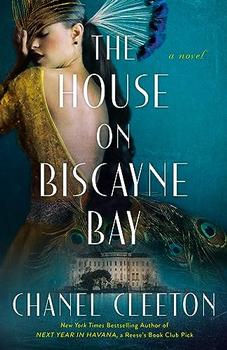
The House on Biscayne Bay
by Chanel Cleeton
As death stalks a gothic mansion in Miami, the lives of two women intertwine as the past and present collide.

The Flower Sisters
by Michelle Collins Anderson
From the new Fannie Flagg of the Ozarks, a richly-woven story of family, forgiveness, and reinvention.
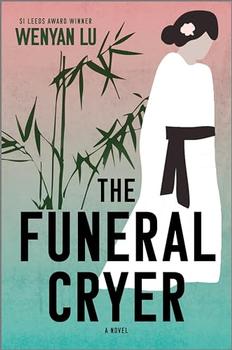
The Funeral Cryer by Wenyan Lu
Debut novelist Wenyan Lu brings us this witty yet profound story about one woman's midlife reawakening in contemporary rural China.
Your guide toexceptional books
BookBrowse seeks out and recommends the best in contemporary fiction and nonfiction—books that not only engage and entertain but also deepen our understanding of ourselves and the world around us.