Summary | Excerpt | Reading Guide | Reviews | Beyond the Book | Readalikes | Genres & Themes | Author Bio
Critics' Opinion:
Readers' Opinion:
First Published:
Nov 2004, 320 pages
Paperback:
Oct 2005, 336 pages
 Book Reviewed by:
BookBrowse Review Team
Buy This Book

Gro Rollag was no beauty, but she was a strong capable young woman with a long face, prominent cheekbones, high forehead, and a kindly intelligent look in her rather narrow eyes. According to family lore, she was not the most conscientious housekeeper because she preferred reading to housework. A love of books and reading ran in the family. Of all the possessions they were forced to sell or leave behind in Norway, what the Rollags remembered with deepest regret was the library they inherited from an eighteenth century ancestor -- lovely old books sold to pay for their passage to America.
Gro and Ole were the first of the family to emigrate, leaving Oslo on April 24, 1873. "We traveled via England and with the Cunard Line from Liverpool," Gro wrote in her recollections half a century later, furnishing precious few details. "We were thirteen days on the Atlantic and landed at Boston. From there we went west in a railroad boxcar. We took a little snack for the journey -- a piece of sausage and a few crackers each."
Her brother, Osten Knutson Rollag, was a bit more expansive when he wrote down his own story. Osten explained that their mother, Kari Nilsdotter, had been left a widow in 1862 with three children to support—Soneva, the oldest, was thirteen; Gro, eleven; and Osten himself, eight. It was the custom in that part of Norway for children to work to support themselves right after confirmation—at fourteen or fifteen—so presumably Soneva got a job soon after her father’s death, probably as a maid for a neighboring farm family. Soneva seems to have been the family favorite. "She was a more than usually nice person," wrote Osten, "and respected by all who knew her."
Soneva died in 1873 at the age of twenty-four. Her death severed the family’s ties to Norway. That same year, Kari sold the farm that her husband had purchased thirty-one years before, Gro married and left for America, and Osten and Kari followed them the next spring. "On the morning of the 15th of May, 1874, we left the home in the valley where my forefathers had lived for how long one does not know," Osten recorded solemnly. "The morning of May 15 began with bright sunshine and the old ‘graend’ was very beautiful. In the sunshine we saw the new foliage on the birches and the many rushing waterfalls which flowed into the valley. It was very hard to say farewell forever to all of this." He was nineteen years old.
"Among the various arguments for going to America, the strongest was the poverty among the common people where we lived in Norway," wrote a fisherman named Lars Stavig, who left his home in Romsdal on the west coast in 1876. "Also, the hopelessness of ever amounting to anything and the hard struggle awaiting my boys if they were to remain in Norway."
Two families to a wagon—they had agreed on this beforehand. The women would sit on top of the trunks and bags and bedrolls with the smaller children, while the men and older children walked alongside. Of the fifty-three families who loaded the wagons to overflowing that day, Anna and Johann Kaufmann were among the less encumbered. They only had the two children, a three-year-old named Johann like his father and Peter, a baby who would ride in his mother’s arms. Some of their neighbors had five, seven, ten children to look after, mountains of luggage, feeble elderly parents. Until that day, Anna Kaufmann had spent her entire life in the village of Waldheim amid the wide windswept fields of the Ukrainian province of Volhynia. She prayed with her family and neighbors every Sunday in the Mennonite church where her father, the Reverend Johann Schrag, served as the elder. The farthest Anna had ever traveled was to neighboring villages—Horodischtz, where her husband had grown up, Kotosufka, Sahorez, German-speaking Mennonite settlements whose names have long since fallen off the map.
In a single summer day, all of these villages emptied.
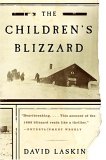
From The Children’s Blizzard by David Laskin. HarperCollins Publishers. Used by permission.






The House on Biscayne Bay
by Chanel Cleeton
As death stalks a gothic mansion in Miami, the lives of two women intertwine as the past and present collide.

The Flower Sisters
by Michelle Collins Anderson
From the new Fannie Flagg of the Ozarks, a richly-woven story of family, forgiveness, and reinvention.

The Funeral Cryer by Wenyan Lu
Debut novelist Wenyan Lu brings us this witty yet profound story about one woman's midlife reawakening in contemporary rural China.
Your guide toexceptional books
BookBrowse seeks out and recommends the best in contemporary fiction and nonfiction—books that not only engage and entertain but also deepen our understanding of ourselves and the world around us.