Summary | Excerpt | Reading Guide | Reviews | Readalikes | Genres & Themes | Author Bio
Critics' Opinion:
Readers' Opinion:
First Published:
Oct 2003, 288 pages
Paperback:
Jul 2004, 336 pages

Chapter One
Now they were starting. Finality ran through the train, an exhalation. There were thuds, hoots, whistles, and the shrieks of late arrivals. From a megaphone, announcements were incomprehensible in American and Japanese. Before the train had moved at all, the platform faces receded into the expression of those who remain.
Leith sat by a window, his body submissively chugging as they got under way. He would presently see that rain continued to fall on the charred suburbs of Tokyo, raising, even within the train, a spectral odour of cinders. Meanwhile, he was examining a photograph of his father. Aldred Leith was holding a book in his right hand -- not reading, but looking at a likeness of his father on the back cover.
It was one of those pictures, the author at his desk. In an enactment of momentary interruption, the man was half-turned to the camera, left elbow on blotter, right hand splayed over knee. Features fine and lined, light eyes, one eyelid drooping. A taut mouth. Forehead full, full crop of longish white hair. The torso broad but spare; the clothes unaffected, old and good. As a boy, Leith had wondered how his father could always have good clothes so seldom renewed -- a seeming impossibility, like having a perpetual two days' growth of beard.
The expression, not calm but contained, was unrevealing. Siding with the man, the furniture supplied few clues: a secretary of dark wood was fitted in its top section with pigeonholes and small closed drawers. This desk had been so much part of the climate of family life, indivisible from his father's moods -- and even appearing, to the child, to generate them -- that the son had never until now inspected it with adult eyes. For that measure of detachment, a global conflict had been required, a wartime absence, a voyage across the world, a long walk through Asia; a wet morning and strange train.
There was no telephone on the desk, no clock or calendar. A bowl of blown roses, implausibly prominent, had perhaps been borrowed, by the photographer, from another room. On the blotter, two handwritten pages were shielded by the tweedy sleeve. Pens and pencils fanned from a holder alongside new books whose titles, just legible, were those of Oliver Leith's novels in postwar translations. There were bills on a spike, a glass dish of chips, a paperweight in onyx. No imaginable colours, other than those of the foisted flowers; no object that invited, by its form or material, the pressure of a hand. No photograph. Nothing to suggest familiarity or attachment.
The adult son thought the picture loveless. The father who had famously written about love -- love of self, of places, of women and men -- was renowned for a private detachment. His life, and that of his wife, his child, was a tale of dislocation: there were novels of love from Manchuria to Madagascar. The book newly to hand, outcome of a grim postwar winter in Greece, could be no exception. And was called Parthenon Freeze.
If the man had stood up and walked from the picture, the strong torso would have been seen to dwindle into the stockiness of shortish legs. The son's greater height, not immoderate, came through his mother; his dark eyes also.
All this time, Leith's body had been gathering speed. Putting the book aside, he interested himself in the world at the window: wet town giving way to fields, fields soggily surrendering to landscape. The whole truncated from time to time by an abrupt tunnel or the lash of an incoming train. Body went on ahead; thought hung back. The body could give a good account of itself -- so many cities, villages, countries; so many encounters, such privation and exertion should, in anyone's eyes, constitute achievement. Leith's father had himself flourished the trick of mobility, fretting himself into receptivity and fresh impression. The son was inclined to recall the platform farewells.
Copyright © 2003 Shirley Hazzard. All rights reserved. Reproduced with the permission of the publisher, Farrar, Straus and Giroux.





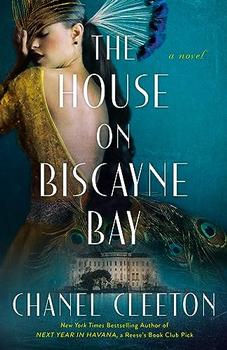
The House on Biscayne Bay
by Chanel Cleeton
As death stalks a gothic mansion in Miami, the lives of two women intertwine as the past and present collide.

The Flower Sisters
by Michelle Collins Anderson
From the new Fannie Flagg of the Ozarks, a richly-woven story of family, forgiveness, and reinvention.

The Funeral Cryer by Wenyan Lu
Debut novelist Wenyan Lu brings us this witty yet profound story about one woman's midlife reawakening in contemporary rural China.
Your guide toexceptional books
BookBrowse seeks out and recommends the best in contemporary fiction and nonfiction—books that not only engage and entertain but also deepen our understanding of ourselves and the world around us.