Critics' Opinion:
Readers' rating:
Published Nov 2011
464 pages
Genre: Literary Fiction
Publication Information
Nineteenth-century Europe, from Turin to Prague to Paris, abounds with the ghastly and the mysterious. Conspiracies rule history. Jesuits plot against Freemasons. Italian priests are strangled with their own intestines. French criminals plan bombings by day and celebrate black masses by night. Every nation has its own secret service, perpetrating forgeries, plots, and massacres. From the unification of Italy to the Paris Commune to the Dreyfus Affair to the notorious forgery The Protocols of the Elders of Zion, Europe is in tumult and everyone needs a scapegoat. But what if, behind all of these conspiracies both real and imagined, lay just one man? What if that evil genius created the most infamous document of all?
"Starred Review. What does it all add up to? An indictment of the old Europe, for one thing, and a perplexing, multilayered, attention-holding mystery. Expect it to find many readers." - Kirkus Reviews
"A novel that takes the power of fakery in history to new heights... This work of teasing historical pseudo-reconstruction combines an intriguing philosophy of history with an elaborate set of reflections on narrative and the nature of fiction." - Times Literary Supplement
"Erudite and pop, sinister and passionate... A work destined to become a classic." - La Repubblica
"This feels like Eco's most accessible novel since The Name of the Rose..." - Sunday Times
"[E]xtemporaneous information certainly adds to the sense of place and the awareness of being told a tale by a master, but the narrative gets lost in the details. [Eco's] desire to impress - and demand so much of - his readers sometimes works against his best intentions." - Publishers Weekly
This information about The Prague Cemetery was first featured
in "The BookBrowse Review" - BookBrowse's membership magazine, and in our weekly "Publishing This Week" newsletter. Publication information is for the USA, and (unless stated otherwise) represents the first print edition. The reviews are necessarily limited to those that were available to us ahead of publication. If you are the publisher or author and feel that they do not properly reflect the range of media opinion now available, send us a message with the mainstream reviews that you would like to see added.
Any "Author Information" displayed below reflects the author's biography at the time this particular book was published.

Umberto Eco was born in the city of Alessandria in the Italian region of Piedmont, right in the middle of the Genova, Milan, Turin triangle. His novels include The Name of the Rose, Foucault's Pendulum, The Island of the Day Before and Baudolino. His collections of essays include Five Moral Pieces, Kant and the Platypus, Serendipities, Travels in Hyperreality, and How to Travel with a Salmon and other Essays. He also wrote extensively on philosophy, including in the areas of semiotics, linguistics, aesthetics and morality. He died in February 2016 aged 84.
In September 1962, Eco married Renate Ramge, a German art teacher with whom he has a son and a daughter. He divides his time between an apartment in Milan and a vacation house near Rimini.
... Full Biography
Link to Umberto Eco's Website
Name Pronunciation
Umberto Eco: Um-bair-toe EK-oh (the um is like the ending of possum)
The Flower Sisters
by Michelle Collins Anderson
From the new Fannie Flagg of the Ozarks, a richly-woven story of family, forgiveness, and reinvention.
The House on Biscayne Bay
by Chanel Cleeton
As death stalks a gothic mansion in Miami, the lives of two women intertwine as the past and present collide.
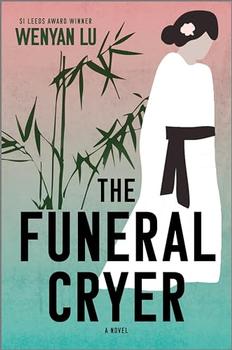
The Funeral Cryer by Wenyan Lu
Debut novelist Wenyan Lu brings us this witty yet profound story about one woman's midlife reawakening in contemporary rural China.
Your guide toexceptional books
BookBrowse seeks out and recommends the best in contemporary fiction and nonfiction—books that not only engage and entertain but also deepen our understanding of ourselves and the world around us.