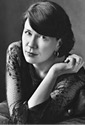
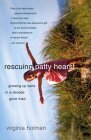
Amongst many things, Virginia Holman describes what it is likely living with somebody who is mentally ill and why it took her so long to find the words and courage to write the autobiography of her own childhood in Rescuing Patty Hearst.
A piece of Rescuing Patty Hearst was originally published in
DoubleTake and won a Pushcart Prize. Can you describe how you came to expand the
essay into a full-length work?
I had probably been working on telling this story in everything I had written
since I began writing. I was engaged off and on for a number of years writing a
novel based on these experiences—but this story refused to work as fiction for
me, despite the fact that many first novels are near pure autobiography.
I am cursed with a perhaps unfortunate amount of earnestness. When I first
spoke with the woman who would later become my agent she asked if I had ever
considered writing this material as nonfiction and I said "Absolutely
not! I couldn’t do that. Especially to my family." I felt it would be
some sort of betrayal to tell some of our secrets. But soon after that
conversation I began writing short essays about my experiences and—with
great fear—showing them to my family.
I suppose deep down I thought that I'd be cast out, but instead they
were immensely kind and supportive of the endeavor. And that's why the book
exists. I could never have published this book—there’s so much pain and
exposure involved in telling a story like this—without the generosity of
spirit of my father, sister, and husband.
The DoubleTake essay came about rather suddenly. About four years ago the
house two doors down from ours was suddenly burned to charcoal timbers in a
terrifying fire set by angry drug dealers. The tenants, who had made the mistake
of trying to steal from the dealers, were taken elsewhere and murdered. It was
extremely upsetting, but watching the house turn into a "crime scene"
and then just a sad burned frame of a house. The tenants' family would
periodically drive by and just stare at the house from their car. Their grief,
their need to understand, ignited my grief for my family home in the fictionally
named Kechotan. I wrote an essay yoking together my childhood grief with the
charred house two doors down, an essay named "Homesickness." The
acquiring editor at DoubleTake, a young man named David Rowell, later prodded me
to write a book. Then I finally began the painful and exhilarating
task of writing this book.
Rescuing Patty Hearst invokes in its title a cultural icon—and the
decade of her heyday, the 1970s. How did you go about choosing the words and
images to so genuinely reconstruct the ethos of the period?
Pure memory and a lot of "oldies radio." (How did all the songs I
love wind up on oldies stations?)
The seventies were a mess, a loud, glittery wonderful mess. We had Woodward and
Bernstein. A corrupt president was removed from office (imagine that happening
now!) John Travolta worked at a paint shop in Saturday Night Fever and lived his
dream of disco king at night. Valerie Bertenelli and McKenzie Phillips lived
with their single mom in a wholly unglamorous apartment in "One Day at a
Time". Things weren't perfect and as a culture we seemed to be trying to
take a look at that. Now we have "Frazier" and Home Alone movies and
"Friends", where people live in homes and dress in ways that are
wildly beyond their means and create and nurture perverse expectations of life.
In the seventies, to my eight year old mind, the SLA, this weird group,
kidnapped an heiress and tried, in their very wrongheaded way, to create change
for more people. Seeing Patty Hearst as a gun toting bank robber was empowering.
Growing up, understanding her story as an adult, I see how much her story, the
seventies, and my family's story was very much a story of identity, captivity,
and what it means to truly choose a way of life.
You have such vivid memories. Did you write with the aid of a childhood
diary, or purely through self-reflection?
I’ve kept diaries over the years, and used them. But memory and
interviewing family members helped me the most as I reconstructed my experience.
I had several conversations with my father where we disagreed with each other or
found we were confused about what happened. And interviews where my sister
recounted experiences that I didn’t recall or when I wasn’t present. I
decided to bring those moments into the book itself. Why not? Memoir and memory
is a faulty and fractured thing—it seemed truthful to present it as such on
the page.
The decision to split alternate your narration between past and present is a
daring one. How did you finesse the tone between your child and adult
perspectives?
I don't know how daring it is—to me it seemed the most honest way to write
a memoir. The past is always in fragments, as is the present, and the future is
up for grabs. I wrote Rescuing Patty Hearst in alternating voices mainly
because those are the voices I had in me: the captive child trying to escape and
understand, and also, unfortunately, later, as an adult still captive to my
past, trying to somehow understand what had happened to my family and why.
People ask me if writing the book was cathartic. The answer is no. Catharsis
means you cast something out and walk away from it. Life isn't that way, at
least mine isn't. Writing this book helped me integrate my past and my present,
to accept it and to speak of it unashamed.
Particularly inspiring are the passages that detail the safe haven offered by
books and reading. Would you prescribe literature for anyone going through a
troubled time?
Well, I am not a doctor, so I can't write scrips. But I recommend books for
anyone at anytime. I am a compulsive reader. As a girl I adored the "Can
This Marriage Be Saved" series and "Drama in Real Life" series in
Ladies Home Journal and Readers' Digest, respectively. But books were it--they
become like friends. Some of my favorites are William Trevor’s stories, Pat
Barker’s Regeneration trilogy, Eric Larsen’s An American Memory and I Am Zoe
Handke, Steven Millhauser, Mary Kay Blakely, Hugh Nissenson, Art Spiegelman,
Erma Bombeck, Ayun Halliday, Ben Okri, Rick Bragg, Anna Quindlen, David Sedaris,
Roddy Doyle, William Stafford, Lousia May Alcott, Pauline Kael, Anthony Lane,
Los Bros Hernandez, Vivian Gornick…
Your book describes the roller coaster of events and emotions that is life
with a mentally ill person. "I want to say that our lives in Kechotan were
awful and horrible all the time," you write. "But the truth is that
there were days it wasn't so bad, and even times it was flat-out fun." How
are you hoping readers who have been through similar experiences will respond to
the book?
I think the dread of living with someone who is chronically psychotic is
hideous. But as an 8 year old, I wasn't fully aware of everything that was
happening. A secret war was kind of fun. Like some girl version of "Jonny
Quest". And when my mother seemed to go into remissions and we were
functioning as a family were fun--as were the times I spent with my cousins.
Life is never just suffering and pain. But an awful lot of the time my life felt
like it was either pure dread or joy. One extreme naturally provokes the other,
I suppose.
I hope readers who are unfortunate enough to go through an experience like mine
will find some comfort in knowing they are not alone. Many of the newer
medications have been helpful to folks afflicted with severe psychotic illnesses
and their families. There are plenty of people who have had psychotic episodes
and chronic mental illness who work and love and function just fine. You’d
never know they had a problem unless they told you. However, there are also
plenty of folks not getting the help they need because the old and vague laws my
family faced that required "danger to oneself or others" prior to any
intervention are still required. So if you are faced with a loved one
threatening to hurt someone else, it is often not enough to get them help.
The plain truth is that you cannot reason with someone who is actively
psychotic--their brains are functioning in such a way that impairs their ability
to make decisions. So many patients who might get better with the proper
medication and help are left to suffer and die. And their family members,
doctors, and lawyers are forced to watch helplessly as this sort of tragedy
plays out over and over again. The laws in many states are simply inhumane.
The book includes letters your mother wrote to you, detailing reality as she
experienced it. Sometimes shocking, sometimes moving, these letters invite the
reader into deeply personal terrain. How did you sacrifice your own privacy for
the sake of emotional honesty?
I think if you decide to write a memoir about hard times, you ought to be
sacrificing your privacy. You have no business even attempting the form if you’re
not willing to put yourself out there naked--beautiful and ugly and sick and
struggling. I liken a green memoir-writer (and this may be a poor comparison) to
a young gung-ho soldier going to war. You just don’t know what you’re
getting into when you start. You think you do, but soon enough you find out you
don't know jack about where you've been or where you're gonna wind up. I was
lucky enough during the writing of this to have a great agent and wonderful
editor and a whole lot of dear friends and family to keep my head on straight
through some terrifically rough spots.
For many years you denied your own experience. You write: "I was just
busy trying to get through those years--these were questions I had never had
time to ask." How did you come to face the questions of your past?
I felt I had no choice but to face them—they wouldn’t leave me alone. I
felt awful all the time as a young woman. As Ellen Gilchrist has written,
"You are only as sick as your secrets." Writing my truth was my
treatment.
Unless otherwise stated, this interview was conducted at the time the book was first published, and is reproduced with permission of the publisher. This interview may not be reproduced or reprinted without permission in writing from the copyright holder.

Lucy Grealy (1963-2002) was born in Dublin, Ireland. She moved to Spring Valley, New York, with her family when she was four years old. When she was nine she was diagnosed with Ewing's sarcoma. Surgery to remove... (more)
If you enjoyed:
Rescuing Patty Hearst
Try:
Autobiography of a Face
by Lucy Grealy

Sarah Hannah received a B.A. from Wesleyan University, an M.F.A. and a Ph.D. from Columbia University. Her poems have appeared in The Southern Review, Parnassus, Agni, Rattapallax, Western Humanities Review, New Millennium ... (more)
If you enjoyed:
Rescuing Patty Hearst
Try:
Inflorescence
by Sarah Hannah
We recommend 8 similar authors

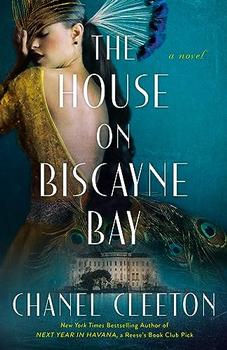
The House on Biscayne Bay
by Chanel Cleeton
As death stalks a gothic mansion in Miami, the lives of two women intertwine as the past and present collide.
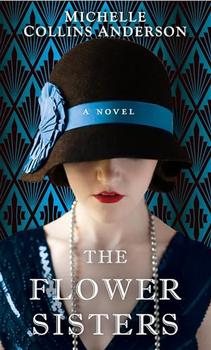
The Flower Sisters
by Michelle Collins Anderson
From the new Fannie Flagg of the Ozarks, a richly-woven story of family, forgiveness, and reinvention.
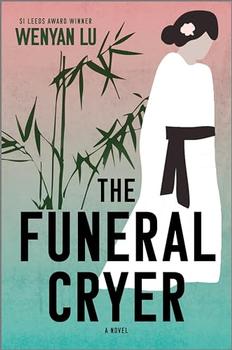
The Funeral Cryer by Wenyan Lu
Debut novelist Wenyan Lu brings us this witty yet profound story about one woman's midlife reawakening in contemporary rural China.
Your guide toexceptional books
BookBrowse seeks out and recommends the best in contemporary fiction and nonfiction—books that not only engage and entertain but also deepen our understanding of ourselves and the world around us.