J. R. (Jamilla Rhines) Lankford reveals what inspired her to write her acclaimed novel, The Jesus Thief, about the cloning of Jesus; why she believes human cloning will soon be a reality; and the challenges it will pose to society.
How did you come up with the idea for your latest novel, The Jesus
Thief?
My husband and I were watching a documentary on the Shroud of Turin in
October 1999. It said a scientist claimed to have found Type AB male blood on
the Shroud. I thought of the idea for the novel at once: What if the DNA were
intact? What if someone extracted it and tried to clone Jesus? I'd been
following developments in mammalian cloning since Dolly, the sheep, was cloned
in 1999. I started the writing and research the next day.
With human cloning in the news, do you believe someone might actually try
to clone DNA from the Shroud?
They'd fail if they did. Reportedly, only traces of blood were found on it
and the DNA was badly degraded. But the DNA of many other historical figures has
surely survived. Should we permit the cloning of Einstein? What about Mother
Theresa? Stalin? Criminals executed by the State? Should we clone the Son of God
if we could? Society must answer these questions because if the first human
clone doesn't already exist, it soon will. The equipment and fundamental
expertise to clone human beings is in every microbiology lab and fertility
clinic.
This was why you wrote The Jesus Thief?
Secondarily, yes. It's a painless way to learn what's involved in cloning,
and the main ethical, religious and legal issues. But the real driving force
quickly became something else. In The Jesus Thief I explore the damage we
do to ourselves and others because of religious dogma when at the heart of every
religion is the concept that God is love. Given our troubling times, that
message felt all the more important. Every day in Palestine, every day in
Jersualem, people kill each other in the name of God. Clergymen molest children.
Surely both the terrorists and the passengers on the doomed September 11 flights
called God's name as their planes hit the Twin Towers. Yet in the parable of the
Good Samaritan, Jesus pointed out that religious creed is secondary to the
actual practice of love. Two members of the approved faith passed an
injured man on the road, but a Samaritan stopped to help him. To Judeans,
Samaritans were enemies and infidels. Jesus didn't seem to care. He thought it
was more important to actively love our neighbors as ourselves, love our
enemies, our parents, our spouses and children. My main character, Felix Rossi,
becomes torn between two religions and forgets the actual practice of love. This
is the true dilemma of The Jesus Thief and I think it reflects the
dilemma of the world.
What did your research entail?
It was great fun to explore the scientific and medical aspects of the novel,
the ethics of human cloning, and to research the particulars of my characters'
interests and backgrounds. I studied cloning technology, in-vitro fertilization,
the history of the Jews in Italy, the decline of the U.S. Merchant Marine, the
growth of AIDS in Africa and learned who makes hats for the British Queen. As
the writing progressed, I traveled to Italy and New York to find and film
locations for the novel. Then I'd come home and write scenes, watching the
tapes. I consulted experts, read books, downloaded articles. Toward the end of
the first draft I made a list of my resources and references. It ran to five
pages, single spaced. Whatever I needed seemed to appear as soon as I thought of
it, as if I were "supposed" to write The Jesus Thief. I just
loved the work, the amazing things I saw and the wonderful people I met along
the way.
Your previous novel, The Crowning Circle, was a mystery/thriller
and I notice The Jesus Thief has a thrilling pace as well, though it's
not mystery.
I like exciting stories with compelling drama. They arise when characters we
care about are in trouble. I discovered I enjoy writing scenes of desperate
peril -- the hero or heroine's back against the wall; our hearts in our mouths!
Also, since I'm an engineer, I like to put a little technology in my books,
though I do it so anyone can understand. All this works well in thrillers like The
Crowning Circle but I think it will be a component of any novel I write.
What authors influenced you?
My real tutors for The Jesus Thief were the magnificent novels I read
as a child. For me, great novels were thrillers in the sense that the characters
faced compelling dilemmas of sweeping scope. Moby Dick, Les Miserables,
were enthralling as they forced me to turn the page to find out what would
happen to Ishmael and the whale, Jean Valjean and his pursuer. I wanted to write
a novel of that scope at the exciting pace today's reader demands. For The
Crowning Circle, it was the usual suspects: Conan Doyle, PD James, Agatha
Christie and so forth. Ken Follett's and Le Carre's older books. I've read
snatches of almost every major mystery author, but when I started writing
fiction, I stopped reading it (except in NovelDoc, the workshop I founded for
novelists). I learned I couldn't read other authors while writing novels of my
own.
You chose to self-publish The Crowning Circle in 2001. Why?
I wanted to see if there was a readership for my writing and I found out
there was, via reactions posted on sites such as Amazon.com. Only about 8 of
those responses are from people I know, so it told me I was on the right track.
I had to proceed in this way because when my former agent submitted The
Crowning Circle to New York publishing houses in mid 1999, we received a
slew of the most glowing rejection letters imaginable. One editor actually said,
"I must let you know off the bat that I fell head over heels with Ms.
Lankford's story. The plot is simply marvelous, replete with interesting
characters and fascinating morsels from the world of computer engineering."
She wasn't the only editor who raved. I now know this isn't uncommon for a new
author with a good book. Publishing is very commercial and rave rejections mean:
we love your writing but we don't want to take a risk.
You're an African-American author. Are your books targeted to an
African-American readership?
I write for everyone -- both male and female readers of any race or ethnic
background. Yes, different groups have specific needs addressed by specialized
books. However, I've always wanted to write novels that depict what we share. In
my experience, our commonalities far outweigh our differences. Especially in a
novel like The Jesus Thief my intention was to create characters who
richly express our common humanity.
The characters in your novels are, indeed, a patchwork of America - of the
world, for that matter - that was intentional?
Yes. It reflects my experience of life. I grew up in a large, diverse family.
In my youth, I was briefly married to a Trinidadian. In my early work as an
electrical engineer, I was a woman in a predominantly male field. When later I
filled the U.S. Secretariat of an international standards committee, I worked
and traveled with delegates from several countries for twelve years. We were all
very different, but we became great friends.
What prompted you to leave an international career in engineering to
become a novelist?
I don't remember whole stretches of my childhood because I was usually lost
in books. I devoured them, adored them, all of them: Dickens, Hemingway, Richard
Wright, Ralph Ellison, Pearl Buck, Colette, Balzac, Flaubert, Tolstoy, Dumas,
Pushkin. I read every novel I could get my hands on. To me their authors were
gods and their words magic. A beautiful sentence could make me cry. It helped
that my mother is a poet, Julia Watson Barbour. You can find her recordings in
the Library of Congress. My father was writing a novel called The Treadmill
when he died. He never finished it. I knew someday I'd return to books.
How do you manage to write books with so many likeable characters and
still create such tension?
I believe everyone means well. When we do something hurtful it's usually fear
that's the real culprit. And everyone wants something they don't have. These
ingredients by themselves make a story. In The Crowning Circle, Jake has
a lot of my husband's hobbies and some, though not all, of his qualities. A dear
woman friend who was a criminal psychologist inspired Skeet's personality. His
nickname and appearance are that of another old friend. A Vietnamese friend in
my former work inspired Shirley. He used to say he was born in China of
Vietnamese parents, educated in France and carried a British passport. As for
Gabrielle, I became interested in the Basques because of someone I sat next to
on a flight long ago. Because I liked all these people, I made the characters in
my book likable and used their good intentions, yearnings and fears to create
suspense. That and a few murders. In The Jesus Thief, none of the
characters were inspired by people I know. They were born on the page as I
wrote.
What are your plans for the future?
I've completed the first draft of Risen, a sequel to The Jesus
Thief. It will go through five to twenty revisions before I'll feel it's
ready to read. After that, I'm not sure. I've outlined four more Skeet/Jake
novels, but The Crowning Circle is virtually unknown. I sold somewhere
between 200 and 300 copies and stopped promoting it when I started writing my
new book. I'd learned what I wanted to know: avid, critical readers liked my
writing. They were ones I'd written for. I didn't want to skate by on
second-rate novels. Great Reads Books may reissue The Crowning Circle
with a better cover and national distribution. If so, I'll go back to those
Skeet/Jake books. There are two other novels I'd like to write for which I've
been gathering research materials. One is historical fiction, based on an
important event of the 16th century. The other is a fictional account of a
period in my grand aunt's life. During the 20's she lived a glamorous life
around exciting people in New York. I'd love to tell her story. As long as I'm
writing, I'll be happy whichever novel it is. I had to wait until late in life
to live my dream, but now that's it here, I'm loving every moment.
Unless otherwise stated, this interview was conducted at the time the book was first published, and is reproduced with permission of the publisher. This interview may not be reproduced or reprinted without permission in writing from the copyright holder.

Steve Berry is the New York Times and #1 internationally bestselling author of the Cotton Malone novels (The Bishop's Pawn, The Malta Exchange), among other books, and several works of short fiction. He has 25 million books ... (more)
If you enjoyed:
The Jesus Thief
Try:
The Third Secret
by Steve Berry
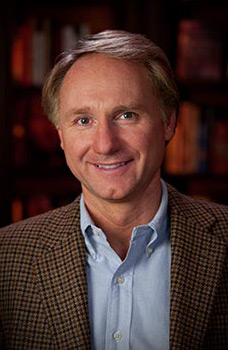
Dan Brown is the author of many bestselling novels, including the #1 New York Times bestseller, The Da Vinci Code. He is a graduate of Amherst College and Phillips Exeter Academy, where he spent time as an English teacher ... (more)
If you enjoyed:
The Jesus Thief
Try:
Angels & Demons
by Dan Brown
We recommend 8 similar authors

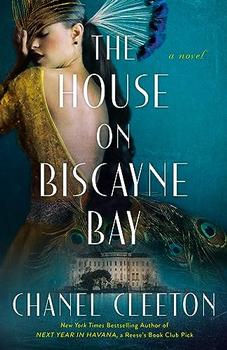
The House on Biscayne Bay
by Chanel Cleeton
As death stalks a gothic mansion in Miami, the lives of two women intertwine as the past and present collide.
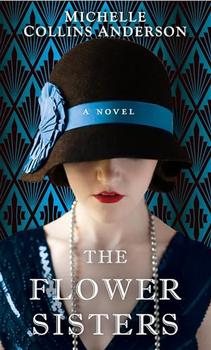
The Flower Sisters
by Michelle Collins Anderson
From the new Fannie Flagg of the Ozarks, a richly-woven story of family, forgiveness, and reinvention.
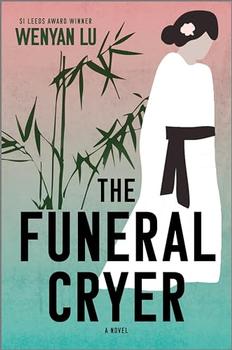
The Funeral Cryer by Wenyan Lu
Debut novelist Wenyan Lu brings us this witty yet profound story about one woman's midlife reawakening in contemporary rural China.
Your guide toexceptional books
BookBrowse seeks out and recommends the best in contemporary fiction and nonfiction—books that not only engage and entertain but also deepen our understanding of ourselves and the world around us.