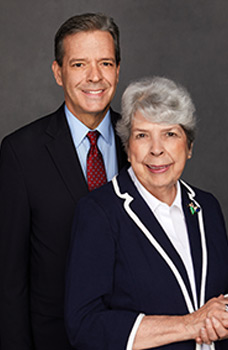
The mother-son writing team known as Charles Todd discuss their books and their lives.
For a while your partnership was a big secret. What made the change to
"coming out" as a mother-son writing team?
Caroline: It was a great relief. Shortly before we'd started all this,
I'd been diagnosed with an irregular heartbeat. That was just as the Gulf War
started, and I became an expert on it, watching CNN constantly while we tried to
figure out what caused my condition. Then we had to search for a cure that
didn't aggravate my allergies. That took a while, and I really couldn't add the
pressure and stress of a tour until we were sure the problem was under control.
Charles: I don't often talk about any of this, but it was a scary time,
and when I was cleared for action, it was a wonderful feeling. For all I knew it
could have been a permanent exclusion: I would have stayed in the shadows if
necessary. I think this is why I really enjoy meeting fans and going to mystery
conventions—I came close to missing all that.
It was a great relief to me too. I'd been out there carrying the banner and
worrying about Caroline, and was very glad when we could work together. It has
been fun, and interesting. I never know what she's going to say on a panel, and
she has no idea what I'm going to come up with. Keeps life exciting.
You've said before that your travels to Europe became the heart of your Ian
Rutledge series. Do you still get to England? Do you do your research traveling
together?
Caroline: I love to travel, any excuse will do. I'd been to the
battlefields in France, I'd seen those fields of white crosses out in the middle
of nowhere, lonely and yet so green and carefully tended. I think that stuck, as
emotional experiences often do. Charles and I had traveled all over England as
well, and we still go together on research trips—it is important to see and
react to the settings both individually and together. Charles gets more out of
pubs and chance encounters. I talk to rectors and policemen and women in the
shops.
Charles: I love to travel too, but I shudder to think of some of the
places Caroline has been and I don't even want to think about what she's eaten.
I'll take a ship anywhere or sit on a sunny beach anytime. But when we take a
research trip, it is always full of surprises that somehow wind up in the books.
One of my favorite things to do when we travel is to pack a lunch of cider,
apple slices, pickles, good bread and cheese that you carry to a churchyard or a
river bank or a hillside and just sit and absorb the feeling of the place.
Caroline, your educational background is in international relations. How has
that played into your writing career?
Caroline: I have an undergraduate degree in History and English Literature, and a master's in international relations. People always tell you to
"write what you know," and I took that advice in the broadest sense. If you look
at World War I, historically, you see how it has affected the entire twentieth
century—and is still affecting the problems in the Middle East. That has given
me a fresh viewpoint of the period, rather then looking at it as nearly a
hundred years in the past.
How has the current situation in the Middle East and our involvement overseas
affected your writing, if at all?
Charles: We are non-political on this issue. I am a member of the Men's
Auxiliary of the VFW, American Legion and AM Vets. My focus is the care of the
troops when they return home. I often speak to returning service people about
their experiences while serving. Whether in 1915 or 2005, the core issue of
facing death on a daily basis remains.
Caroline: I agree with Charles. Shell shock or today's post traumatic
stress disorder is still a problem for returning vets. Our hope is that through
Rutledge we can offer today's vets and their families to get help for war damage
to the mind and spirit as well as to the body. We receive so many e-mails from
vets of many wars and the stories they tell help us to capture the combat
experience.
As for the Middle East, I've an excellent background in the history of the area,
and I've traveled to many of the countries there. It has given me a personal
feeling for what is happening in the headlines. The politics, the people and the
history still have lethal consequences. It is rather terrifying to think that
events and decisions made nearly a hundred years ago have ramifications in WWII,
today's Middle East, in Kosovo and in Afghanistan. We do reap what we sow. WWI
isn't that long ago, it is in our newspapers and on TV and radio every day,
in some fashion. It gives immediacy to what we write about in the Rutledge
series.
In numerous reviews you are praised for your "psychological insight" and in
particular your ability to describe what the ravages of war can do to the human
mind, where does this insight come from?
Charles: Time spent listening to service people, their wives and widows.
During high school I worked in a retirement home. I spent many wonderful hours
hearing from service men and their widows about WWI. My great uncle fought in
WWI. His stories fascinated me. I firmly believe as an author you have to go out
in life and hear the stories of people. In pubs in the UK or a retirement home
in the US it is the stories of others that bring a book to life.
Caroline: I come from a long southern tradition of storytelling. Charles
and I spent many summer evenings on my father's porch sitting quietly as he told
the stories of his life experience. A writer has to have an interest in people.
You never know which part of an over heard conversation is going to be a gem for
a book. But most importantly, we write about ordinary people being driven to the
brink of control by a stress in their lives that has no other solution than
someone's death. Murder lurks in all of us, and we try to draw out of our
characters a sense of reality where what they do would have been done in real
life, not just on a page at an author's whim.
Charles, your background is in business trouble-shooting. Your clients were
often not glad to see you, since it meant they hit bottom. You've said this
helps you to see from Rutledge's point of view?
Charles: I was a corporate trouble-shooter for many years, and I know what
it is like to walk very carefully into a hostile environment. This has given me
good insight into what Rutledge goes through, and I've found that useful. You
can't barge in and take over, you have to feel your way through the situation
and get a grip on what's happening. And I think I've learned patience from him.
How is Rutledge changing in your minds? Is
he becoming the person you thought he'd be, or has he grown in ways you haven't
anticipated?
Caroline: You know how it is when you hit your thumb with a hammer then
the rest of the week, you bump that thumb over and over again when you least
expect it? Life is like that too—you do your best to survive against the odds
and aren't always successful. Intriguingly, Rutledge has a better grasp of that
than we do, and he's always surprising us and his cases always surprise us. It's
a voyage of discovery, which is probably what keeps the series fresh for us and
for readers. He has a knack for giving us insights into situations we hadn't
intended to raise, and then finding a way to deal with them.
When a character is as "real" as Rutledge and starts to act independently, you
know you're on the right track. You listen to him/her and learn where the plot
is going and how it is going to be played out.
Charles, you have put so much time and energy into Mystery Writers of
America: Board member, Chairman of the Edgars Committee, now as Secretary. You
must believe in the organization strongly to offer so much to it.
Charles: I do. It's run by writers for writers, and it needs the time and
energy of its membership to be the resource and the support system we all need
to survive in the business of writing. Even in the ten years we've been
published, there have been enormous changes in the publishing industry, and the
individual writer is a lonely figure in the wilderness of agents, editors, chain
bookstores, and dwindling numbers of independents. The stronger MWA can be, the
better it can serve us, and the more respect it can bring to bear in dealing
with the problems most of us face every day. Where else are we going to turn?
Unless otherwise stated, this interview was conducted at the time the book was first published, and is reproduced with permission of the publisher. This interview may not be reproduced or reprinted without permission in writing from the copyright holder.
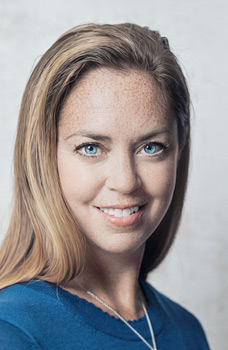
Marie Benedict is a lawyer with more than ten years' experience as a litigator at two of the country's premier law firms and for Fortune 500 companies. She is a magna cum laude graduate of Boston College with a focus in ... (more)
If you enjoyed:
A False Mirror
Try:
The Mystery of Mrs. Christie
by Marie Benedict

Clare read History at Trinity College, Cambridge, where she was a Senior Scholar. She graduated with a Double First.
She then spent eleven years in advertising, first at Saatchi & Saatchi and then, as a board director...
(more)
If you enjoyed:
A False Mirror
Try:
The Great Stink
by Clare Clark
We recommend 14 similar authors


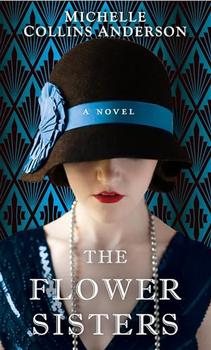
The Flower Sisters
by Michelle Collins Anderson
From the new Fannie Flagg of the Ozarks, a richly-woven story of family, forgiveness, and reinvention.
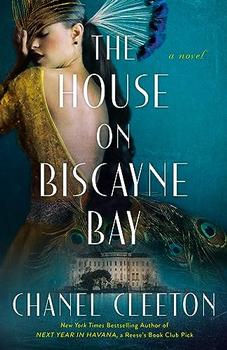
The House on Biscayne Bay
by Chanel Cleeton
As death stalks a gothic mansion in Miami, the lives of two women intertwine as the past and present collide.
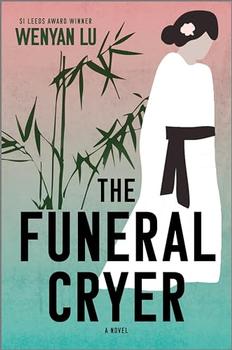
The Funeral Cryer by Wenyan Lu
Debut novelist Wenyan Lu brings us this witty yet profound story about one woman's midlife reawakening in contemporary rural China.
Your guide toexceptional books
BookBrowse seeks out and recommends the best in contemporary fiction and nonfiction—books that not only engage and entertain but also deepen our understanding of ourselves and the world around us.