Chris Bohjalian discusses his 2012 novel, Sandcastle Girls, which explores the Armenian Genocide - a novel which he says has been gestating since his childhood visits to the home of his Armenian grandparents.
For additional interviews with Chris Bohjalian, please see the reading guides for Midwives and Skeletons at the Feast
The story behind the story: The kernel that led to the novel, The Sandcastle Girls
Sometimes my novels have positively elephantine gestation periods - and even that, in some cases, is an underestimate. A mother elephant carries her young for not quite two years; I have spent, in some cases, not quite two decades contemplating the tiniest seed of a story and wondering how it might grow into a novel.
Moreover, in the quarter-century I've been writing books, I've realized two things about a lengthy gestation period. First, the longer I spend allowing an idea to take root inside me, the better the finished book; second, the more time I spend thinking about a book, the less time I spend actually writing it. Here's a confession: The first draft of the novel for which I may always be known best, Midwives, took a mere (and eerily appropriate) nine months to write. Skeletons at the Feast, another book I will always be proud of, took only 10. But I spent a long time pondering both of these novels before ever setting a single word down on paper.
Perhaps in no case has the relationship between reflection and construction - between the ethereal wisps of imagination and the concrete words of creation - been more evident than in the novel I have arriving this summer, The Sandcastle Girls. The novel has been gestating at the very least since 1992, when I first tried to make sense of the Armenian Genocide: a slaughter that most of the world knows next to nothing about.
My first attempt to write about the genocide, penned 20 years ago now, exists only as a rough draft in the underground archives of my alma mater. It will never be published, neither in my lifetime nor after I'm dead. I spent over two years struggling mightily to complete a draft, and I never shared it with my editor. My wife, who has always been an objective reader of my work, and I agreed: The manuscript should either be buried or burned. I couldn't bring myself to do either, but neither did I ever want the pages to see the light of the day. Hence, the exile to the underground archives.
Moreover, just about this time, Carol Edgarian published her poignant drama of the Armenian Genocide and the diaspora, Rise the Euphrates. It's a deeply moving novel and, it seemed to me, a further indication that the world didn't need my book.
And so instead I embarked upon a novel that had been in the back of my mind for some time: A tale of a New England midwife and a home birth that has gone tragically wrong.
Over the next 15 years, all but one of my novels would be set largely in New England. Sometimes they would be about women and men at the social margins: homeopaths, transsexuals, and dowsers. Other times they would plumb social issues that matter to me: homelessness, domestic violence, and animal rights.
The one exception, the one book not set in New England? Skeletons at the Feast, a story set in Poland and Germany in the last six months of the Second World War. That novel is, in part, about a fictional family's complicity in the Holocaust. Often as I toured on behalf of the book in 2008 and 2009, readers would ask me the following: When was I going to write about the Armenian Genocide? After all, from my last name it's clear that I am at least part Armenian. (I am, in fact, half-Armenian; my mother was Swedish.)
I had contemplated the subject often, even after failing in my first attempt to build a novel around the Meds Yeghern. The Great Calamity. Three of my four Armenian great-grandparents died in the poisonous miasma of the genocide and the First World War. Moreover, some of my best - and from a novelist's perspective most interesting - childhood memories occurred while I was visiting my Armenian grandparents at their massive brick monolith of a home in a suburb of New York City. Occasionally, my Mid-Western, Swedish mother would refer to their house as the "Ottoman annex of the Metropolitan," because it was - at least by the standards of Westchester County in the middle third of the twentieth century - so exotic.
In 2010, my father's health began to deteriorate badly. He lived in Florida at the time, while I lived in Vermont. I remember how on one of my visits, when he was newly home after yet another long stay in the hospital, together we looked at old family photographs. I was trying to take his mind off his pain, but I also found the exercise incredibly interesting. In some cases, these were images I had seen on the walls of my grandparents' or my parents' house since I was a child, but they had become little more than white noise: I knew them so well that I barely noticed them and they had grown as invisible to me as old wallpaper.
Now, however, they took on a new life. I recall one in particular that fascinated me: a formal portrait of my father when he was five years old, his parents behind him. All of them are impeccably coiffed. My grandfather is seated in an elegant wooden chair in the sort of suit and tie and vest that he seemed always to be wearing when I was a boy, and my grandmother is standing beside him in a beautiful black dress with a white collar and a corsage. I can see bits of my daughter - their great-granddaughter - in my grandmother's beautiful, almond-shaped eyes. My father, a kindergartener at the time, is wearing shorts, a white shirt, and a rather badly knotted necktie with a cross on it.
I knew almost nothing about my grandparents' story. But that picture reminded me of those moments when, as a child myself, I would sit on my grandfather's lap or listen to him, enrapt, as he played his beloved oud. I recalled the wondrous aroma of lamb and mint that always wafted from their front door when I would arrive, and my grandmother's magnificent cheese boregs. I thought of their library filled with books in a language - an alphabet - I could not begin to decipher, even as I was learning to read English.
And at some point, the seeds of my family's own personal diaspora began to take root. I had no interest in revisiting the disastrous manuscript that was gathering dust in my college archives. But I knew that I wanted to try once again to write about the Armenian Genocide. A good friend of mine, a journalist and genocide scholar, urged me on.
Ironically, I was about 90 pages into my new book when Mark Mustian published his beautifully written and deeply thought-provoking novel, The Gendarme. I felt a bit as I had in 1994 when I read Carol Edgarian's Rise the Euphrates. Did the world really need my book when it had Mark's - or, for that matter, the stories and memoirs that Peter Balakian, Nancy Kricorian, Micheline Aharonian Marcom, and Franz Werfel had given us? It might have been my father's failing health, or it might have been the fact that I was older now; it might have been the reality that already I cared deeply for the fictional women and men in my new novel. But this time I soldiered on.
I think The Sandcastle Girls may be the most important book I've written. It is certainly the most personal. It's a big, broad, sweeping historical love story. The novel moves back and forth in time between the present and 1915; between the narrative of an Armenian-American novelist at mid-life and her grandparents' nightmarish stories of survival in Aleppo, Van, and Gallipoli in 1915. Those fictional grandparents are not by any stretch my grandparents, but the novel would not exist without their courage and charisma.
Is the novel among my best work? The book opens with memories from my childhood in my grandparents' home, what my mother referred to as the Ottoman Annex. In other words, it has been gestating almost my entire life.
This essay appeared originally in The Armenian Weekly in 2012.
Unless otherwise stated, this interview was conducted at the time the book was first published, and is reproduced with permission of the publisher. This interview may not be reproduced or reprinted without permission in writing from the copyright holder.


Poet, essayist, and naturalist, Diane Ackerman is the author of many highly acclaimed works of nonfiction, including A Natural History of the Senses -- a book beloved by readers all over the world and the volumes Deep Play, A... (more)
If you enjoyed:
The Sandcastle Girls
Try:
The Zookeeper's Wife
by Diane Ackerman
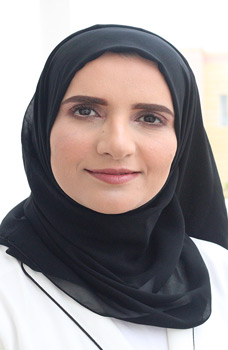
Jokha Alharthi is the first Omani woman to have a novel translated into English, and Celestial Bodies is the first book translated from Arabic to win the Man Booker International Prize. She is the author of two previous ... (more)
If you enjoyed:
The Sandcastle Girls
Try:
Celestial Bodies
by Jokha Alharthi
We recommend 40 similar authors





The Flower Sisters
by Michelle Collins Anderson
From the new Fannie Flagg of the Ozarks, a richly-woven story of family, forgiveness, and reinvention.

The House on Biscayne Bay
by Chanel Cleeton
As death stalks a gothic mansion in Miami, the lives of two women intertwine as the past and present collide.

The Funeral Cryer by Wenyan Lu
Debut novelist Wenyan Lu brings us this witty yet profound story about one woman's midlife reawakening in contemporary rural China.
Your guide toexceptional books
BookBrowse seeks out and recommends the best in contemporary fiction and nonfiction—books that not only engage and entertain but also deepen our understanding of ourselves and the world around us.