
-
Your next favorite book
is waiting.
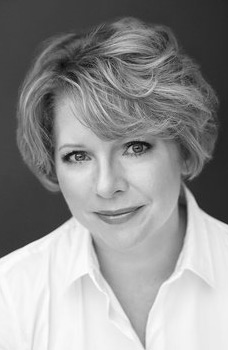
Melanie Benjamin explains the back-stories to her novels, The Autobiography of Mrs. Tom Thumb and Alice I Have Been; and explains why she chose to write about Anne Morrow Lindbergh in The Aviator's Wife.
This page includes two interviews with author Melanie Benjamin; in the video below, she discusses The Autobiography of Mrs. Tom Thumb, and, in the written piece beneath, she explains the back story to her first novel, Alice I Have Been. In a separate essay, she explains why she chose to write about Anne Morrow Lindbergh in The Aviator's Wife.
Why Anne Morrow Lindbergh?
by author Melanie Benjamin
What was I thinking, writing a novel about Anne Morrow Lindbergh?
That is a question I asked myself every time I sat down to work on The Aviator's Wife.
For Anne Morrow Lindbergh guarded her privacy fiercely and, at times, I felt she was eluding me just to make that point! My other heroines - Alice Liddell in Alice I Have Been and Lavinia Warren Stratton in The Autobiography of Mrs. Tom Thumb - gave up their secrets easily, almost eagerly. Anne, however, did not.
But that was what attracted me to her story in the first place - because of how elusive Anne remains to this day. She is known in fragments but never completely. Some are aware of her child's horrific kidnapping and murder. Others remember her chiefly as the shy, pretty bride of the most heroic man of his time. Many women revere her as an early feminist writer.
But few know her entire story, including her major accomplishments as an aviator in her own right, her grit and determination, her inner strength. Always she seems willing to stand in the tall shadow of her husband, Charles Lindbergh. And it was her marriage that fascinated and obsessed me; this marriage between two extraordinary and very different individuals under the relentless glare of the spotlight. This operatic life they led, through dizzying heights of accomplishment and celebrity to the devastating lows of what Anne always saw as the price they paid for flying too close to the sun.
It seemed to me, as I studied her, standing always slightly behind her husband, that there was a sly smile, a gleam in her eyes that she was always suppressing; a secret strength hidden from the world and even, at times, herself. This was the Anne Morrow Lindbergh whose story I wanted to tell. It's time for Anne to step out from behind her husband's shadow once and for all and be the heroine in her own epic story.
Melanie Benjamin, 2013
A Note about Alice I Have Been
by author Melanie Benjamin
Several years ago, while wandering the halls of
the Art Institute of Chicago, I stumbled upon an interesting exhibition:
Dreaming in Pictures: The Photography of Lewis Carroll. I
knew Lewis Carroll only by his classic story Alice's Adventures in
Wonderland. I suppose I had always pictured him as some benign,
fatherly figure - if I pictured him at all.
Imagine my surprise, then, to discover that the photography
of Lewis Carroll (or the Rev. Charles Lutwidge Dodgson, his
real name) consisted primarily of images of - young girls. Rather
provocatively posed young girls.
Even for the Victorians, this collection of images seemed a little
unsettling. And even among these fascinating images, one
photograph in particular stood out. It was a picture of a child
clad in scanty rags, showing just enough skin to make me uncomfortable.
But it was the eyes that haunted me; dark, glittering,
they were wise, worldly, almost defiant. They were the eyes
of a woman.
The caption said she was actually seven-year-old Alice Liddell,
the privileged daughter of Dean Liddell of Christ Church,
Oxford, where Dodgson taught mathematics; she was also the
little girl who inspired the classic Alice's Adventures in Wonderland.
I wondered what happened to her, after she grew up. I wondered
what happened between the two of them to result in such a
startling photograph. I thought it might make an interesting
story. Then I went home and promptly forgot about it.
Four years later, my friend Nic was visiting me from Australia,
and I took her to the Art Institute. As we sat having coffee,
I told her about that earlier exhibit, remembering how I'd thought
it might make a good story.
"Write it," she said.
"But I'm working on something else."
"No. This is what you should write. Write it."
"Well, maybe."
The next morning at breakfast, Nic was a little wild-eyed; she
had stayed up all night researching Charles Dodgson and Alice
Liddell, and proceeded to tell me the tale:
In 1862, Charles Dodgson told ten-year-old Alice and her
two sisters the story of a little girl who fell down a rabbit hole.
Unusually - for he had told the three little girls many stories - Alice begged him to write this one down.
Dodgson told the girls these stories because he had rather an
odd, intense friendship with them; he lived next door to the
Deanery, their home as the family of the Dean of Christ Church,
Oxford. In 1863, after years of this friendship, something happened
that resulted in a terminal break in their relations; at the
time Alice was eleven and he thirty-one. Soon after this, her
mother burned all correspondence between the two. After his
death, his relatives apparently cut out the pages of his diary that
would have covered this period. Neither Alice nor her family
ever talked publicly about Dodgson again, except late in her life
after she was forced to sell her original handwritten copy of Alice
in order to save her beloved home. It was only then that she
seemed able to embrace her role in the creation of this timeless
classic.
My friend was correct. This was the story I had to write.
I'm no historian, no scholar of Lewis Carroll; there are plenty
of those, and this is not his story. I'm a novelist, and this is Alice 's
story. As I dug for further details, I discovered that Alice Liddell's
childhood had been somewhat documented (with the
exception of all that missing correspondence), and even fictionalized.
There had been a novel, in 2001, by Katie Roiphe called Still She Haunts Me, about the years leading up to the break between
Dodgson and Alice; also a 1985 film, Dreamchild, that
dealt, somewhat fantastically, with the same period of time. Also
two slim biographies, one a children's book, the other long out of
print. But no one told the story entirely from Alice's point of
view, and her later years were always glossed over or omitted
entirely.
Yet these were the years that most intrigued me; as I continued
my research, I found out she may have had a broken romance
with Prince Leopold of England but ended up marrying
another man (while wearing a diamond brooch from the Prince
on her wedding dress); as a mother, she suffered heartbreak during
World War I; widowed, she almost descended into anonymous,
genteel poverty; finally, she enjoyed triumph and fame just
before she died.
Dodgson, meanwhile, went on to publish the Alice books - and, of course, photograph many little girls - but it was as if he
was always searching for a replacement for his original "child
friend." He was heartbreakingly unable to reconcile the adult
Alice with the child he had loved when they met, once more, near
the end of his life.
This was the story, then, that I had to write: Alice 's adventures
after she left Wonderland. And it appeared to me that it all
came down to what happened between man and child one seemingly
lovely summer afternoon, before this mysterious break.
It must always be remembered that this is a work of fiction,
not biography. I did not alter known facts about Alice's life, with
the exception of the last photograph, when she was a young
woman, taken by Dodgson; in reality, this occurred when Alice
was eighteen, prior to Prince Leopold's time at Oxford. Still, I
strove to capture what I felt must have been the emotional impact
of that moment, whether it occurred when she was eighteen or
twenty-three. I sometimes leaned on the side of documented
gossip and speculation - for example, there are some who believe
Prince Leopold was actually interested in Alice 's sister
Edith. I couldn't ignore the fact, however, that Alice really did
wear the brooch he gave her on her wedding dress. And that the
Prince named his first daughter Alice, while she named her second
son Leopold.
Alice did, indeed, marry a man named Reginald Hargreaves,
and lived the rest of her life on a country estate called Cuffnells,
which, sadly, has since been torn down. Near the end of her life
she did travel to Columbia University in New York, where she
received an honorary doctorate and met another figure from
children's literature, Peter Llewelyn-Davies, who was immortalized
as Peter Pan, but who later in life committed suicide.
The greatest liberty I have taken is in depicting Alice Liddell's
relationship with John Ruskin, the eminent art and social
critic of the Victorian age. While Ruskin's circumstances are
historically accurate - his scandalous marriage, his tragic relationship
with a young girl, Rose La Touche - I deliberately
made him a more important figure in Alice 's life than he probably
was. Again, there is some fact on which to base this. It's obvious
he and Alice knew each other socially during his years as
the Slade Professor of Art at Oxford. He gave her and her sisters
art lessons. And he himself described more than one occasion
when he was bewitched by the young Alice in his autobiography,
Praeterita.
Ah, but what about that break? What really happened that
summer afternoon to lead to such a permanent fracture between
Dodgson and Alice?
This was my greatest gift, as a novelist. Because no one - not
Alice, not Dodgson, not her mother, not her sisters - ever publicly
spoke of it, except for a tantalizingly vague reference in a
letter to Alice from her sister Ina, near the end of their lives.
There were rumors, of course, for Oxford was a great place for
gossip. But that is one major event in her life - perhaps the most
important event - that remains, even today, pure speculation.
However, the most important fact that endures is a piece of
fiction. A slim volume, a classic of literature still today - Alice's
Adventures in Wonderland. That is what remains; that is, I think,
what Alice herself would have hoped remained.
Melanie Benjamin, 2011
Unless otherwise stated, this interview was conducted at the time the book was first published, and is reproduced with permission of the publisher. This interview may not be reproduced or reprinted without permission in writing from the copyright holder.



Julian Barnes is the author of fourteen novels, including The Sense of an Ending, which won the 2011 Booker Prize, and Sunday Times bestsellers The Noise of Time and The Only Story. He has also written three books of short ... (more)
If you enjoyed:
Alice I Have Been
Try:
Arthur & George
by Julian Barnes

Marie Benedict is the New York Times and USA Today bestselling author of The Queens of Crime, The Mitford Affair, Her Hidden Genius, The Mystery of Mrs. Christie, The Only Woman in the Room, Lady Clementine, Carnegie's Maid, ... (more)
If you enjoyed:
The Aviator's Wife
Try:
Lady Clementine
by Marie Benedict
We recommend 44 similar authors


More Anagrams
Click Here to find out who said this, as well as discovering other famous literary quotes!

Can you name the title?
Test your book knowledge with our daily trivia challenge!
Your guide toexceptional books
BookBrowse seeks out and recommends the best in contemporary fiction and nonfiction—books that not only engage and entertain but also deepen our understanding of ourselves and the world around us.

