Keith Donohue talks about his first novel, The Stolen Child, inspired by the William Butler Yeats poem of the same name.
You seem to know a lot about changelings. How much of The Stolen Child is autobiographical
To the best of my knowledge, I am not a changeling. Nor am I a composer or a musician. Not an anthropologist, not a folklorist, and I have never eaten a bug or played the pipe organ in Bohemia. Any resemblance to persons or mythical creatures, living or dead, is purely coincidental. Of course, the style and subject betray deeper truths about growing up, heartbreak, creativity, and yearning – and by necessity, any work of art springs from its creator’s inner life.
I understand that the novel was initially inspired by William Butler Yeats’s poem, “The Stolen Child.” Tell us about that connection and Irish folklore.?
Well, I wasn’t even aware of my Irish roots until going off to college. Irishness, at the time, was all about stereotypes — leprechauns and St. Paddy’s Day and all that. I think my father had one Irish record, but he was just as likely to be listening to Mahalia Jackson or Herb Albert, and I was even more likely to be listening to “American Pie” or reading American books or watching American television and movies. It was a surprise to me to encounter someone like Yeats and react so viscerally to the rhythm and the ambience of his poems, particularly “The Stolen Child.” It’s really not so much about the faeries, but more about the images of the natural world — the heron, the lake, the rushes — in contrast to the domestic life of the kettle on the hob and the mouse bobbing around the oatmeal chest.
So, I knew the poem ages ago, and one day wandered into a used book store and picked up Flann O’Brien’s novel At Swim-Two-Birds, which brushes the dust off the fairy story and brings it to life. A swath of that book revolves around a dialogue between a Pooka (a sort of third-class devil) and a Good Fairy, who being formless, spends a lot of time in his pocket. All very funny, contemporary, and subversive, which is how I decided to approach the changeling legend.
What are the roots of the changeling legend, and how much of it in The Stolen Child is pure invention?
Before I forget, there are another few threads to the weft. The Waterboys, a Celtic rock-folk band, recorded a version of “The Stolen Child” which helped make the poem stick in my mind, and they did a great job of capturing its sensibility. Another influence was Sarah Hardy’s book Mother Nature: A History of Mothers, Infants and Natural Selection, which deals with the changeling legend from a social-anthropological standpoint. She writes about the practice in medieval times of parents simply abandoning babies with obvious birth defect — “failure to thrive” is the phrase — and how they justified their infanticide by conjuring up this elaborate theological explanation that their “normal” child had somehow been replaced by this devilish creature in the cradle. And out of that story sprang the folktales and legends that were prevalent in Western Europe. Like most of these stories, there are an awful lot of variations, some contradictory, so I decided to move the story to America and make up the rules for their society — most importantly, how they become changelings and how they can change back into humans. For the purposes of the book, I needed a way to create a character who would be in a child’s body forever, and a character who was a child for too long and who has now reentered human life.
The novel brings up some interesting questions about leaving childhood and the nature of the search for identity, for both Henry Day and Aniday are struggling to find their place in their respective worlds. As you were writing, were you primarily concerned with the development of such large themes?
Prior to writing it, yes, more than anything else I was thinking about early childhood development and the general period of time when a child begins to realize he is mortal like everyone else, when self-consciousness takes a turn toward the accommodation of other wills. In addition to not being a changeling, I’m no expert in early childhood psychology, but I was concerned with how one takes another giant step toward identity and belonging around the time school begins — at six or seven, like Henry Day.
While writing, however, I found that the themes mutated according to the vagaries of the creative process. The book revealed itself in the writing. For example, I had no idea until the end of Chapter One that Henry was originally a little German boy. It came to me suddenly during the scene where his mother reads from the Brothers Grimm. I thought that if Henry remembered the fairy tales from his childhood, he would begin that reentering process, and it seemed to make sense that he would remember it aslant — that he would remember the fairy tales in the original German. And off I went….
That’s interesting that you had no idea that Henry would be a German-American boy going in. Did you discover any other ideas about his character through the writing process? For example, was he predestined to be a musician?
In the process of writing and revision, all kinds of discoveries were made about Henry and Aniday and all of the other characters. I started with the most general notion of two characters responding to the world in different, though not mutually exclusive, perspectives. One of the seminal books in art history is Worringer’s Abstraction and Empathy, which looks at early Modernist painting and tries to explain this sudden shift toward abstract art. Worringer traces the human impulse to deal with the natural world through either abstraction or empathy. As Aniday became a faery and empathetic with nature, I realized that the other protagonist would have to think and view nature more abstractly. I knew I wanted Henry to be an artist of some sort, and of all the forms, music rewards the abstract thinker. So he’s a musician who becomes a composer. And he gives us the music he hears in his mind. He tells his story. Of course, Aniday does just the same, although he uses poetry and stories to give us his creation.
Tell us about the decision to tell the story through alternating narrators. Any particular challenges with the process?
I had a devil of a time keeping them straight in my head. I’ve read books with more than one narrator, and the technique seemed right for this novel about the divided self. After the first two chapters, the stories begin to diverge in time, occasionally crossing over into the same incident from different perspectives, before finally coming together in time at the end of the story. Plotting became a complex process.
The other difficulty was trying to write in two different first person voices that are essentially the same person — the original Henry Day and the person trying to become Henry Day — but with enough of a difference to be discrete. Since both narrators are looking back on events, they have the capability of writing as mature beings; but, of course, sustaining the feeling that Aniday is trapped as a seven-year-old led me to many small decisions about his voice. He is both seven and not-seven. Aniday still sees the world as if for the first time, but by the end of the book, he is relying on memory just as much as Henry.
Of the many subtexts in the book, one of the more intriguing is the disappearance of the woodlands and the disappearance of myth. Are these two linked?
To me, one of the great things about being alone in the woods is being swallowed up by wonder. Wallace Stevens has a poem called “The Snow Man” in which a person with “a mind of winter” stands and listens in the snow, “And, nothing himself, beholds?
Nothing that is not there and the nothing that is.” Opportunities for that simple existential transcendence with the natural world have been diminished, not simply because we have put up more houses where trees used to stand, but because of the increased mediation of our lives. We’re bombarded with thousands of messages each day on TV, the Internet, advertising, and so on, and it’s easy to forget the magical world that exists in silence, in attention to the splendor going on all around us. It’s not so much the disappearance of myth, or religion, or art, but our diminished sensibility to want or need those stories and images to create meaning in our lives. Our lack of enchantment. That’s why I wrote it as a fairy tale for adults, for the subversive uses of enchantment. After you read the book, go take a walk in the woods and remember whence you came.
Do you consider The Stolen Child to be part of the fantasy genre?
There seems to be an awful lot of art being created these days that disregards the old distinctions of genre. Very realistic treatments of the impossible — muggles and wizards, time travelers, vampire-chasing historians, people aging backwards, and so on — and I’d put myself in the middle of all that delight rather than, strictly speaking, as a fantasy writer. And it’s not an invention of the late-20th or early 21st century at all. “A Midsummer Night’s Dream” has a changeling prince and fairies and says a lot about love and enchantment. From the Brothers Grimm to Bulgakov, from Garcia Marquez to Murakami, writers have always taken fantastical or fabulous elements to write realistically about the human condition. What drew me to Yeats’s “The Stolen Child” is not what it says about the fairies, but about the human child.
Is this book representative of the kind you’d like to write in the future? Another tale about changelings?
I doubt it, but I’ll always endeavor to remain enchanted and enchanting. As Luchóg says, “A mind often makes its own world to help pass the time.” I’m already at work on the next little world.
Tell us a little bit about your background as a writer.
I was one of those kid novelists, always telling stories and writing them down.
In college, I was a writing fiend — poetry, plays, stories — and had put myself through school with creative writing scholarships, and in the years afterward, I wrote sporadically, published a few short stories in some small journals, but found little time as my own familial responsibilities grew. Since 1984 I’ve been writing professionally — first, at the National Endowment for the Arts, where I was hired as a correspondence clerk, a slight step above Bartleby the Scrivener. When the speechwriter left in 1989, they gave me the opportunity, and for the next eight years I wrote hundreds of speeches and articles for the chairmen of the agency. But the real dream was deferred, despite the encouragement of my wife and family.
So I decided to go back to school, get my Ph.D., teach college, and have all this free time to write. Going part-time, it took a mere 10 years, but by the time I finished, I couldn’t find a teaching job. I went on to work on federal child care policy, and then left the government for the Center for Arts and Culture.
So how did you come to write this novel? Did you have a difficult time getting it published?
All these different notions were bubbling around in the black cauldron of my imagination–thoughts about art, the divided self, cultural anthropology, mythology, and that early scene in the book where Henry Day has run away from home and is hiding in the hollow tree. I could see him there, feel the bark against his face, and remember the glory of being successfully hidden. Being around artists again inspired me to give the dream of writing one last chance—to take Charlie Parker’s advice and “just play the music, baby.” The novel took me eight months to write, but it went around from agent to agent. Keeping the faith in the book was a challenge, for during the process, my mother passed away after a long bout with cancer and I was sacked from my job at the Center. Nearly two years after I had first sent it out, the call came, and it took another year to revise with the help of agents and editors.
Dreaming, any fool will tell you, is the easy part. The real work involved decades of reading, writing, and building up the perseverance to sit down and work day after day on the novel for its own sake–without fear or hope, but simply to tell the story as best as I could. Publication is surreal. Fairy tales can come true, it can happen to you….
Unless otherwise stated, this interview was conducted at the time the book was first published, and is reproduced with permission of the publisher. This interview may not be reproduced or reprinted without permission in writing from the copyright holder.

Anne-Laure Bondoux was born on April 23, 1971, in the region surrounding Paris, where she still lives today with her two children. She studied Modern Letters at the University of Paris X–Nanterre, and during her ... (more)
If you enjoyed:
The Stolen Child
Try:
The Killer's Tears
by Anne-Laure Bondoux
Born in Dublin in 1969, Emma Donoghue is an Irish emigrant twice over: she spent eight years in Cambridge doing a PhD in eighteenth-century literature before moving to London, Ontario, where she lives with her partner and ... (more)
If you enjoyed:
The Stolen Child
Try:
Room
by Emma Donoghue
We recommend 10 similar authors
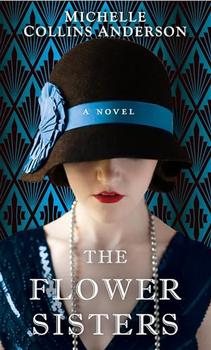
The Flower Sisters
by Michelle Collins Anderson
From the new Fannie Flagg of the Ozarks, a richly-woven story of family, forgiveness, and reinvention.
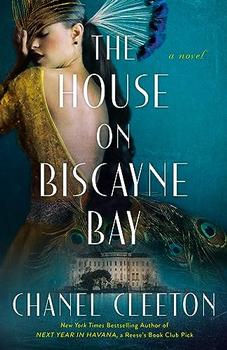
The House on Biscayne Bay
by Chanel Cleeton
As death stalks a gothic mansion in Miami, the lives of two women intertwine as the past and present collide.
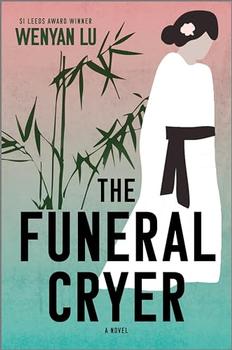
The Funeral Cryer by Wenyan Lu
Debut novelist Wenyan Lu brings us this witty yet profound story about one woman's midlife reawakening in contemporary rural China.
Your guide toexceptional books
BookBrowse seeks out and recommends the best in contemporary fiction and nonfiction—books that not only engage and entertain but also deepen our understanding of ourselves and the world around us.