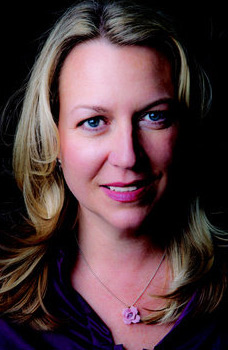
Cheryl Strayed, author of Torch, discusses the differences between urban culture and rural culture, which serves as a thematic undercurrent throughout her debut novel.
What can you tell us about the genesis of Torch?
I began to write the novel in its most rudimentary form more than ten
years ago, when I was in my early twenties, shortly after my mother
died — young and of cancer, like the character of Teresa in the novel.
My mother's death and my family's subsequent grief, which I
fictionalized in Torch, lent itself to the kind of deep
character excavation I was compelled to do as a writer. I've always
been most interested in exploring relationships and delving into what
motivates us, what complicates us, what crushes and saves us and,
quite naturally, I've drawn from my own life experiences to do that in
both my fiction and my nonfiction. The personal essays I've written
for magazines like Allure and Self and the New York
Times Magazine and The Sun all explore the same kinds of
themes I do in Torch. Having said that, real life is only the
raw material from which the story is spun and so the process of
writing is not cathartic, but instead creative. Certainly, there are
scenes in Torch that are close to my heart, but I didn't write
Torch in order to transform myself, but rather to reach those
who would be transformed by reading it.
Teresa's radio show, Modern Pioneers!, serves as a central
motif throughout Torch, binding Bruce and Joshua and Claire
together even when they've come profoundly apart, and also literally
bringing Teresa's voice back long after she has died. How did you get
the idea to use the radio in that way?
Like Claire and Joshua in Torch, I spent a good deal of my
adolescence living without electricity, which meant without a
television. What we had instead was a radio that my stepfather hooked
up to a car battery. We could get a public station from Grand Rapids,
Minnesota, much like the one I've written about in Torch, full
of programs hosted by locals who essentially made it up as they went
along. When I got older and moved away from home, I spent time in a
number of small towns across the United States — in New Mexico,
Wyoming, and Massachusetts, to name a few — and in each of those
places the radio served as the same kind of lifeline, the same quirky,
intelligent, endearing voice of, by, and for the community. Those
radio stations are a real and important part of life in much of rural
and small-town America, and so it seemed only right that that reality
be reflected in my novel.
Plus, I am a huge radio fan. When we read books, it's largely up to us
to construct the visual world of the story. Radio has that same power
to provoke our imaginations. I had a mad crush on one of the hosts on
an NPR show until I saw him in person, not because of the way he
looked but because I had constructed his persona based on his voice —
the visual component changed all that. I wanted Teresa to work that
same kind of mystery and magic on her listeners in Torch, to
belong to her community more powerfully than an ordinary citizen would
and, more important, to allow those who loved her most — Bruce and
Claire and Joshua — to experience the pain and the joy of hearing her
voice after she was dead.
Was it a challenge for you to take up a subject so fraught with
emotion?
The challenge had less to do with writing Torch than it does
with talking about it. When people hear the words cancer,
grief, or loss in the context of a novel, they often have
preconceived ideas about what they are about to read. There is a rule
in contemporary literary fiction that one's writing must never be
sentimental, which often results in writing that lacks sentiment
entirely. And so we have a number of stories about grief in which the
actual loss is never addressed directly and the emotions of the
characters are portrayed only furtively, often leaving the reader
rather indifferent in response. On the other hand, there's an enormous
body of work — in writing, film, and television — in which cancer and
grief are depicted in ways that really are too sentimental and
melodramatic for the reader or viewer to have any kind of authentic
reaction. In Torch, I set out to do something different, to
write with sincerity and complexity, with emotion as well as
restraint, and, of course, with humor. I write literary realism and so
I wanted my novel to seem like life, which means that it had to
contain the range of emotions we experience when we suffer a deep
loss. There are light, hilarious moments, as well as terribly sad
ones. There is the beautiful as well as the gritty truth. All of these
things are pushed up against one another in Torch. For example,
in the scene when Bruce is in Teresa's hospital room the morning she
dies, he isn't sitting by her bedside weeping and professing his love;
instead he is forcibly jamming green Jell-O into her mouth, trying
desperately — brutally as well as somewhat comically — to keep her
alive. He doesn't tell her it's OK to die; he insists that it isn't.
But then he lies down next to her and gently holds her. Ultimately, he
gives in to the only thing he has, which is his love.
The setting of the novel — the small town of Midden, in rural
Coltrap County, Minnesota — has the presence of something like a
character, as do the collective community members and businesses that
make up the town and county. What made you want to write about these
people and this particular place?
I grew up in northern Minnesota in a place much like the fictional
setting in Torch. By the time I began to think seriously of
myself as a writer — when I was nineteen or twenty — I lived in an
entirely different landscape and community as a college student in the
Twin Cities. The children of the middle and upper classes become more
like their parents and the adults in their community when they go off
to college, but children of the working and poor classes — like me —
become less so. In the course of attaining an education and exploring
the world more broadly, I was in some ways estranging myself from the
people I'd loved and known best in my life. And yet this isn't to say
that the people I loved and knew best or the place I came from was in
any way small or uninteresting or less complicated and sophisticated
than the urban, more cultured world I was beginning to occupy. In
fact, the opposite was true, and I could see that more clearly once I
lived outside of that world. There are riches there, stories to tell.
It's the landscape I feel most connected to, provoked by, and
passionate about, so it was a natural choice for me to set Torch
there.
That difference you speak of, between urban culture and rural
culture, serves as a thematic undercurrent throughout the novel.
Yes, and it's rooted, ultimately, in class. Like many rural
communities across America, Midden is a place where there are two
clearly defined groups of people: the locals and the visitors. In
Torch, as in real life, the locals refer to the visitors as "city
apes," a term that captures the lighthearted resentment the locals
have toward the visitors, who almost always have more money than the
locals. Their houses, which sit empty three quarters of the year, are
bigger and newer, their cars are fancier and shinier. So the visitors
have a material power that the locals don't have, and yet there is
also a way in which the locals are superior, or at least believe
themselves to be, and that is the power that comes from living a
hardscrabble existence deeply rooted to the land. The people of
Coltrap County, like the real Minnesota county in which I came of age,
are generally poorer, less educated, less well-traveled, and less
fashionably dressed than the urban people who make places like Coltrap
County their vacation playground. Because of that they are branded
hicks and rednecks and country bumpkins, and yet there is also a
reverse sort of discrimination. A phrase I heard a lot growing up was
book knowledge, and it was almost always spoken with a fair
amount of scorn. Books and formal education were not to be trusted
entirely. More valuable was the practical knowledge gained in the
course of a life lived hard. In Torch, Claire straddles that
urban/rural divide as she goes off and becomes educated, caught
between two worlds, while Joshua has to confront the fact that he's
never going to leave Midden after all, despite his claims that he will
soon move to his much-idealized California. And characters like Bruce
and Leonard and Mardell, who rely on the business of the so-called
city apes for their livelihood, struggle with that divide in a very
different way.
Reproduced by permission of the publisher, Houghton Mifflin.
Unless otherwise stated, this interview was conducted at the time the book was first published, and is reproduced with permission of the publisher. This interview may not be reproduced or reprinted without permission in writing from the copyright holder.

Elizabeth Berg is the author of many bestselling novels, including Open House (an Oprah's Book Club selection), Talk Before Sleep, and The Year of Pleasures, as well as the short story collection The Day I Ate Whatever I... (more)
If you enjoyed:
Torch
Try:
Never Change
by Elizabeth Berg
Joan Didion (1934-2021) was born in Sacramento, CA, the daughter of an officer in the Army Air Corps. A shy, bookish child, Didion spent her teenage years typing out Ernest Hemingway stories to learn how sentences work. She ... (more)
If you enjoyed:
Torch
Try:
The Year of Magical Thinking
by Joan Didion
We recommend 5 similar authors


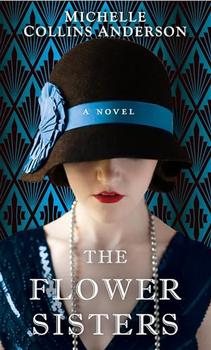
The Flower Sisters
by Michelle Collins Anderson
From the new Fannie Flagg of the Ozarks, a richly-woven story of family, forgiveness, and reinvention.
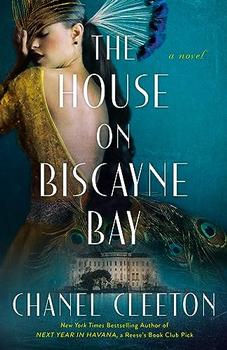
The House on Biscayne Bay
by Chanel Cleeton
As death stalks a gothic mansion in Miami, the lives of two women intertwine as the past and present collide.
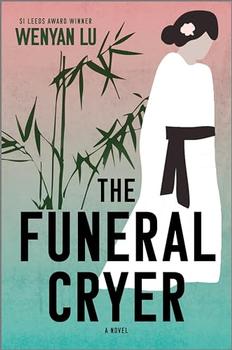
The Funeral Cryer by Wenyan Lu
Debut novelist Wenyan Lu brings us this witty yet profound story about one woman's midlife reawakening in contemporary rural China.
Your guide toexceptional books
BookBrowse seeks out and recommends the best in contemporary fiction and nonfiction—books that not only engage and entertain but also deepen our understanding of ourselves and the world around us.