
-
Your next favorite book
is waiting.

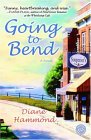
First time novelist, Diane Hammond, explains why the weather takes on the aspect of a character in Going To Bend, why she chose to write about a small town community when she was brought up in New York herself and whether she has plans for a sequel.
Going to Bend is your first novel. Is there a story behind your
writing it?
I think of the first half of this book as my graduate school
thesis. I wrote it in 1994 and 1995, agonizing over its technical aspects
and devices as well as its characters and story line. Craft issues have
always loomed large for me. Are the character voices clear enough,
consistent enough, revealing enough? How much of the story should I stage,
and how much can I just allude to in internal monologues? Is it moving along
smoothly? Experienced writers make hundreds of critical decisions by
instinct, but most less-experienced writers don’t have that luxury. It can
be exhausting. In fact, by the exact midway point in the book, I was so worn
out from the technical choices and decisions I was making that I was losing
my way in the story. This, plus the fact that I had a young child, multiple
sclerosis, and a demanding day job, convinced me to put the manuscript down.
In fact, I didn’t look at it again until 2001, when I was uninspired by
whatever work was at hand and instead hauled out the manuscript. By then,
thanks to my appallingly bad memory, I had forgotten more about the book
than I remembered. This afforded me the luxury of reading the manuscript
straight through with relative objectivity, and by the time I was done, I
knew exactly where the remaining story was headed, and how to get there. And
the craft issues never waylaid me again—I’d graduated. I completed the
second half of the book in just six months.
A lot of readers assume that you’re from a small Oregon town
yourself, because Hubbard is so vividly evoked and its characters are so
deeply defined by its limitations. But you were born and raised in suburban
New York. What’s the deal with that?
It’s true that my background, up until my late twenties, was
largely urban. I grew up in Upper Nyack, a suburb of New York City, and
later lived in Honolulu and Washington, D.C. But in 1984 I moved to Newport,
Oregon, then a coastal town of just under 9,000, and everything changed. My
first job interview—for a secretarial position with the electrical utility
serving the central Oregon coast—ended with a stern lecture about the fact
that big-city, East Coast ways would not be tolerated here. It was clear
that I had two choices: I could maintain my urban identity and spend a lot
of time alone and misunderstood, or I could pipe down, listen hard, and
learn about a way of life that was completely new to me. It’s probably no
surprise that my survival instincts led me to choose the latter. On those
terms, I was befriended by some extraordinary teachers, skilled
storytellers, and sure-footed guides to the insular culture of coastal
Oregon. I became an avid solicitor of stories of all kinds, and developed a
great respect for the strenuous business of living in a town that offers
low-paying jobs, limited educational opportunities, significant isolation,
and a whole lot of bad weather.
Yes, the weather on the Oregon coast takes on the aspect of a
character in the book. Why?
I think that until you’ve spent nine months in nearly relentless
wind and rain, you can’t fully appreciate the effect that such weather has
on everything you feel and do. And it’s dynamic weather, where the
rain takes many shapes—teeming, drizzling, blowing, pelting, and pouring
straight down, to name a few—and storm fronts come through like conquering
armies. On any given day, damned near everyone I knew could tell you what
flags the U.S. Coast Guard was flying over Yaquina Bay to announce the
incoming weather. Here’s the thing: You lived in all of this, you worked
in it, drove in it, carried your groceries inside through it, ferried small
children and babies through it, and your moods reflected it even when you
thought they didn’t. You and the weather become one. So when I began
writing Going to Bend, it was only natural to cast the weather in a
major role.
Let’s talk about your characters for a minute. Do you have a
favorite?
Petie is certainly the character to whom my heart goes out first.
She is a woman who’s been dealt a bad hand and she refuses to pity herself
for it. From that innate pride of self springs everything else about
her—her tough exterior, her faith in her own ability to get by, her fierce
sense of right and wrong. And yet, her ability to love unconditionally has
come through intact. Given her life circumstances, that’s a small miracle.
In many ways, Going to Bend is a love story. It’s about the healing
powers of unconditional love. For Petie, finding unconditional love has come
at a huge price: Paula’s love, though absolute, is insufficient to keep
Petie from harm; Rose’s love gives her a staunch ally, but also one who
offers limited protection. It is only Eula’s love that brings with it
healing powers, though for far too little time. Even so, these pockets of
unconditional love have given her sufficient strength to endure
exceptionally difficult circumstances. Other characters for whom I have a
tender spot include Marge and Larry Hopkins, who also have a gift for loving
not only each other, but those around them; and Schiff, who is a much better
man than he’s ever given credit for, either by himself or by those around
him. I’d have to say that Old Man Tyler was the character who presented me
with the greatest writing challenge. I’d never created a thoroughly bad
character before, someone capable of doing loathsome things. We tend to
protect our characters as we do our children, wanting them to be liked and
successful. Old Man was neither. And yet, I don’t believe he was
evil—just incredibly, deeply, cruelly flawed.
How do you approach building a novel? Do you work out a lot
of your story ahead of time?
I have always envied those writers who can build a story ahead of
time, who can pull together a comprehensive road map, the who, what, when,
where, how, and why, all very lucidly and methodically set out in advance.
It probably says something about the scattershot way in which I create that
I am absolutely unable to do this. I really only succeeded in doing it once,
and the resulting work was so lifeless that I buried it in a desk drawer.
No, for better or worse I am an impulsive, instinctive, intuitive writer,
which means that when I begin writing a book, I know a couple of my key
characters, though not well; I have a sense of the feel of the story, though
not its specific events; I have a rough timeframe in mind over which the
story will take place; and I have a hazy idea of where the main characters
will end up. Other than that, I don’t know a thing. I invent it, discover
it, reveal it—not only to my readers but to myself—in the writing
itself. This can be both exhilarating and terrifying; it’s a very high
risk creative proposition, in that I’m staking a year or more of my
writing life on the bet that I can bring the story—which I don’t yet
know—home successfully in the end. So far, it’s worked, but there
isn’t a day when I take that outcome for granted. That’s why, for me,
the process of writing is fraught with danger, a nearly incomprehensible act
of the greatest faith in my creative outcomes. I wouldn’t wish this
writing style on anyone, though on a good day when my characters’ voices
are flowing and I’m hurrying to get it all down, I wouldn’t trade it for
anything.
We leave Petie and Rose at a real crossroads, literally and
figuratively. Do you plan to write a sequel?
I’m often asked that. No, I don’t have any plans for a sequel. I
feel that I safely guided Petie, Rose, and the rest of Bend’s characters
through a difficult time, a life-changing time, and at the book’s end had
safely delivered them not to an ending, but a beginning. I don’t believe
they need me to take them any further. And wherever they go from here, it
will not be with the sort of high drama that makes for a compelling story to
read. So, literarily speaking, I’ve wished them Godspeed and moved on. I
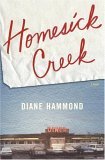
have hung on to the towns of Hubbard and Sawyer, though. My next book, Homesick
Creek, takes place there, too, though with entirely different and
unrelated characters—except for Roy, the bartender at the Wayside, who
continues to drift in and out of scenes.
Unless otherwise stated, this interview was conducted at the time the book was first published, and is reproduced with permission of the publisher. This interview may not be reproduced or reprinted without permission in writing from the copyright holder.
Maeve Binchy was born in a small village outside Dublin. She spent her childhood in Dalkey, an experience she draws on today when creating the rural villages usually at the heart of her novels. After receiving her B... (more)
If you enjoyed:
Going To Bend
Try:
Tara Road
by Maeve Binchy

In her own words: "I was born and raised in suburban Boston. My mother's death, when I was eight, was the defining event of a childhood that was otherwise ordinary. I took piano lessons and flute lessons. I took ballroom... (more)
If you enjoyed:
Going To Bend
Try:
Lake News
by Barbara Delinsky
We recommend 4 similar authors
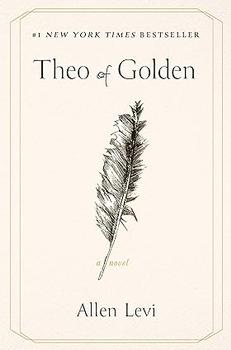
Theo of Golden by Allen Levi
One spring morning, a stranger arrives in the small southern city of Golden. No one knows where he has come from…or why…




Your guide toexceptional books
BookBrowse seeks out and recommends the best in contemporary fiction and nonfiction—books that not only engage and entertain but also deepen our understanding of ourselves and the world around us.

