
-
Your next favorite book
is waiting.
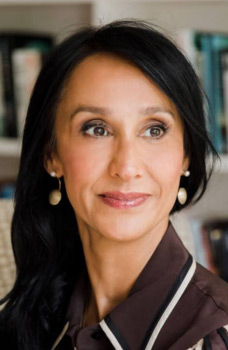
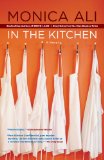
Monica Ali discusses her third novel, In The Kitchen, which is set in the frenetic, almost pirate-ship-like world of the kitchen in a major urban restaurant (Q&A contains potential plot spoilers).
In the Kitchen vividly thrusts the reader into the sweaty, frenetic,
almost pirate-ship-like world of the kitchen in a major urban restaurant. Did
you rely upon any first-hand experience to bring the kitchen scenes to life?
I spent a year researching the novel and several years before that thinking
about it and reading around it. Part of my year of intensive research was in the
north of England where sections of the novel are set but most of it was in
London where I spent time in restaurant kitchens and in five big hotels, always
on the understanding that I would never identify them. That gave me great access
and once I had entered the world of hotels I knew that a hotel would be my main
setting. Hotels are like microcosms of society. You get everything from the
penthouse suite at the top to the porter in the basement compacting rubbish. But
it was always the kitchens that I was particularly drawn to. Those places are
like UN assemblies. You get every different nationality down there, so they are
a very rich source of diverse stories.
What inspired you to write about the life of a chef?
In the UK, and perhaps in the USA as well, we've become quite obsessed with
chefs. And even though we see the likes of Gordon Ramsay on the television,
ranting and swearing, I still felt that what we get is quite a glossy, sanitized
version. I guess I wanted to look behind the scenes at what really goes on below
stairs, and to ask questions about what it is that lies behind our 'food porn'
culture. Kitchens, which are high pressure environments, are also great stages
for dramatic confrontations!
There are several instances throughout the novel when Gabe is compared to an
angel. Lena points out that his name – Gabriel – has angelic meaning and Jenny
teases him about sprouting angel wings after he has made a particularly
thoughtful gesture. Is Gabe a fallen angel? What are your feelings towards your
protagonist?
Gabe struggles constantly with himself, and battles – as we all do on occasion –
to understand why he acts the way he does, which is sometimes against his better
judgment. Although he fails himself (and falls) in many ways, he makes an
emotional journey through the course of the novel. At the core of this journey
are faith, hope and love. In the beginning he lacks faith in anyone or anything,
including himself, but he finds ultimately a faith in humanity. Despite being
pushed to the edge of despair, through a process of taking responsibility and
engagement with those around him he is left with a sense of hope. And by being
forced to reevaluate what is truly important, he comes to consider what love,
particularly in the context of family and relationships, really means.
How do you develop your main characters and which characters in In the
Kitchen did you particularly enjoy writing about?
With Gabriel, I had an idea that I wanted to write about a man who is adrift in
a modern, metropolitan, multicultural society. At first he feels he is able to
navigate that environment easily, and that having no real community, no
long-standing work commitments, only very loose family ties, and a limitless
sense of alternative perspectives due to the many cultures by which he is
surrounded, is no big deal. But as the pressures pile on him, he comes to
question everything in his life, and the stories he has told about himself and
to himself. At that stage he feels he is looking into something of a void.
The characters start as whispers inside my head. When the voices get loud
enough, it's time to begin the writing. I enjoyed writing the variety of
characters in this novel, from the slippery restaurant manager, Gleeson, to the
somewhat bullying general manager, Maddox. Gabe's sous chef, Oona, was
particularly fun to write as their miscommunications gave ample scope for comedy
.
Gabe and his father discuss the British identity, arguing about Great
Britain's global significance and what it means to be British and how that
status is defined. As a Londoner, what cultural changes have you observed in the
country and what impact have they made?
London, as with many big cities in the West, has changed rapidly in recent times
as the result of new migrations. One of the things I wanted to explore in this
book, is the way in which although other people's stories can be enriching, they
can also be exhausting and overwhelming. Gabriel, at the beginning of the book,
doesn't really want to know about the backgrounds of his staff. He is too busy
grappling with his own story, his life history and family secrets, and making
sense of that. It is the death of the porter which, although it is a small part
of the book in one way, is pivotal in changing this. It comes to haunt Gabriel
and opens him up to seeing his other staff as individuals and to issues about
society and responsibility.
There is too a debate running through the novel about British identity. Our
politicians keep banging on about our 'core values.' When that happens, you
begin to suspect that those values have perhaps been lost somewhere along the
way.
Gabe's downward spiral ultimately leads him to an onion farm outside London
that operates as an illegal, exploitive labor camp. Do businesses like this
actually exist? Is the onion farm experience in In the Kitchen based on true
events?
Yes, I did my research. All of those exploitative practices happen. The ejection
of the Afghans from the farm was directly based on a newspaper report. I also
know that the UK is far from being the only country in which migrant workers are
exploited.
You explore many social issues in this novel, including the immigrant
experience. Are these issues the driving force behind your writing?
No, I don't think so. Character is always my driving force. And to tell a good
story and to provide an entertaining read. Although I think the book raises some
tough questions about our modern existence and society – old values versus new
freedoms, for example – the novels that I love are the ones which find the light
within the dark, and the comedy in the tragedy. And of course one sets out to
write the book one wants to read!
Your first novel, Brick Lane, was recently adapted into a movie. Can
you describe that process? How did you feel when you saw your story rendered in
film?
I decided not to interfere in the film process. My feeling was that I should
either write the script myself or stay out of the way, and since I already had
another project on the go I stepped out. When it came to seeing the rough cut I
was very nervous but happily the director had done a great job. The casting
seemed to me to be spot on, and although film necessarily has to leave things
out the movie captures the spirit of the novel.
Alentejo Blue, your second novel, is set in a Portuguese village. Why
did you decide to make such a departure from your first book?
I spend a lot of time in Portugal and it wasn't really a question of deciding. I
just had all these characters and stories in my head. Although I have, on the
surface, written three very different books, I guess at one level they have
quite a lot in common. A sense of place, for instance, has been important in my
work so far. Also, questions of home, displacement, cultural intersections and
life on the margins. I don't feel that I set out to write about these things but
they seem to come out in any case.
Unless otherwise stated, this interview was conducted at the time the book was first published, and is reproduced with permission of the publisher. This interview may not be reproduced or reprinted without permission in writing from the copyright holder.

Leila Aboulela won the first Caine Prize for African Writing and is the author of many novels. Minaret was longlisted for the 2006 Orange Prize. The Translator was one of The New York Times 100 Notable Books of the Year. ... (more)
If you enjoyed:
Brick Lane
Try:
Minaret
by Leila Aboulela

Chimamanda Ngozi Adichie grew up in Nigeria. Her work has been translated into more than fifty-five languages. She is the author of the novels Purple Hibiscus, which won the Commonwealth Writers' Prize; Half of a Yellow Sun, ... (more)
If you enjoyed:
Brick Lane
Try:
The Thing Around Your Neck
by Chimamanda Ngozi Adichie
We recommend 28 similar authors



Happiness belongs to the self sufficient
Click Here to find out who said this, as well as discovering other famous literary quotes!

Can you name the title?
Test your book knowledge with our daily trivia challenge!
Your guide toexceptional books
BookBrowse seeks out and recommends the best in contemporary fiction and nonfiction—books that not only engage and entertain but also deepen our understanding of ourselves and the world around us.
