
-
Your next favorite book
is waiting.
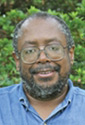
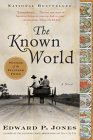
Edward P. Jones answers questions about his much acclaimed book, The Known World including, how usual was it for free blacks to be slaveholders in the South?
Throughout The Known World, you intersperse your fictional account with historical records and data about Manchester County, Virginia. Are these records factual? What was your intent in incorporating them into your novel?
The county and town of Manchester, Virginia, and every human being in those
places are products of my imagination. Other counties and towns (Amelia
County, Charlottesville, etc.) are real, but were employed merely to give some
heft and believability to the creation of Manchester and its people. The same
is obviously true of real, historical people -- President Fillmore, for
example.
The census records I made up for Manchester were, again, simply to make the
reader feel that the town and the county and the people lived and breathed in
central Virginia once upon a time before the county was "swallowed
up" by surrounding counties. Saying that the census of 1840 shows that
there were so many black people, so many white people there, et cetera,
affords a hard background of numbers and dates that makes the foreground of
the characters and what they go through more real.
How unusual was it for free blacks to serve as slaveholders in the
South? How did the idea come to you to write a novel that dealt with this
issue?
I don't have any hard data but I'm quite certain that the numbers of black
slaveowners was quite small in relation to white slaveowners. The fact that
many people -- even many black people -- didn't know such people existed is
perhaps proof of how few there were. In addition, as I note in the novel,
husbands purchased wives and parents purchased children, and so their
neighbors may have come to know the people purchased not as slaves, as
property, but as family members. Finally, owning a slave was not a cheap
proposition, and the economic status of most blacks back then didn't lend
itself to owning a human being.
Women in The Known World wield roles of extraordinary power, whether
assuming the typically male responsibilities of the plantation like Caldonia
Townsend; educating the illiterate like Fern Elston; inspiring violence,
passion, and grief, like Celeste and Minerva; or creating art that transcends
the brutal realities of slavery, like Alice Night. How important was it to you
to give voice to women's experiences of slavery in this work?
I didn't set out with any agenda. When you are raised by a woman who had it
hard and you are sensitive to how hard a life she had, you don't necessarily
look around and think of women as fragile creatures, whether slave or
otherwise. You develop the belief that they can "make a way out of no
way." The hardy women of today had predecessors, I'm sure. It would have
been insane for me, of course, to write a novel about a black woman who was
president of the U.S. in 1855, or even a senator. But a black woman who
becomes the head of a plantation due to the premature death of her husband who
was helped along the way by the wealthiest white man in the county, that is
believable. It is also believable that Fern Elston could make part of her
living by teaching free black children; there were educated black women back
then, and not all of them would choose to stay in the shadows, especially one
with Fern's temperament. And no doubt there had to be people like Celeste who
tried in their small way to fight something they were forced to live under;
perhaps she, of them all, understood how Moses got to be that way: He was not
born hating the world, she would have said. And I suppose Alice would have
said that as well, had she not been so focused on escaping alone.
Your account of antebellum Manchester County, Virginia, is by no means
linear; you weave different strands of the story together and return to them
at various phases of the novel. Why did you choose this format for your book?
I always thought I had a linear story. Something happened between the time
I began the real work in January 2002 of taking it all out of my head and when
I finished months later. It might be that because I, as the "god" of
the people in the book, could see their first days and their last days and all
that was in between, and those people did not have linear lives as I saw all
that they had lived. What Tessie the child did one day in 1855 would have some
meaning for her 50, 75 years later. She might not be able to look back and see
that moment, but her creator could. That, perhaps, is why she says something
about the doll her father made for her to Caldonia and Fern in September 1855
that she will repeat on her deathbed, some 90 years later; she might not even
remember the first time she uttered those words, but I can't afford to forget
if I'm trying to tell the truth.
There is a touch of the supernatural in events such as the spontaneous
combustions of the Otis boys and the slave Teacher, the cow with the endless
supply of milk, the transformative experiences of Stamford with the crows and
the lightning, and the details of cadavers "talking" to Wilson and
Morris Calhenny. How do you explain these incidents in the larger scope of
your novel?
I was raised among a people who believe that if a person is killed on a
city street, the blood of that person will show up on that spot every time it
rains. Even years and years later. I was raised to believe that one's hair
should be taken from combs and brushes and burned (my mother did it in an
ashtray) because the hair could somehow get out into the world where birds
could find it, make a nest of the hair, and give the person headaches. Those
people believed you shouldn't rest your hands on the top of your head because
it will shorten your mother's life.
Given all that, it's easy to create a situation where lightning runs away
from a man because the lightning doesn't think it's time for the man to die.
The cow with all the milk came from hearing law school friends talk in the
1970s about a court case where a man sued his neighbor to get back a cow he
had sold him after the cow began producing milk again. So the supernatural
events are just another way of telling the story by someone who grew up
thinking the universe did weird things all the time.
You open and close The Known World with the figure of Moses, the
overseer of Henry and Caldonia Townsend's land. In what ways is his odyssey
central to your novel?
Moses became another symbol of what slavery had done. I have no doubt that
when Moses was standing naked in John Skiffington's jail and saying that he
and Bessie were "one," were "family," that he was not the
man who years later was bitter and grasping and wanted, as he put it, to get
rid of his family now that they stood in his way of becoming Caldonia's
husband. Slavery did things to everyone; some were able to transcend, as with
Celeste, and others succumbed.
What are some of your favorite books and authors? Which writers have
most influenced your work?
Black fiction writers, including Ann Petry, Paul Laurence Dunbar, Richard
Wright, Gwendolyn Brooks. The southern writers (black and white), including
Faulkner. And others such as Chekhov and James Joyce, who was the primary
inspiration for my collection of stories, Lost in the City.
Unless otherwise stated, this interview was conducted at the time the book was first published, and is reproduced with permission of the publisher. This interview may not be reproduced or reprinted without permission in writing from the copyright holder.
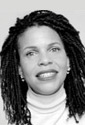
Ifa Bayeza is an award-winning playwright, producer, and conceptual theater artist. Her works for the stage include Amistad Voices, Club Harlem, Kid Zero, Homer G & the Rhapsodies, and The Ballad of Emmett Till, winner of the... (more)
If you enjoyed:
The Known World
Try:
Some Sing, Some Cry
by Ifa Bayeza
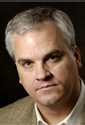
Douglas A. Blackmon is the Pulitzer-Prize winning author of Slavery by Another Name: The Re-Enslavement of Black Americans from the Civil War to World War II, and co-executive producer of the acclaimed PBS documentary of the ... (more)
If you enjoyed:
The Known World
Try:
Slavery by Another Name
by Douglas A. Blackmon
We recommend 25 similar authors



All my major works have been written in prison...
Click Here to find out who said this, as well as discovering other famous literary quotes!

Can you name the title?
Test your book knowledge with our daily trivia challenge!
Your guide toexceptional books
BookBrowse seeks out and recommends the best in contemporary fiction and nonfiction—books that not only engage and entertain but also deepen our understanding of ourselves and the world around us.
