-
Your next favorite book
is waiting.
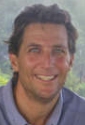
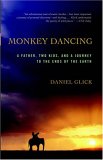
Daniel Glick explains why he spent six months traveling to little known parts of the world with his young children, what Monkey Dancing means to him and the connection he feels between environmental issues, parenting, relationships and his own inner and outer journeys.
A lot of friends thought I had lost my mind
when I announced plans to drag my two kids around the world for nearly half a
year. Maybe I had. But after my ex-wife moved 1,000 miles away to live with
her new girlfriend and my brother died of cancer, I imagined that a heroic
adventure might bring some clarity and healing to my otherwise shaky
existence. It wasn't as if I thought we could escape our losses by going to
Borneo. But it was arguably a little more distracting to obsess about pythons
and leeches than it was to stay home watching Grounded for Life. By the
time my children and I broke into a frenzied "monkey dance" on a
wilderness island in northern Australia the third week of our trip, I knew a
psychic convalescence had begun--for all of us.
I privately thought of our journey as a "before they're gone" tour.
The literal meaning was to visit amazing critters and places before humans
maimed or destroyed them. The second was to spend time with my children before
they left my reconfigured single father's nest. Lastly, the big "before
they're gone" loomed especially large: after witnessing my brother's
death at forty-eight, I knew viscerally there were no guarantees about how
long any of us would be around. It was time to do something drastic, and I
nominated an epic road trip.
Q: Okay, I’ll bite. What’s monkey dancing?
A: I don’t suppose I could tell you to read the book?
Q: I promise to read the book even if you tell me.
A: I can live with that. "Monkey dancing" was actually my son Kolya’s
expression. We had been backpacking on a wilderness rainforest island in
Australia for four days, and camped our last night on a deserted white sand
beach. After dinner, the kids called me to join them near water’s edge, and
the two of them jumped me. We began a raucous three-way tag-team wrestling
match that mostly involved the kids running kamikaze at me and me tossing them
to the sand like a benevolent King Kong. It was a wonderful, warm, tropical
night, and without a word, we started a kind of simian step, hunching our
shoulders up and down and dragging our knuckles on the fine sand. The three of
us peered at each other with cocked heads, and started making monkey sounds.
We started moving slowly, almost in a circle, then faster, and faster, with
more abandon and less inhibition. Soon we were dancing wildly along the beach,
rolling around, jumping and screaming. Kolya dubbed it "monkey-dancing."
Q: Why make that the book’s title?
A: I guess it just became a metaphor for the trip. Monkey dancing meant wild
abandon, it meant adventure, it meant the three of us creating something new
together. When our first spontaneous monkey dance erupted on that Australian
beach, three weeks or so into the trip, I took it as a sign that something
remarkable was being born: a new family of three.
Q: Good lead in to my next question. After your divorce, your wife moved a
thousand miles away. A year later your brother died of breast cancer. A lot of
people would have crawled under the covers and started hoarding Prozac. You
decided to go to Borneo. Why?
A: After a treacherous passage through the past few years, a long, open-ended
journey had beckoned to me like a Siren’s song. Hitting the road had always
served me in times of transition as an entrée into a reflective trance, as a
tool of personal reinvention, as literal and metaphorical escape. For much of
my life, I had sought psychic salve in the thrill of discovery amidst wild,
unfamiliar places, and among unpredictable traveling companions. Borneo
certainly qualified as wild and unfamiliar, and my two children effortlessly
supplied the unpredictability.
Q: How about your concerns for your daughter when she freaked out after
seeing the python and pit viper?
A: I realized the irony that as I was trying to show my kids more about the
natural world, at times I made them a little more fearful of it. Leeches,
mosquitoes, scorpions and poisonous snakes aren’t the earth’s most cuddly
creatures. We did, however, see koala bears, kookaburras, wallabies,
cassowaries, kangaroos, rhinos, elephants, mongooses, orangutans, macaques,
proboscis monkeys, and other pretty cool animals.
The truth is, I'd be lying if I said the trip wasn't challenging. Of course I
was concerned about my kids’ fears of the unknown and unfamiliar. Kids are
full of fears, as we all are. Snakes and voracious jungle predators that make
little girls disappear without a burp can be scary. I grappled with my fears
that the kids would contract malaria or get lost in Phnom Pehn. If you’re
asking, "Did I ever consider calling the whole thing off?" the answer is, "Yes, several times." But that feeling never lasted long, and now I think
the kids are very proud of themselves for doing what we did. So am I. One
thing I hope to teach my kids is to make peace with their fears, to stare them
in the eye without blinking. Even with that fatherly advice, however, Zoe
still makes me look under the bed for googly-monsters before I say good night.
Q: What about after September 11? Did you feel safe being Americans abroad?
A: The response after 9/11 was universally heart-warming. We were in
Singapore, and a couple days later we headed for Vietnam. People expressed
outrage at the terrorist attacks, and solidarity with the U.S. We were made to
feel very much a part of the world community. As the weeks and months went by,
though, some people shared their concerns about President Bush’s apparent
disdain for world opinion. I grew very fearful myself, since our country was
being guided through perilous international waters by a man who had spent less
time abroad than my nine-year-old daughter.
Q: Can we talk a little about writing? You’ve been predominantly a
newsmagazine journalist, and your first book was an investigation of a true
crime story, the so-called "ecoterrorism" attacks at Vail ski resort in
1998. What is it like writing such a personal story?
A: Talk about scary. In twelve years of working for Newsweek, I used the
pronoun "I" exactly twice. It’s daunting writing about people I know,
about my family, about my own losses and failings. But I realized early on
that this book had to be as honest as possible in order to work, so I guess I
had to stare my own fears down, too. You may have noticed that I did manage to
slip in some old-fashioned environmental reporting about the perilous
condition of coral reefs, orangutans, Javan rhinos, and tigers.
Q: You write about your brother, about environmental issues, about
parenting, about relationships, about your own inner and outer journeys. The
book covers a lot of ground. Where do you think this book belongs in
bookstores, anyway?
A: On the must-read, innovative non-fiction, travel, memoir, parenting,
environmental table, of course. The book does cover a lot of ground, and my
hope is that it will draw people into a genre they might not ordinarily visit.
Obviously one main narrative thread is about our literal odyssey around the
world: We went to some truly memorable places and met some incredible people.
The book is a memoir as well, since I do draw on my own experiences growing up
in Africa with my brothers, as well as being with my older brother as he was
dying. As I said before, there’s also some straightforward journalism about
our troubled relationship with the natural world. I can’t really say it’s
a self-help book, but I hope that some people might find courage and solace
from my journey through loss and grief towards something like hope and
redemption. And lastly, I’m betting that anybody who is a parent will find
some hilariously familiar and thought-provoking lessons here.
Q: Have the kids read it?
A: As far as I know, just a few parts. They of course offered up their journal
entries. If they do read it, they’ll learn a few things about their father
they didn’t know. My hope is that they’ll see it on some level as a love
letter from their dad.
Unless otherwise stated, this interview was conducted at the time the book was first published, and is reproduced with permission of the publisher. This interview may not be reproduced or reprinted without permission in writing from the copyright holder.
Liv (pronounced 'leave') Arnesen's rich life experiences, both on and off the ice, have made her an internationally recognized leader and role model for women and girls. A self-proclaimed "keen" but not ... (more)
If you enjoyed:
Monkey Dancing
Try:
No Horizon Is So Far
by Liv Arnesen
Ann Bancroft is one of the world's preeminent polar explorers and an internationally recognized leader who is dedicated to inspiring women and girls around the world to unleash the power of their dreams. Through her various ... (more)
If you enjoyed:
Monkey Dancing
Try:
No Horizon Is So Far
by Ann Bancroft
We recommend 6 similar authors
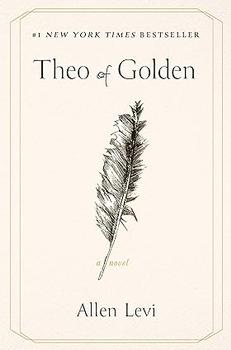
Theo of Golden by Allen Levi
One spring morning, a stranger arrives in the small southern city of Golden. No one knows where he has come from…or why…

Your guide toexceptional books
BookBrowse seeks out and recommends the best in contemporary fiction and nonfiction—books that not only engage and entertain but also deepen our understanding of ourselves and the world around us.