A thoroughly entertaining interview with Andre Dubus III as he shares a variety of anecdotal stories describing the people and events that influenced his writing
What was it like growing up in your household, with a writer for a father?
Well, like most kids, I didn't pay attention to what my dad did, I just
wasn't interested. My dad and Mom divorced when I was around 10, and I didn't
live with him after that, though he was close by and we saw each other weekly. I
wasn't really aware that he was a writer; I didn't start reading his writing
until I was about 15. It occurred to me then that my dad was kind of special;
he's still one of my favorite writers. I grew up in a pretty working-class
neighborhood, and my friends didn't have a lot of books in their houses, though
I did. And though I didn't pick up a lot of those books off of the shelf, I grew
up knowing that it was part of a full life.
Is being a writer something that you always aspired to, or did you have an epiphany at some point in your life?
I did have an epiphany, I actually aspired to do something quite
different. I got a degree in sociology, didn't read much fiction in college, and
I was a pretty political, left-wing, type of guy. I wanted to do some kind of
work in social change and make things better for the poor man, and I was very
romantic and passionate about it. I was a Ph.D. candidate in Marxist social
science at Madison, and I took a year off and worked construction and trained
for the Golden Gloves. That sounds a lot more impressive than it actually is. I
was doing well, and then I got my butt kicked by this big white guy with a beard
who looked like he sat on a barstool all day long. At the same time, I was
dating a girl who was taking a writing class. She had a crush on this writer and
I was really jealous. She would come back from these workshops all flushed in
the face, and I read one of his stories, prepared to hate it and tear it apart,
and it was beautiful. It was a gorgeous little story, and I was inspired. I had
a crush on him at that point, too. So I started writing that summer, finished a
story that wasn't very good, but I was hooked. It was kind of epiphanous. I
didn't know if it was any good, but I went for a long drive and all of a sudden
everything looked clear to me and I knew that I had to keep doing this, no
matter what I did.
You've had an interesting career path, working as a carpenter, actor,
private investigator, teacher, bartender and bounty hunter. How did these
experiences shape you perspective of the world and contribute to your writing?
I can't sit still! I think a lot of that is actually misleading. The bounty
hunter/private investigator gig was just a six-month deal in my twenties. Many
people would think that I came to writing late because I had been doing these
other jobs, but I chose these jobs because they were at night which gave me
mornings free to write, and because they were people jobs and I love and am
interested in people far more than things. So, to answer your question, I think
they've given me a wide range of experience, which is helpful, although I don't
believe we have to go out and live all of these adventures in order to write
well. That's really a romantic notion. I think the imagination knows it all
already and we can put ourselves in the shoes of another and just do our
research. On the other hand, experience never hurt a writer either, and if you
can get it you might use it someday.
House of Sand and Fog was inspired partly by true events. Can you
tell me about the genesis and development of the novel?
A lot of times with my fiction I can't trace the roots, but with this one I
can. I was teaching a writing class at Emerson College, trying to get these
students going, and I get great ideas from the newspaper. Usually the local news
section has fragmented stories and one of these stories was about a woman who
had been evicted from her house for failure to pay taxes she did not owe, and
the county realized its mistake and were willing to rescind the sale, but the
new owner wouldn't. And I thought, "Wow, that's a great one. Someone ought
to write that." And my friend from college, her father was an Iranian
colonel and he did know the Shah, and they did terrible things. I remember
seeing him fumble in the United States, couldn't find a job, and ended up
working at a convenience store. This was a man who used to be standing with
kings and queens. And I thought that was incredibly dramatic. I took a few stabs
at writing about him, I think I wrote a poem about him. The way it actually came
together was, I took another look at the newspaper clipping and the man who
bought the house had a Middle Eastern name, and I thought, "What if that
was my Colonel?" And then four years later, there's the book.
What do you like most about writing?
I think what I love most is that feeling that you really nailed something. I
rarely feel it with a whole piece, but sometimes with a line you feel that it
really captured what it is that you had inside you and you got it out for a
stranger to read, someone who may never love you or meet you, but he or she is
going to get that experience from that line. Flannery O'Connor says "Our
beliefs are not what we see but the light by which we see." The
"we" being fiction writers. Tim O'Brien said in an essay that fiction
writers tend to want to "enter the mystery of things." It's one of the
reasons I love to write. I'm drawn to these disparate characters. I want to know
more about them.
Who are some of your influences, literary and otherwise?
I'm a big Bruce Springsteen fan. And Bob Dylan; as a kid I didn't listen to
rock, I listened to Bob Dylan. And I get inspired a lot going to museums. I do
think that some of the best writing of the past thirty years is being written
right now, though.
Which comes to you first - the characters or the plot?
I never get a plot first. On purpose I try not to. I teach writing at Tufts
College and Emerson College. I always counsel my writers around this. Everyone
does it differently. It's important not to plot things out first and important
to follow the character. I ask myself, "Do I believe he thinks this or
feels this?" The story will then flow from the characters. I love this
quote from Jane Burroway, "Plot is how we arrange the causal sequence of
events that make up a story." I generally take two, three, to four years to
write the story, then months more arranging it and putting the parts in
sequence. You have to cooperate with the truth of a piece.
What is one book that you love so much you wish you had written it?
Oh, a great one is Ironweed by William Kennedy - a wonderful book. Bastard
Out of Carolina by Dorothy Allison is masterful. And Larry Brown's Father
and Son. Those are three contemporary American novels, all of which are
tremendous works.
Interview with Andre Dubus III conducted by and reprinted with the permission of Page One, January 2001
Unless otherwise stated, this interview was conducted at the time the book was first published, and is reproduced with permission of the publisher. This interview may not be reproduced or reprinted without permission in writing from the copyright holder.
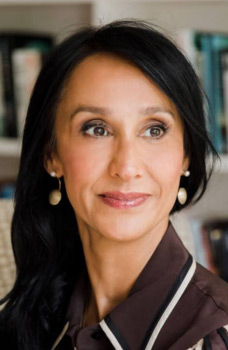
Monica Ali is the daughter of English and Bangladeshi parents.
She came to England at the age of three, and her first home was Bolton in Greater Manchester. Ali later studied at Oxford University.
Her first novel, Brick ...
(more)
If you enjoyed:
House of Sand and Fog
Try:
In the Kitchen
by Monica Ali
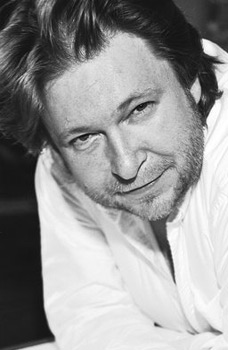
Rick Bragg (b. 1959) is the author of seven books, including the best-selling Ava's Man and All Over but the Shoutin'. He is also a regular contributor to Garden & Gun Magazine. He lives in Alabama. (more)
We recommend 17 similar authors
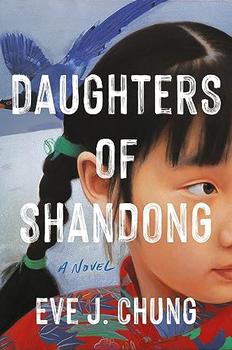
Daughters of Shandong
by Eve J. Chung
Eve J. Chung's debut novel recounts a family's flight to Taiwan during China's Communist revolution.
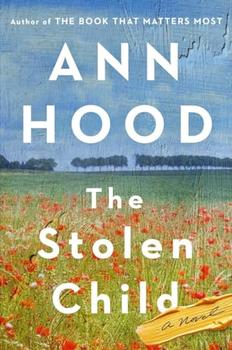
The Stolen Child
by Ann Hood
An unlikely duo ventures through France and Italy to solve the mystery of a child’s fate.
Be careful about reading health books. You may die of a misprint.
Click Here to find out who said this, as well as discovering other famous literary quotes!
Your guide toexceptional books
BookBrowse seeks out and recommends the best in contemporary fiction and nonfiction—books that not only engage and entertain but also deepen our understanding of ourselves and the world around us.