
-
Your next favorite book
is waiting.
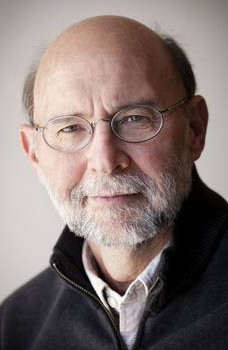
Stephen Harrigan shares what first led him to the story of the Alamo, his most surprising discovery, and his thoughts about the recent and highly contentious auction of a supposed "Alamo Diary".
What first led you to the story of the Alamo?
If you grew up in Texas, as I did, there's no escaping the Alamo. The story of the Alamo is the Texas creation myth, and the Alamo itself, or what is left of it--this grim little church in the heart of downtown San Antonio--is one of the world's most mysterious and resonant places. When I first saw it at the age of seven, I was awestruck--it was a haunted house. And I suppose I have never gotten over that first impression.
There have been many books and films about the Alamo. What sets yours apart?
There have certainly been many movies, but none of them has the slightest relationship to historical reality. And there are plenty of books as well, mostly histories, and some are excellent. But I was surprised to discover, when I first started thinking about this novel, that there wasn't much out there in terms of historical fiction. There are plenty of novels about the Texas revolution, and some of them deal in part with the Alamo, but this is the first one I know of in which the Alamo itself is the focus. I think one reason I had the field pretty much to myself is the fact that it's a tough story to pull a reader through, because--as you well know--the Alamo did not exactly have a happy ending.
How did you deal with that problem?
I can't really answer that without giving away the ending of the book. But I will say that I worked very hard to create characters who--whether they live or die--are crucially transformed by their experience of the battle.
Why do feelings about the Alamo run so deep?
The Alamo is a very well cultivated myth, and as such it speaks to our deepest hopes that we are capable of heroism and selflessness. Simply put, we remember the Alamo with such fervor because it continually inspires us to believe that there is something worth dying for, and if the time ever came for us to "cross the line" we might be able to find the courage to do so. Of course, that is the myth. The reality of the Alamo is far more complex--and ultimately, I think, far more interesting.
Your book has been compared to epics like LONESOME DOVE, COLD MOUNTAIN, and THE KILLER ANGELS. What literary influences have shaped your work?
I've always liked books with a driving narrative and an unexpected sensibility. I think my favorite novel of all time is Moby Dick, because it's a story filled with breath-taking, almost unimaginable events--all told with the most peculiar insight. And really my main goal in The Gates of the Alamo was to make the book surprising, to come at things from different angles, so that readers who might think they are already familiar with the story will be caught off-guard.
How much research did you do for this novel?
I worked on this book for eight years, and looking back it seems to me that my research was endless. I read everything, of course--all the books, all the primary documents: the diaries and letters and battle orders. There were many historians who were very generous with information and with whom I am now close friends. The thing about an historical novel is that you have to know everything: what kind of shoes people wore, what kind of money they used, what songs they sang, what they ate for breakfast. It's relatively easy to find out about the events themselves, but that kind of everyday stuff is often very difficult.
What was your most surprising discovery?
That everything I thought I knew about the Alamo was wrong.
There was recently a highly contentious auction of a supposed "Alamo diary" written by a Mexican officer. What was the controversy about?
You're referring to the de la Pena Diary, which is not really a diary but a kind of narrative history written by a lieutenant named Jose Enrique de la Pena who fought with the Mexicans at the Alamo. This manuscript has been highly controversial ever since it was first published in English in 1975. It was controversial then because it stated that David Crockett had not gone down fighting--as he is famously depicted in all the movies--but had surrendered instead and was then executed. A lot of people were deeply offended by that, imagining it as some sort of slur on Crockett's reputation. But the larger controversy about the de la Pena diary is whether it is even authentic or not. There's a possibility--a good possibility, in my opinion--that it may be a forgery. In any case, it's a very problematical document and I used it very cautiously in my research.
The state of Texas has provided the backdrop for several of your books. What compels you to set your stories there?
Well, in the first place, it's where I'm from; and I suppose it's the rare writer who doesn't have some sort of creative allegiance to his home territory. But Texas is also an undeniably rich canvas by any standard--full of bombast and bloody history, and populated by people who generally like to imagine themselves reflected in its mythic light.
You started out as a journalist, writing for Texas Monthly and other magazines, and now you make your living as a screenwriter. What do you consider yourself now--screenwriter, journalist, or novelist?
I'm still all three. Novels are what give me the greatest satisfaction as a writer, but there is a synergy, a kind of hybrid vigor, that sometimes comes from doing more than one thing.
The action in The Gates of the Alamo is very vivid. Did you write this novel with a movie in mind?
No. I really didn't. Writing movies is diverting and rewarding in all sorts of ways, but one of the great frustrations is that you never quite get to tell the story the way you want to tell it, you're always squeezed in by the exasperating realities of the process: budgets and deadlines and the not-always-so-great opinions of dozens of other people who are looking over your shoulder as you write. A novel is something you write by yourself, exactly the way you want to do it, and no studio or producer or actor can take it away from you. On the other hand, I've learned a lot about pacing and forward movement from writing movies, and those aren't bad tools for a novelist to have. If somebody wants to make a movie out of The Gates of the Alamo, I'd be delighted, but the result will be something other than the novel--which is emphatically, totally, purely a book.
Unless otherwise stated, this interview was conducted at the time the book was first published, and is reproduced with permission of the publisher. This interview may not be reproduced or reprinted without permission in writing from the copyright holder.


Chris Adrian was born in Washington, D.C. A graduate of the Iowa Writers' Workshop, he received his MD from East Virginia Medical School. "Every Night for a Thousand Years", the New Yorker story from which this ... (more)
If you enjoyed:
The Gates of The Alamo
Try:
Gob's Grief
by Chris Adrian

Paulette Jiles is a poet and memoirist. She is the author of Cousins, a memoir, and the bestselling novels News of the World and Enemy Women. She lives near San Antonio, Texas. (more)
If you enjoyed:
The Gates of The Alamo
Try:
News of the World
by Paulette Jiles
We recommend 8 similar authors
Theo of Golden by Allen Levi
One spring morning, a stranger arrives in the small southern city of Golden. No one knows where he has come from…or why…




Your guide toexceptional books
BookBrowse seeks out and recommends the best in contemporary fiction and nonfiction—books that not only engage and entertain but also deepen our understanding of ourselves and the world around us.

