-
Your next favorite book
is waiting.
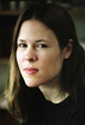
How to pronounce Ann Napolitano: na-poll-ih-TAH-no (first syllable like 'ap' in apple)
In two interviews, one video and one text, Ann Napolitano discusses her book A Good Hard Look, set in Milledgeville, Georgia, home of celebrated author Flannery O'Connor.
In two interviews, one video and one text, Ann Napolitano discusses her book A Good Hard Look, set in Milledgeville, Georgia, home of celebrated author Flannery O'Connor.
In the video below, author Ann Napolitano discusses her book A Good Hard Look
A Conversation with Ann Napolitano
What drew you to write a novel centered around Flannery O'Connor? What were the most interesting challenges/pleasures in writing about such an extraordinary literary figure? How much research did you do for the novel?
When I started A Good Hard Look, I had no idea Flannery O'Connor would come anywhere near the novel. If you'd told me she would be one of the characters, I would have said you were crazy. I had no aspiration to write historical fiction and I hadn't read any of Flannery's work in about a decade.
Initially, the book was about a character called Melvin Whiteson who lived in New York City in the present day. I had the idea of this very wealthy man who'd been given every opportunity, but didn't know what to do with those opportunities. I was interested in the question of how people choose to live their lives. The novel wasn't working though; I think Melvin was more of an idea than a character. It was about a year into the book that Flannery O'Connor showed up out of the blue - creatively speaking - though in hindsight, I can see that she embodies for me this idea of a "life well-lived". Her appearance changed everything, of course. The time period, the setting, the heartbeat of the novel. I think she also provided the contrast that Melvin required to come to life as a character, and really, to shape the rest of the narrative.
As a writer, her arrival both excited and terrified me. My dual fear - which I carried throughout the remainder of the writing process - was that I would portray Flannery inaccurately, or that I would do her a disservice by writing a mediocre book. To conquer the first fear, I did a lot of research. I read everything I could get my hands on. I re-read Flannery's stories, her essays and two novels; I read the one existing biography on her, and several critical essays about her work; I flew to Atlanta, rented a car and drove to Milledgeville. I visited Andalusia, her farm (which is now a museum) and walked all over town. I was only there for about thirty hours, but that visit was crucial. Milledgeville had to be real to me, so I could make it real for the reader. Sitting on Flannery's front porch, and smelling the air there - I don't think I could have re-created her world without spending that time in her space.
To conquer the second fear, I wrote and re-wrote and re-wrote and then re-wrote some more. I worked on this book for seven years in total, and that's because I had to make sure Flannery was as true as possible, and that the book that contained her was not terrible.
Has Flannery O'Connor been a major influence on your own work?
The short answer to that is yes, but not in the way you might think. The truth is that Flannery's non-fiction has had a much larger influence on my work than her fiction. I fell in love with Flannery's letters during college, when I was assigned The Habit of Being. I can't recommend that book highly enough; her letters are wonderful - they're irreverent, sarcastic, insightful, and wise. Flannery is accessible, and even sweet in a way you'd never guess from her fiction. So the letters drew me in, but my connection to her deepened because the content of the letters spoke directly to the circumstances of my life. Flannery chronicled her battle with lupus; when I read the letters, I was also sick. I'd been diagnosed with the Epstein-Barr virus, an auto-immune disease, six months earlier. As it turned out, I would be ill for the next three years, and the symptoms had already dissembled my highly active, twenty-year-old life.
Reading those letters, I had what Oprah would probably call an "A-ha moment". Flannery wrote about coming to terms with her changed situation, and deciding to focus her limited energy where it would matter most - on her writing. I consciously sized up my own life in a similar manner. I had always loved writing, but I lacked the confidence to declare myself a writer. After I graduated, I planned to work in publishing, or something book-related. I would surround myself with other people's words, and maybe write on my own in secret, as a hobby. But my illness, and Flannery's example, offered up a new clarity. I was able to appreciate, in a way my obnoxiously healthy twenty-year-old peers couldn't, the real brevity of life. I could see how important it was to make each moment meaningful, and to make my life matter somehow. Because of Flannery, I decided to become a writer. So, yes, she is the major influence behind everything I write.
Flannery O'Connor, as she appears in your novel and in her own writing, seems able to see through people's facades, to penetrate to the depths of who they really are. The illustration for your website shows x-ray views of people on the streets of New York City. Is this kind of x-ray vision an essential skill for a novelist to have?
It certainly helps. I'm fascinated by people - their character quirks, the way they speak, and most of all their stories, both the ones they tell and the ones they hide. I can meet someone at a party and speak to them for ten minutes, and then startle them years later when I recall verbatim the anecdote they told me at the party. I simply love stories, and I love trying to tease out the riddle of what makes a particular person tick. Writing fiction allows me to explore humanity, and that's one of the things I love most about it.
You describe the peacocks several times as doing what they please rather than trying to please others. "The peacocks were not out to make friends. They were out to do what they liked, when they liked" [p. 3]. Did you intend for the peacocks to have a particular symbolic value in the novel?
No. I really don't know what to say about the peacocks' symbolic value. I'm too close to the story; I don't have the perspective. I didn't write them to represent something, but that doesn't mean they don't. I look forward to hearing what other people think about the peacocks; I know the readers will be a lot wiser in this area than me.
All I can say with certainty is that I loved writing about the birds in every way - their visual beauty, their take-no-prisoners attitude, their noise. Each scene they showed up in, they took over in the best kind of way. The peacocks were a joy to Flannery in her life, and they were a pleasure for me in the book.
Did you know how the novel would end when you began or did it take new directions as you were writing it?
Like I said earlier, I worked on the novel for a year before Flannery even showed up. So, in the beginning I knew almost nothing. Once Flannery was in the book, I figured the peacocks would play a role in the ending, but I didn't know anything more specific than that. I wrote many, many drafts, and headed in many different directions while writing this book. Imagine a tangential story line for A Good Hard Look, and I probably wrote (and deleted) it at least once.
When asked whether universities stifled writers, Flannery O'Connor famously remarked: "My view is that they don't stifle enough of them." How helpful was your experience at the creative writing program at New York University? Are our MFA programs turning out too many writers?
I love that quote. My MFA experience had two distinct positives: 1) I had the chance to study under a brilliant teacher, the writer Dani Shapiro. I still have her voice in my head (in a good way) when I write. 2) I met two writers in the program - Hannah Tinti and Helen Ellis - with whom I still meet regularly to critique one another's work. They are the first sets of eyes that see any draft of my writing. I wouldn't even want to guess how many times they read A Good Hard Look. I dedicated the book to them, and frankly, they earned it.
So, my basic take on MFA programs is that they are expensive, and not necessary to become a writer, but they can certainly be helpful in various ways.
What are you working on now?
I've started taking notes on a novel, which is a new experience for me. I've never tried to plot or plan before beginning a book, so I'm finding it to be an interesting (and frustrating, and hopefully rewarding) experience. The book is inspired by a news story I was obsessed with last year, but that's all I can say at this point.
Unless otherwise stated, this interview was conducted at the time the book was first published, and is reproduced with permission of the publisher. This interview may not be reproduced or reprinted without permission in writing from the copyright holder.

Tiffany Baker’s Recipe For A Writing Life
A handful of islands: Belvedere , Aquidneck, Balboa, Manhattan, Corsica, Maui, the UK
Three small children: Two girls and a boy, plump in the cheeks and knees. Strong-willed ...
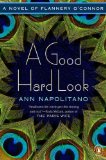
If you enjoyed:
A Good Hard Look
Try:
The Little Giant of Aberdeen County
by Tiffany Baker
Melinda Haynes grew up in Hattiesburg, Mississippi. A painter for most of her life, she now writes full-time from her home in Grand Bay, Alabama.
Her works include Mother of Pearl (1999), Chalktown (2001) and Willem's Field (...
(more)
If you enjoyed:
A Good Hard Look
Try:
Mother of Pearl
by Melinda Haynes
We recommend 10 similar authors


The low brow and the high brow
Click Here to find out who said this, as well as discovering other famous literary quotes!

Can you name the title?
Test your book knowledge with our daily trivia challenge!
Your guide toexceptional books
BookBrowse seeks out and recommends the best in contemporary fiction and nonfiction—books that not only engage and entertain but also deepen our understanding of ourselves and the world around us.