
-
Your next favorite book
is waiting.
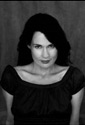
Jan Elizabeth Watson discusses Asta in the Wings and how she went about writing this luminous first novel.
Asta in the Wings is your first published novel. Is it the first novel you wrote?
When I was about twenty years old, I wrote a twelve hundred page novel called Tresunder Manor, which was sort of a cross between a Victorian “cozy” mystery and a novel of psychological suspense. (I think I was reading a lot of Ruth Rendell at the time.) My writing in this early novel was earnest but mostly turgid—unreadable, really-- and the files on which the manuscript was kept were lost long ago—which is no great loss, all things considered. But it was useful to attempt a sustained narrative and to learn from all its mistakes.
Asta was your thesis when you were an MFA student at Columbia. What did you gain from pursuing an MFA? Did you receive feedback that helped you bring the novel to its completed state?
I submitted a prototype of the first couple of chapters of Asta to my MFA workshops and noticed right away that the story elicited a mixed response; people either loved the writing or were baffled by it. I figured that any novel that draws such polarized responses couldn’t be all bad, so that gave me the impetus to forge ahead and turn it into a thesis-length work, which eventually became a springboard for the novel itself.
How long did it take you to finish the novel?
For better or for worse, the novel took a long time to finish, but its progress was impeded many times along the way. I completed the first half of the book in 1998 and then shelved it for awhile. Around 2001 I added a second half, in which the narrative jumped into the future and Asta and Orion were of college age—eighteen and twenty years old, respectively. This newer section didn’t seem to work, though, and I couldn’t pinpoint why it was going wrong. Then 2005 rolled around and it suddenly dawned on me that Asta and Orion needed to remain children from beginning to end—that keeping them in their childhood would solve the book’s structural problems. That, it turned out, gave the book the direction and shape and premise it needed.
Asta and her mother and brother live in rural Maine. You currently live in Maine, but you began writing Asta in New York City. Why did you choose to place Asta in Maine? Could the book exist in any rural setting or is there something particular about Maine that influenced your choice?
I grew up in Maine and used to vow that I would not set my stories there because I didn’t want to be pegged as a “Maine writer”; for whatever reason, I was afraid of being thought of as a regionalist. So the early version of Asta was set in a fictitious town in Massachusetts, which is geographically close to Maine and has a lot of the same quaint New England characteristics. But as I progressed further into the manuscript, it became obvious that it was Maine I was really writing about—its isolation, its stoic eccentricties-- and that it was my own childhood in Maine that informed Asta’s perspective a great deal.
How about the timing of Asta? The book is set in the 1970s, before seven-year-olds had e-mail accounts and Internet access. Do you think the story would work set in 2008? Or is there an innocence and simplicity necessary to the story that no longer exists in kids’ lives today?
I don’t think that today’s children are necessarily less vulnerable or even less innocent because of advances in modern technology; children are always children, which is one of the reasons why the child in literature has always fascinated me—because the concerns and feelings of a child in a 19th century novel are not, deep down, so different from the emotional experiences of a child in the world today. I was a young child in the 1970s and, at the time, thought it was a period of remarkable new inventions. How is a decade that spawns lava lamps and inflatable furniture not magical in the eyes of a child?
Asta in the Wings is a first-person narration. The reader never knows Asta’s current age, where she lives, or what has happened to her and her family. Why did you choose not to assert the older Asta into the narration more?
Not asserting the older Asta into the narrative was a conscious choice that I made early on in the writing process. In my own mind I have a clear picture of who Asta is as an adult—what she looks like, what she does for a living, how she acquired the particular diction that she uses and recalls the particular things that she does—but I don’t think it’s essential for the reader to know all this. The writer always has to know more biographical details than the reader; that is the trump card we have. I will say that I always saw Asta as someone who is so captivated by her own memories and, at times, the web of her own narrative that her language sometimes becomes that of a child—she gets so “in the moment” that she fully relives the childhood experience throughout the book. I liked having a narrator who could show flashes of sophistication and wit but still convey a deep and lingering attachment to the childhood self. I relate to this kind of narrator.
Did you ever consider making Asta in the Wings a young adult novel? What were some of the challenges of writing a novel about a seven-year-old girl for adult readers?
Some of the first agents who read Asta suggested that it seemed a little Young Adult, which apparently was a marketing concern for them. I really don’t see the connection so much; YA novels today are so hip and topical, so much more worldly than the YA fiction of my youth, which was all about girls getting their periods or buying bras. Asta, on the other hand, has an innocence that I associate more with classic children’s novels that can be enjoyed by adults, like the works of E. Nesbit or Frances Hodgson Burnett, albeit with some modern, ironic twists. I like to think that the book has crossover appeal insofar as bright young people could conceivably like it as much as adults, or vice versa.
What was the inspiration for Asta in the Wings?
At the time when I began writing Asta in the Wings I had been reading a lot of Victorian fairy tales. I found their moralizing overtones fascinating. And I was collecting old primers—school reading books—from various lawn sales and garage sales, and I wanted to incorporate the feeling of those as well, in a contemporary way. The first scene of Asta that popped into my head was the scene where Asta and her brother have that first conversation on Orion’s cot, pushing the can lid back and forth; I saw that very clearly in my mind, overheard their dialogue and wrote it down.
In Asta’s home life with her mother and brother, there is a strong theatrical life. Asta’s mother wanted to be a movie actress, as her mother was. Asta and her mother and brother reenact movies and plays. Were you ever involved in theater or acting?
I was always the writer, never the actress. However, I’ve always been fascinated with old movies and cinema history, and I wanted to channel this enthusiasm into the novel somehow. A few of my acquaintances have pointed out that I live my life as though I were a character in a movie or a novel, so maybe it wasn’t such a stretch for me to write a book in which the theatrical life and the day-to-day life are as one.
The character of Leon is simultaneously ominous and comforting. He is Asta’s only friend in her new surroundings and yet the reader is aware of the inappropriateness of a friendship between a college-age man and a young girl. What were some of the challenges of portraying Leon as both a sympathetic and a somewhat disturbing character?
The character of Leon was a later addition to the book, but he turned out to be one of my favorites; I developed a little bit of a crush on him because he is the sort of peculiar, lonely boy who I would have loved when I was seventeen or eighteen years old. I thought he would make an unusual yet somehow fitting friend for Asta. The age difference and his morbid inclinations might suggest that there is some underlying deviance at work—a question of intention. But Leon is in his own way as innocent as Asta, and I enjoyed keeping him that way while still raising some doubt or a sense of unease in the readers’ minds. Unease mixed with innocence can be a very powerful combination when executed correctly—like the juxtaposition of the very ugly with the very beautiful.
What’s a book that you have read recently that you would recommend?
I like the Canadian author Barbara Gowdy. I just read her books Mister Sandman and Falling Angels. She has a such a peculiarity to her writing, and her characters are ones I can truly identify with; to riff off Holden Caulfield (speaking of Ring Lardner), Gowdy is an author who I’d like to call up on the phone. I suspect we would have a lot to talk about.
Unless otherwise stated, this interview was conducted at the time the book was first published, and is reproduced with permission of the publisher. This interview may not be reproduced or reprinted without permission in writing from the copyright holder.
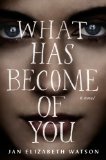

Chris Adrian was born in Washington, D.C. A graduate of the Iowa Writers' Workshop, he received his MD from East Virginia Medical School. "Every Night for a Thousand Years", the New Yorker story from which this ... (more)
If you enjoyed:
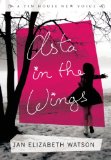
Asta in the Wings
Try:
A Better Angel
by Chris Adrian

Peter Bognanni is a graduate of the Iowa Writers' Workshop. His debut novel, The House of Tomorrow, won the Los Angeles Times Book Prize for first fiction and the ALA Alex Award and has been adapted into a feature film. He ... (more)
If you enjoyed:
Asta in the Wings
Try:
The House of Tomorrow
by Peter Bognanni
We recommend 10 similar authors


Who dares to teach must never cease to learn.
Click Here to find out who said this, as well as discovering other famous literary quotes!

Can you name the title?
Test your book knowledge with our daily trivia challenge!
Your guide toexceptional books
BookBrowse seeks out and recommends the best in contemporary fiction and nonfiction—books that not only engage and entertain but also deepen our understanding of ourselves and the world around us.

