
-
Your next favorite book
is waiting.

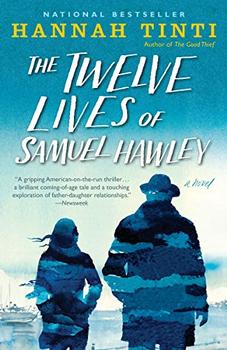
A Conversation between Karen Russell and Hannah Tinti Hannah Tinti discusses her first novel, The Good Thief, set in America during the 1800s, a time when the opportunities for "Resurrection Men", who stole the bodies from newly buried coffins, flourished in the face of ever greater demand from surgical and medical schools.
Karen Russell: I'm always curious where other writers begin. What was the first image you had for this book? Did you start with Hawley and his daughter, Loo, in their current lives, or did you begin with the secrets of Hawley's past?
Unless otherwise stated, this interview was conducted at the time the book was first published, and is reproduced with permission of the publisher.
This interview may not be reproduced or reprinted without permission in writing from the copyright holder.
Hannah Tinti: The first spark of this novel came from my desire to write a love story. One of my favorite books is Jane Eyre, and the moment she meets Mr. Rochester is such an iconic scene - he is literally thrown at her feet. So I started by sketching out my own meeting of two people (which is actually still in the book - when Marshall washes up at Loo's feet from the ocean). Once I had that boy and girl together, I wrote a paragraph for each of their backgrounds, and that included a description of the girl and her father clamming on the shore. Right away, the father began to dominate and take over the story. He was a lot more interesting than the boy or the girl. But what was his name? While walking through one of the old cemeteries in Salem, Massachusetts, where I grew up, I came across one that struck me: Samuel Hawley.
Hawley's name and those brief paragraphs were fragments that I carried around with me for months. They didn't come together until I sat down and wrote about the greasy pole. That was the breakthrough, and when the novel fell solidly into place. The Greasy Pole is based on a real contest that I grew up going to and still attend each year when I can. It takes place each summer in Gloucester, Massachusetts, during a celebration of Saint Peter, the patron saint of fishermen. A forty-five-foot pole is attached to a pier and set horizontally above the water, then covered with grease and lard. A flag is attached to the end. The first man who manages to walk the pole and reach the flag wins. These fishermen break their arms and smash out teeth as they slip off the pole into the harbor, all for the simple glory of capturing the flag and being carried through the streets in triumph.
I put the character Samuel Hawley on that pole and began to sketch out a scene. When his turn came to enter the contest, I described him physically for the first time, and realized that his skin was covered with scars. Once the scars appeared, I wanted to know the stories behind them. Hawley's body became a map of the book that I was going to write.
KR: The central conceit of the novel is that it weaves back and forth through time. Every other chapter dives into Samuel Hawley's past life and tells the story of one of his "bullets" - a moment where he narrowly evaded being killed and earned another scar as a consequence. How did this fabulous idea come to you, and how is this structure important for the story you wanted to tell?
HT: I wrote the first bullet chapter to explore Hawley's backstory. I needed to find out how he got those scars. The marks we carry on our physical bodies are full of memory - stories that usually only get shared with the people we're most intimate with. That's what I wanted to uncover. The more I wrote, the more intrigued I became with the idea of telling a man's whole life this way - brief flashes of meaning, with many blank years inbetween that the reader would have to imagine. I began to write short pieces, skipping through Samuel Hawley's criminal past, each story revealing one moment where he'd found a way to keep living, starting when he was sixteen, and ending when he was nearly fifty.
While the past drives much of the novel, I wanted it to be in conversation with the present, and for objects and characters to jump back and forth between the two timelines. Each bullet adds another piece to the present narrative - which is held by Hawley's daughter, Loo. In this way, the reader gets to be a detective, picking up clues and slowly filling in the picture. I wanted the structure of the book to be a call and response. The father's experiences in the past and his daughter's experiences in the present are intricately linked together - two separate coming of age stories that eventually flow together, like a confluence of two rivers.
KR: I love how the story ranges in setting all over the United States. Each time we turn the page, we might find ourselves in Alaska or the desert or the Midwest. How did you decide where to set Hawley's bullet chapters? Did your travels over the years inform the book? And how did you come up with Olympus, Massachusetts, where Hawley lives in the present with Loo?
HT: Early on, I decided that with this book, I would write about places that I knew. Each of the settings are worlds I have visited or lived in, and feature bits of my own experiences. I've stayed at a great camp in the Adirondacks. I got caught in a dust storm in the middle of the Arizona desert. Whidbey Island is a place close to my heart, as is the ferry ride from Mulkiteo. I have visited prairie dog towns in Wyoming. And I've walked in midnight sun and watched Child's Glacier calve in Alaska. As for Olympus, Massachusetts - where Hawley and Loo live - that is the only setting that is fictional in the book. I based it on Gloucester - home of the Greasy Pole, and a place where I lived for a year after college, waiting tables. I called the town Olympus in a nod to Greek mythology. It gave me some creative license and allowed me to shape the world of Hawley and Loo in more mythic proportions.
KR: Hawley reminds me of Clint Eastwood in an old spaghetti western - you're a little frightened of him even as you root for him, but his essential goodness is never in doubt. How did you develop him as a character, and were movies an influence as you wrote?
HT: Movies are definitely an influence. I grew up with Star Wars and Indiana Jones. But also classic films like the Marx Brothers pictures and the original King Kong (1933). Because of this I tend to write with a focus on visual elements, and I'm very aware of pacing and the reader's experience. I want them to be surprised and have fun and also to be emotionally moved. Like when you're on a roller coaster, screaming with fear and dread and excitement and joy but at the end you get the wash of adrenaline and relief, and you stumble away grateful to be alive, stunned and maybe even a little weepy, and for a brief period of time the world is brought into a sharper focus.
KR: This is a book where some scary things happen. Yet it's also a story about love and connection, especially between a parent and child. No matter what Hawley and Loo are going through, his desire to protect her is so clear to the reader. Can you talk a bit about how their relationship evolved as you wrote the book?
HT: In each of Loo's chapters, she learns something. She starts by shooting her first gun. Then she has her first fight. Her first drink. Her first kiss. Her first job. Her first car. Her first heartbreak. And she also commits her first crime. Her father acts as her protector and teacher, until eventually Loo begins to forge her own path. Samuel Hawley is a classic masculine hero, tough and rugged. But as his daughter's coming-of-age story intertwines with his own, Hawley ends up being saved by Loo - not once, but twice, and by the final chapter of the book, she is the one who rises. She becomes the true hero, and Hawley (like Hercules) takes his place among the stars.
KR: In addition to your writing, you're known for your work as the co-founder and editor of one of my favorite literary magazines, One Story. How does being an editor inform what you do as a writer?
HT: One Story has been one of the greatest joys and most rewarding experiences of my life. Together with Maribeth Batcha, I co-founded the magazine in 2002, and was editor in chief for fourteen years. I'm now executive editor. We're a non-profit organization, and publish one story at a time, allowing authors to take center stage, and giving our subscribers an intimate, focused reading experience. When One Story launched we made the rule to never publish an author more than once, so we have run stories from over 250 different writers from around the world. Editing these diverse voices has been enormously educational, and made me acutely aware of how a reader is making his or her way through a story. It also makes me hard on myself. I constantly stop and tinker with sentences, and often can see only the flaws in my own work.
While that side can be hard to turn off at times, being an editor has been a great gift. It taught me to respect the magic that happens in the creative process, while also understanding the mechanics behind the page. It has provided a way for me to support and celebrate emerging writers, something I feel very strongly about. And it's introduced me to a generous group of readers who love books as much as I do. I am thankful for the people I have met, and for the authors who have trusted me with their words, just as I am also grateful and trusting everyone reading this book - with my own.
KAREN RUSSELL, a native of Miami, was named a Pulitzer Finalist in 2012 for her first novel Swamplandia! She is also the author of two story collections published by Knopf: St. Lucy's Home for Girls Raised by Wolves (2006) and Vampires in the Lemon Grove (2013), which, like Swamplandia!, was a New York Times bestseller, and a novella titled Sleep Donation published by Atavist Books in 2014. She was chosen as one of Granta's Best Young American Novelists in 2007, and was named one of best 20 under 40 writers by The New Yorker. In 2013, she received a MacArthur Fellowship. Her short fiction has appeared in The New Yorker, Granta, Oxford American, Zoetrope, and Conjunctions. Four of her short stories have been selected for the Best American Short Stories volumes.
Why did you decide to set your novel in New England?
I wanted The Good Thief to take place in America in the 1800s, and New
England felt like the perfect place. I grew up in Salem, Massachusetts—famous
for the witch trials and as the birthplace of Nathaniel Hawthorne—so stepping
into the time period was actually quite natural for me. Most of the houses in
the neighborhood where I grew up were built in the 1700s and 1800s, and it was
not unusual to have a back staircase, or fireplaces in nearly every room, low
ceilings or small latched pantry doors. Whenever my family worked outside in our
small garden, we were constantly digging up things from the past—fragments of
blue and white china plates, broken clay pipes, or crushed shells that used to
line the path to a neighboring carriage house. Once, my grandmother found a
Spanish Reale from the 1700s. This unearthing of tangible history, and being
conscious every day of the people who have lived in places before you is
something common in Europe and other parts of the world, but in America it is
more unusual. In any event, it made a lasting impression on me, and has
certainly wound its way throughout The Good Thief.
How did you come up with the title The Good Thief?
Originally I had planned to call the book Resurrection Men. Then,
for a number of reasons, I had to change it. I was at a loss for a long time,
and nothing seemed appropriate. Finally, I gave an early draft of the novel to
my mother, who worked for many years as a librarian and has read more books than
anyone else I know. She came up with The Good Thief, and as soon as she
said it I knew it was the right title. There is a lot of stealing going on
throughout the book, with mixed intentions and results. I also liked the
biblical reference of the Good Thief (also known as Saint Dismas), who was one
of the men crucified with Jesus Christ on Golgotha. His story is one of
redemption, at the very last minute, and that suits this novel perfectly.
What are ‘Resurrection Men'?
A number of years ago I was given a copy of Jeffrey Kacirk's Forgotten
English, a collection of words that have fallen out of use in the English
language. One of the words was "Resurrection Men," and it included a brief
description of what the word meant:
"Body-snatchers, those who broke open the coffins of the newly buried to supply
the demands of the surgical and medical schools. The first recorded instance of
the practice was in 1742, and it flourished particularly until the passing of
the Anatomy Act in 1832. The resurrectionist took the corpse naked, this being
in law a misdemeanor, as opposed to a felony if garments were taken as
well…First applied to Burke and Hare in 1829, who rifled graves to sell the
bodies for dissection, and sometimes even murdered people for the same
purpose."—Ebenezer Brewer's Dictionary of Phrase and Fable, excerpted by
Jeffrey Kacirk in Forgotten English.
I was drawn to the moral murkiness of these resurrection men. They were doing
something terrible—desecrating graves—but with the knowledge of the medical
schools and partial acceptance from the law. These thieves did it for the money,
but they also inadvertently saved others from dying by providing the test
subjects doctors needed to further their science. I tore out the definition of
"Resurrection Men," and pasted it into my journal with a note—possible novel?
That was six years ago.
How did you come up with the character of Ren, and why does he have only one
hand?
After learning the definition of Resurrection Men, a scene began to form in
my head. It was a moonlit night, and a small boy was holding the reins of a
horse and wagon outside a graveyard. I didn't know anything about the boy, only
that he was waiting for the resurrection men to bring the bodies, and that he
was terrified. This was the first chapter I wrote of The Good Thief, and
it became the center of the book.
Writing for me has always been an intuitive and mysterious process. As I
expanded the scene, I began to describe the boy, and wrote that he was holding
the reins of the horse with his right hand. But when I tried to say what he was
doing with his left I faltered. Then I realized—he didn't have a left hand. And
suddenly the boy was alive. This is how I discovered Ren's secret, and I used it
to unlock his character. It answered so many questions about him—why he was
alone, and how he might have fallen in with these dangerous men.
The Good Thief has been compared to the work of Robert Louis Stevenson
and Charles Dickens. Did you set out to write an adventure tale?
It's humbling to be compared with these master storytellers. Stevenson and
Dickens were my heroes growing up, along with James Fenimore Cooper. I'm not
sure if I set out purposely to write an adventure story, but I was certainly
influenced by these great writers. Who could forget the scene in Kidnapped
where David Balfour climbs the empty staircase and nearly falls? Or when
Magwitch appears on the moor in Great Expectations? Whenever I felt
daunted by the task before me (The Good Thief is my first novel), I went
back to this important lesson—write something that you would like to read
yourself—and tried to put it in motion on the page. Once I started it was
hard to stop. I like to fall into books; to read about strange places and about
characters who make me care deeply. I also like to be surprised at what's going
to happen next.
What is a wishing stone?
A wishing stone is a rock, usually found near water, with an unbroken white line
circling it completely. It is good for one wish to come true. When I was a child
I would collect them. Later, I was reintroduced to them at an important time in
my life. At the beginning of The Good Thief, Ren comes into possession of
one. It is his golden ticket, and this wish reverberates throughout the rest of
the book, as do the stones themselves. Several people have asked me what a
wishing stone looks like, and so I'm attaching a photo, below, of a few that
I've held on to.
 Membership Advantages

Novelist, biographer, and poet Peter Ackroyd was born in London on October 5, 1949.
He graduated from Clare College, Cambridge, and studied at Yale University as a Mellon Fellow, where he completed Notes for a New Culture: ...
(more)
If you enjoyed:
The Good Thief
Try:
The Casebook of Victor Frankenstein
by Peter Ackroyd

Ian Caldwell attended Princeton University, where he studied history. He graduated Phi Beta Kappa in 1998. He began writing The Rule of Four with his best friend, Dustin Thomason, after graduation. His second book, The Fifth ... (more)
If you enjoyed:
The Twelve Lives of Samuel Hawley
Try:
The Rule of Four
by Ian Caldwell
We recommend 18 similar authors



Polite conversation is rarely either.
Click Here to find out who said this, as well as discovering other famous literary quotes!

Can you name the title?
Test your book knowledge with our daily trivia challenge!
Your guide toexceptional books
BookBrowse seeks out and recommends the best in contemporary fiction and nonfiction—books that not only engage and entertain but also deepen our understanding of ourselves and the world around us.
